Pearl Buck - Kinfolk
Здесь есть возможность читать онлайн «Pearl Buck - Kinfolk» весь текст электронной книги совершенно бесплатно (целиком полную версию без сокращений). В некоторых случаях можно слушать аудио, скачать через торрент в формате fb2 и присутствует краткое содержание. Год выпуска: 2012, Издательство: Open Road Media, Жанр: Классическая проза, на английском языке. Описание произведения, (предисловие) а так же отзывы посетителей доступны на портале библиотеки ЛибКат.
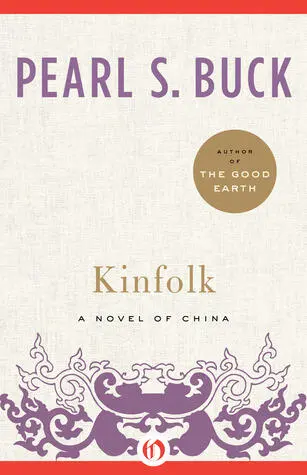
- Название:Kinfolk
- Автор:
- Издательство:Open Road Media
- Жанр:
- Год:2012
- ISBN:нет данных
- Рейтинг книги:4 / 5. Голосов: 1
-
Избранное:Добавить в избранное
- Отзывы:
-
Ваша оценка:
Kinfolk: краткое содержание, описание и аннотация
Предлагаем к чтению аннотацию, описание, краткое содержание или предисловие (зависит от того, что написал сам автор книги «Kinfolk»). Если вы не нашли необходимую информацию о книге — напишите в комментариях, мы постараемся отыскать её.
, a sharp dissection of the expatriate experience, Pearl S. Buck unfurls the story of a Chinese family living in New York. Dr. Liang is a comfortably well-off professor of Confucian philosophy, who spreads the notion of a pure and unchanging homeland. Under his influence, his four grown children decide to move to China, despite having spent their whole lives in America. As the siblings try in various ways to adjust to a new place and culture, they learn that the definition of home is far different from what they expected.
Kinfolk — читать онлайн бесплатно полную книгу (весь текст) целиком
Ниже представлен текст книги, разбитый по страницам. Система сохранения места последней прочитанной страницы, позволяет с удобством читать онлайн бесплатно книгу «Kinfolk», без необходимости каждый раз заново искать на чём Вы остановились. Поставьте закладку, и сможете в любой момент перейти на страницу, на которой закончили чтение.
Интервал:
Закладка:
“Why should we wait for spring?” Mary exclaimed. “There is food in the village, and there is plenty of room. I want to go now.”
James turned to Peter. “What do you say, brother?” he asked. He dreaded the answer, for what would Peter do in the village? There would be no students there and he would be lonely and unhappy. He would refuse to go. To his surprise Peter said no such thing. He lifted his head which so often he held down as though he were thinking of something secret and far from them all. “I am ready to go,” he said. “I shall be glad to get away from here, at least.”
Chen slapped his two hands on the table. “It is all folly,” he declared, “but I will follow you three fools.” They laughed and the thing was decided.
Yet so large a move could not be done in a day. First Uncle Tao must be written to, and this James did, telling him of his father’s permission to receive the rents. Then the hospital must be told of their decision to leave. Never did James know that he had so many friends among the doctors and the nurses. Dr. Kang gathered together all the other doctors and they gave a small feast, not for farewell, Dr. Kang declared, but for advice. It was given in Dr. Su’s house and Mrs. Su herself supervised the dishes. Since only men were present Mary was invited to come and help Mrs. Su, and these two young women busied themselves in the kitchen and ate in Dr. Su’s study, while the doctors kept to themselves in the dining room. In the kitchen Mrs. Su apologized for everything before Mary, although secretly she was proud of her small clean foreign-style house. “Before the Japanese came,” she said, stirring long strands of flour noodles into a pot of chicken broth, “I would not have thought it possible to keep a house without five servants at least. Now I am lucky to have this one Lao Po.”
Lao Po was an old woman who kept perfectly silent and did nothing but wash the dishes which Mrs. Su dirtied and sweep the floor upon which were dropped flour and bits of grease and bone. She understood only a country dialect, for she did not come from the city.
Mrs. Su spoke to Mary in English. “Now of course money is nothing. I pay Lao Po food and room and bedding and some clothes beside her cash. She is not clean, but what can I do? Su will not look at her because he says she is so unclean. I say, ‘Su, it is true Lao Po is dirty, but find me someone clean.’ He cannot for no poor people can be clean. Let us tell the truth about ourselves. Our poor people are very dirty. After all, we are not Americans here today. We need not be ashamed before each other.”
“Everything is nice,” Mary said politely. Indeed the little house with curtains at its windows and wicker chairs with cushions in the living room seemed a palace of comfort to her.
Mrs. Su moved her chopsticks to a pot of pork bits simmering with chestnuts. “Louise is really very lucky,” she said next. She did not know whether Mary knew that Louise had met the American here, and she could not be easy until she found out. “Of course it is better to marry a Chinese — we all agree to that. But Alec is a good American — not roughly chewing gum and swearing words all the time. He is nice family, I am sure. And I think Louise can never be happy here. She is really quite American herself.”
Mary, slicing big white winter pears for a dessert before the meal, did not answer this.
Mrs. Su felt that by her silence she assuredly knew. Therefore she plunged into a half confession. She laughed first to show that she thought it nothing. Then she said, “You know Louise begged me so hard to come here and see Alec sometimes — of course always I was here with them. I felt very unhappy. I should have come and told you first. But I did not know how to say it to Louise. And they are so modern — we are all modern, of course. But I must ask you to excuse me if I did wrong.”
Mary looked up with her large too truthful eyes. “I didn’t know anything about it,” she said. “Louise didn’t tell me.”
Mrs. Su regretted her queasy conscience and she made haste to talk about something else. “It does not matter now, with such happy ending,” she said quickly. “Of course I knew Alec would be good husband and not just fooling. Now tell me, do you really leave our city?”
“We want to go to our ancestral home,” Mary said. She began piling the thin slices neatly in a pyramid on a flowered dish.
“I am sorry,” Mrs. Su said. She covered the pork and uncovered a skillet of shrimp and bamboo shoots. “And I think you will be sorry, too. For people like us, well educated, village is very hard. I never was in some village. That is, not for sleeping. Sometimes in spring and summer we go outside the city for picnic and of course we stop at village to rest. Even then it is too dirty for us. Su will not eat food there. The people are very wild and dirty and all the children are sick with something.”
Mary did not reply to this. “Shall I take the pears in now?” she asked.
“Yes, please,” Mrs. Su said briskly. “Just ask them to eat with watermelon seed and small things and in few minutes dinner is there.” She began to spoon the shrimps into a bowl and Lao Po, seeing that the moment had arrived, brought bowls for other food.
“Lao Po!” Mrs. Su said loudly in Chinese. “I told you, put on a clean coat and wash your face and brush your hair!”
The old woman put down the bowls on the table and went away. By the time Mrs. Su had the bowls full of food, Lao Po came back looking quite clean. “Lao Po, you take the bowls, and put them on the table. I will put the rice in the bowls. Then you can serve us all.”
Mrs. Su was a busy little figure in all the pride of her kitchen. Over her neat Chinese dress of rose-red silk she wore a white apron and her plump and creamy arms were bare.
Mary came back from the dining room. The men had greeted her pleasantly but with reserve. There was much gossip in the hospital that Mary was more willful than James and not so easy in temper, and that she, rather than he, guided the family destiny. It was for this reason that Dr. Su had invited only men to the feast.
“Shall I take in these dishes, too?” she asked Mrs. Su. “No, Lao Po will do everything now,” Mrs. Su said, taking off her apron. “I don’t mind to cook, but I don’t like to appear servant.”
She led the way to the study and they sat down. Mrs. Su enjoyed a friend with whom to talk. Mary was not so pliable a friend as Louise had been, but she was a woman and a listener. “Sit down, please,” Mrs. Su said. “Have some tea. Then our stomachs will be ready for the food. Lao Po will bring us the dishes when the men finish.”
So sipping the fragrant tea, Mary sat and listened. Long ago she knew that women like Mrs. Su were of a kind to which she did not belong.
“Now, really,” Mrs. Su began. Her round little face was not so pretty as it had been in the days before her marriage. It was less delicate and her eyes were no longer shy. “What shall we talk?” she asked in a bright voice.
“You talk,” Mary said, smiling, “and I will listen.”
Mrs. Su smoothed down her short skirt. “Shall I tell you how I marry Su?” Her voice was at once demure and cozy.
“If you like.”
“It all begins like this,” Mrs. Su said. “I was teaching English in Kunlun girls’ school. Naturally I don’t have to teach since my father is head of the bank, but still I cannot do nothing. One day my father say to me, ‘Someone say Dr. Su, very famous and rich doctor, is going to divorce. Of course he cannot live always divorcing. He must have wife and how would you like to be that one?’ At first I didn’t like. I told him, ‘Baba, suppose he has divorcing habit how I feel if then some day he also divorcing me?’ But Baba say, ‘No! All his other wives have been too stupid. They think only he is husband, they don’t think also I am wife. Now you are not so stupid. When you marry, you think of him first.’ So I say all right. Then my father asking Su’s friend Dr. Kang to suggest Su I am rather nice. Of course my father gives something. Then at a party Dr. Kang introduces me and I look rather nice, I must say. Su is very handsome. There are two sons, but they are nice and they don’t live here.”
Читать дальшеИнтервал:
Закладка:
Похожие книги на «Kinfolk»
Представляем Вашему вниманию похожие книги на «Kinfolk» списком для выбора. Мы отобрали схожую по названию и смыслу литературу в надежде предоставить читателям больше вариантов отыскать новые, интересные, ещё непрочитанные произведения.



Обсуждение, отзывы о книге «Kinfolk» и просто собственные мнения читателей. Оставьте ваши комментарии, напишите, что Вы думаете о произведении, его смысле или главных героях. Укажите что конкретно понравилось, а что нет, и почему Вы так считаете.