Pearl Buck - Kinfolk
Здесь есть возможность читать онлайн «Pearl Buck - Kinfolk» весь текст электронной книги совершенно бесплатно (целиком полную версию без сокращений). В некоторых случаях можно слушать аудио, скачать через торрент в формате fb2 и присутствует краткое содержание. Год выпуска: 2012, Издательство: Open Road Media, Жанр: Классическая проза, на английском языке. Описание произведения, (предисловие) а так же отзывы посетителей доступны на портале библиотеки ЛибКат.
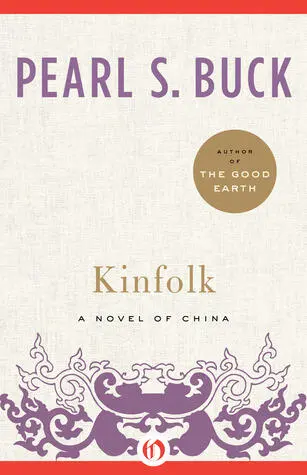
- Название:Kinfolk
- Автор:
- Издательство:Open Road Media
- Жанр:
- Год:2012
- ISBN:нет данных
- Рейтинг книги:4 / 5. Голосов: 1
-
Избранное:Добавить в избранное
- Отзывы:
-
Ваша оценка:
Kinfolk: краткое содержание, описание и аннотация
Предлагаем к чтению аннотацию, описание, краткое содержание или предисловие (зависит от того, что написал сам автор книги «Kinfolk»). Если вы не нашли необходимую информацию о книге — напишите в комментариях, мы постараемся отыскать её.
, a sharp dissection of the expatriate experience, Pearl S. Buck unfurls the story of a Chinese family living in New York. Dr. Liang is a comfortably well-off professor of Confucian philosophy, who spreads the notion of a pure and unchanging homeland. Under his influence, his four grown children decide to move to China, despite having spent their whole lives in America. As the siblings try in various ways to adjust to a new place and culture, they learn that the definition of home is far different from what they expected.
Kinfolk — читать онлайн бесплатно полную книгу (весь текст) целиком
Ниже представлен текст книги, разбитый по страницам. Система сохранения места последней прочитанной страницы, позволяет с удобством читать онлайн бесплатно книгу «Kinfolk», без необходимости каждый раз заново искать на чём Вы остановились. Поставьте закладку, и сможете в любой момент перейти на страницу, на которой закончили чтение.
Интервал:
Закладка:
That Louise was gone made only one of the reasons for restlessness through the winter that now came upon the city. The old landlord, who had during those months kept prudently to his promise not to ask for the rent in advance, forgot himself in his need and became troublesome to them. The manservant had come to Young Wang and had put to him the matter of money.
“My old lord and mistress are very poor,” he told Young Wang. “It would be a good deed if your master were to forget the signed paper and give him the month’s rent in advance.”
At first Young Wang refused but the man came back again with a present in his hand of two pieces of jade which he gave to Young Wang, saying, “My mistress gives these to you as a present that you may sell. Only plead with your master for a month’s rent.”
The jade was a worthless pair of ornaments such as in old times were once sewn on the sides of a woman’s crownless cap. They were thin as paper. When the man was gone Young Wang took them to James. He opened his hand and there were the jade bits on his palm. “These things were given me by the landlord as a bribe to ask you to advance the rent,” he told James. “I could not give them back because it would cause offense. Here they are.”
“What can I do with them?” James replied. “Give them away or sell them. As for the request, I will think of it.”
So he saved Young Wang, who when the man came back again was able to say, “My master considers it.”
When Chen came home, and it was a cold bitter dry night at the end of the year, James told him what the landlord asked, and Chen grew angry. “We had better move away,” he said. “Once these old opium lovers swallow down their shame and begin to beg we shall have no peace.”
But James was more tender, and he decided that he would go to see the old pair and persuade them if possible to go into the hospital to be cured. So a few days after that when he had an hour he came house earlier than usual and he knocked at the landlord’s gate and was admitted by the manservant who was all smiles at the sight of him.
“Is your master at home?” James asked.
“My master is always at home,” the man replied smartly. “Where has he to go?”
James did not answer this impudence and he followed the man into the middle room of the house. It was a dreary room. Everything of worth was gone from it, and a few cheap benches and a broken bamboo table were all that remained. The manservant left him there and after a long while he came back, bringing his master. The old landlord tottered into the room, the manservant supporting him from behind, his hands under his arms like crutches. He was a pitiable figure. His padded winter robes were torn and the cotton was hanging out in a dozen places. On his feet he wore farmer’s shoes of woven reeds, the woolly tassels twisted inside for warmth. On his head was a felt cap, once black but now rusty brown, and it had a hole at the side whence a tuft of gray hair came out. So wasted was the old man, so yellow, so withered, that he was all but dead. He tried to give greeting to James and was in such distress that he could not speak.
“I had to wake him,” the manservant declared. “He was deep in dream.”
“Eh — eh—” the old landlord stammered.
James leaned toward him. “Sir, you look very ill,” he said gently.
These words and the kind tone in which they were spoken reached the old man’s dimmed mind.
“I am very ill,” he moaned.
“Then you ought to go to the hospital,” James said in the same gentle voice. “Let me entreat you. Come with me. I will see that you are put into a warm room and a good bed. We will give you food and we will help your illness. We can cure you so that you will crave no more for the thing that makes you ill.”
The old man slowly came to his senses while James was thus speaking. He fastened his dead black eyes on James’s face and listened.
“It is cold here,” James went on. “You have not even a brazier of coals.”
“He sleeps on the k’ang,” the manservant broke in. “When we have any food to cook, the smoke from the stove creeps under the k’ang and warms him.”
“But only for a little while — unless you use charcoal,” James remonstrated.
“Who can pay for charcoal?” the man said rudely.
The old man sighed. “I have no money.”
“If you were well,” James said, “you could perhaps earn some money. Were you not once a scholar? A scholar can write letters for other people. You could even teach children again. Or I might be able to find a desk in the hospital office for you where you could copy records.”
The old man listened to this and he thought a while. Then he shook his head. “I have nothing to live for,” he said at last. “My sons are gone. There are no grandsons here. Why should I work?”
“You see what he is,” the manservant put in.
James spoke again and yet again, but each time the old landlord said again that he had nothing for which to live and why should he come out of his sleep? “I sleep and I return to that place from which I came before I was conceived in my mother’s womb,” the old man said. “There I am at peace.”
Beyond this James could not go. It was the end of persuasion. When he saw that all was useless, he put his hand in his pocket and brought out a bundle of money. The servant stretched out his hands at once to receive it, but James would not see this hand. He took the landlord’s hands and into those thin yellow shells he put the money. “This is a month’s rent,” he said. “Try to keep it for food and a little charcoal.”
He knew even as he said the words that the hope was idle. At the gate he looked back and the manservant had taken the money from the old man and was helping him out of the room again.
He told the story that night when they were together at the evening meal and Chen rebuked him for what he had done. “You have made it impossible for us to stay here,” he said. “Now every few days this manservant will be after us.”
“I think James did right,” Mary declared. “Only I think he should have insisted that the old man come to the hospital.”
“When the Japs were here opium was cheap,” Peter said.
“And how do you know that?” Chen asked.
“Fellows at the college use the stuff too,” Peter said. “Not the crude opium, of course, but heroin pills. It makes me sick to see them. They can’t get it now. One fellow is always after me.” He closed his lips firmly as though he could not tell more.
James, listening to all this, now decided to speak what was in his mind. He looked around at them all. They had put on padded Chinese garments. Only thus could the intense cold of the house be borne. Here in the middle room which they all shared, there was the foreign stove which they had found at the thieves’ market, not the large stove they had hoped to have but a little one which blazed red when coal was put into it, and turned cold soon after. Yet it was far better than nothing. This room was the only place which held any heat except the kitchen, and there the grass and reed fuel gave but a quick warmth that passed as soon as the flames died down. Padded cotton garments on their bodies and padded cotton shoes on their feet kept them from frostbite. They looked no whit different from the people on the streets.
“The time has come, I think, for us to move to the village,” James said. “I know we thought of spring. But we cannot be colder there than here. And the cost of food and fuel will soon be beyond us. We cannot be worse off there.”
Money was indeed becoming worthless. There was no true money. What the people used were baskets full of paper printed in America with Chinese letters and figures, signifying gold and silver that did not exist. All that James and Mary and Chen could earn barely paid for their food and rent and fuel, besides wages to the ones who cared for them. There was nothing left for clothing or pleasure. And soon, as the paper stuff grew more abundant and the figures were printed higher, even this would not be enough.
Читать дальшеИнтервал:
Закладка:
Похожие книги на «Kinfolk»
Представляем Вашему вниманию похожие книги на «Kinfolk» списком для выбора. Мы отобрали схожую по названию и смыслу литературу в надежде предоставить читателям больше вариантов отыскать новые, интересные, ещё непрочитанные произведения.



Обсуждение, отзывы о книге «Kinfolk» и просто собственные мнения читателей. Оставьте ваши комментарии, напишите, что Вы думаете о произведении, его смысле или главных героях. Укажите что конкретно понравилось, а что нет, и почему Вы так считаете.