Pearl Buck - Kinfolk
Здесь есть возможность читать онлайн «Pearl Buck - Kinfolk» весь текст электронной книги совершенно бесплатно (целиком полную версию без сокращений). В некоторых случаях можно слушать аудио, скачать через торрент в формате fb2 и присутствует краткое содержание. Год выпуска: 2012, Издательство: Open Road Media, Жанр: Классическая проза, на английском языке. Описание произведения, (предисловие) а так же отзывы посетителей доступны на портале библиотеки ЛибКат.
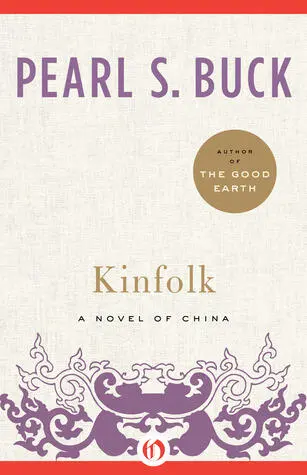
- Название:Kinfolk
- Автор:
- Издательство:Open Road Media
- Жанр:
- Год:2012
- ISBN:нет данных
- Рейтинг книги:4 / 5. Голосов: 1
-
Избранное:Добавить в избранное
- Отзывы:
-
Ваша оценка:
Kinfolk: краткое содержание, описание и аннотация
Предлагаем к чтению аннотацию, описание, краткое содержание или предисловие (зависит от того, что написал сам автор книги «Kinfolk»). Если вы не нашли необходимую информацию о книге — напишите в комментариях, мы постараемся отыскать её.
, a sharp dissection of the expatriate experience, Pearl S. Buck unfurls the story of a Chinese family living in New York. Dr. Liang is a comfortably well-off professor of Confucian philosophy, who spreads the notion of a pure and unchanging homeland. Under his influence, his four grown children decide to move to China, despite having spent their whole lives in America. As the siblings try in various ways to adjust to a new place and culture, they learn that the definition of home is far different from what they expected.
Kinfolk — читать онлайн бесплатно полную книгу (весь текст) целиком
Ниже представлен текст книги, разбитый по страницам. Система сохранения места последней прочитанной страницы, позволяет с удобством читать онлайн бесплатно книгу «Kinfolk», без необходимости каждый раз заново искать на чём Вы остановились. Поставьте закладку, и сможете в любой момент перейти на страницу, на которой закончили чтение.
Интервал:
Закладка:
“Bread and garlic,” she replied.
“What else?” Chen asked.
“We have millet and cabbage.”
“Nothing else?” Chen insisted.
“Bread and garlic,” she said again.
They laughed and she laughed and James told her to bring all she had. Nevertheless, she brought a little more, for these, she saw, were no common guests. When the meal was served she put before them homemade noodles in boiling water and dipping out the noodles she sprinkled them with sesame oil and a little vinegar and soy sauce and on top of this she put chopped green onion sprouts.
“No meat?” Peter said with some discontent.
“Come, you American,” Chen replied, “you will see little meat from now on.”
“The food is hot and good,” James said.
They ate themselves full, Young Wang sitting at some distance from them. James had motioned to him to sit with them but Young Wang, feeling what was fit, would not do this. While he ate the woman sat near him on a bench and talked. Thus he learned that this village feared greatly the coming of the Communists who were now only a short distance away.
“What are Communists?” Young Wang asked, to see what she would say.
“Who knows?” the woman retorted. “I have never seen one alive. But some were caught a month ago near here and beheaded by the soldiers of the government and I went to see them. Well, they looked just like all dead men, except they were young.”
“Why do you fear them?” Young Wang asked.
“They take away the land,” the woman replied.
“And they are all young men,” Young Wang said slyly, “and I suppose you fear them for that, too.”
The woman laughed very much at this and looked sidewise at Young Wang, and made such answer as this, “You and your mother! Eh, you son of a hare—” all of which was designed to reprove him and at the same time to signify that she took pleasure in his wit.
Later in the day, while Young Wang rode beside Peter, he told Peter what the woman had said, and Peter looked so thoughtful that Young Wang was curious, and he grew bold. “What do you think of the Communists, young master?” he asked.
“How do I know what they are?” Peter replied. “Some say they are good and some say they are bad, but I have seen none of them.”
“If some are good and some are bad then they are like all other men,” Young Wang said, and they rode on without more talk.
Ahead of them the other three rode together, side by side when the road allowed, and falling into single file when it went narrow. Mary was always between James and Chen, and both talked to her but Chen talked the more. James was deep in thought. He saw every line and accent upon the landscape, but it was not of the landscape that he thought. His mind was already in the village. He must begin small. For a month or so he would seem to do nothing. Then he would heal a sick child, and then a few more and then he would be willing to treat others, and then he would find a room for a clinic and this room could become two and three until in a simple way it was a small hospital. When the time came he would write to Rose and Marie and Kitty and among the three perhaps one would be willing to come as a nurse to aid him.
In the same small quiet way must Mary begin her school. Nothing must be done with noise or fanfare. They were only Liangs coming home to their kinfolk. Chen was their friend. Chen would advise and keep the accounts. He would begin from the first to ask a little money for medicine. He had brought with him a small dispensary, loaded in boxes upon the backs of two mules, and Mary had brought some schoolbooks. It was good that they were not farther from the city, for Young Wang could always ride back for new supplies. But they had enough for some months.
James repeated to himself like a song, like a ritual, like the rhythm of his heartbeat, that he must go slowly every day and win his way. The dream was a hospital, not a great foreign building standing stories high above the surrounding countryside under a great curving temple roof. He saw his hospital low, a spreading shelter for the sick, the walls of earth and the roof of common tiles, so that when the sick came in it would not frighten them. They would see only a house like their own homes, bigger, for the family of the sick was large, but under their feet would be the beaten earth, and above their heads the rafters would be beneath the tiles. This hospital would be the center but out from it everywhere would reach living hands of healing. He would teach as well as heal. Under his teaching men and women would go out everywhere to find the sick, to treat them for simple illness, and to bring back to the hospital those who were too gravely ill. And they would not only heal the sick. They would teach the young mothers who were the creators of life, and the children who loved life enough to cling to it, and the young men who took pride in their families.
So he wove his dreams that day as he rode through the countryside until he saw them reaching into every village through which they passed, and every blind man and sickly child he saw healed and strong again. What had seemed impossible in the city and in the great hospital now became plain and possible to him.
“It is well enough for you two,” Chen was grumbling to Mary, “you and Jim know what you will do. But I am here for nothing. This is all folly, I tell you. I am the son of a villager and I know that village people cannot be changed unless you catch them young and drag them away. They like their faces dirty and they do not want to bathe themselves. Dirt is their garment.”
“We will change all that,” Mary said briskly.
“Ah,” Chen said sagely, “do not think that you will do all the changing! They will also change you.”
So the day passed. They rode steadily except for stopping for the noon meal and again at sunset. The several mules went more slowly than the two had come on their first visit, and it was well onto midnight before they came near to the ancestral village. The night was as clear as the day had been and the great yellow stars hung in the sky and quivered in the cold night air.]n the darkness the villages sank back into the earth. Gates were barred and they could no longer pass through the streets. They were compelled to find paths around village walls, and only the baying of watchdogs, wakened by the sound of horses’ hooves, disturbed the silence of those who slept early and deep.
They, too, were full of sleep and their bones ached from the rough riding. Peter rode with hanging head and a slack bridle and Mary, though wakeful, was made solemn by the vastness of the land spreading in darkness about her. She was not given to meditation or imagination, being one of those creatures easily busy in many things, but even upon her did the spell of the land fall.
Chen buttoned his coat closely about him and wondered at himself. He was no dreamer of dreams, having all his life seen life hard and clear and cruel. He had not come to save anyone from death or even sickness. Often did he wish that he could live as callously as Su or Peng or Kang and their kind, and he cursed himself that he could not. It was their fault, he told himself. Had they been larger men, less selfish and trivial in their minds, he would have accepted them. But they repelled him with their smallness, even while he admired their skill. He loved no villager or poor man and yet he tended any man or woman or child with care and with respect for life. Thus unwillingly was he the bondsman of his own soul. It was soon after midnight when they saw ahead of them the low walls of the ancestral village. The square of these walls, the squat tower over the gate, were not different from those of any other village they had passed, but some homing instinct led James to know the village was his own. The gate was locked and Young Wang beat upon it with a loose brick he found and he raised such a clatter that every dog inside the walls snarled and bayed his belly out. This woke the watchman who slid back a small panel and looked out with terror shining on his face in the light of the paper lantern he held. Who but bandits and Communists would come to a village at midnight?
Читать дальшеИнтервал:
Закладка:
Похожие книги на «Kinfolk»
Представляем Вашему вниманию похожие книги на «Kinfolk» списком для выбора. Мы отобрали схожую по названию и смыслу литературу в надежде предоставить читателям больше вариантов отыскать новые, интересные, ещё непрочитанные произведения.




Обсуждение, отзывы о книге «Kinfolk» и просто собственные мнения читателей. Оставьте ваши комментарии, напишите, что Вы думаете о произведении, его смысле или главных героях. Укажите что конкретно понравилось, а что нет, и почему Вы так считаете.