Pearl Buck - Kinfolk
Здесь есть возможность читать онлайн «Pearl Buck - Kinfolk» весь текст электронной книги совершенно бесплатно (целиком полную версию без сокращений). В некоторых случаях можно слушать аудио, скачать через торрент в формате fb2 и присутствует краткое содержание. Год выпуска: 2012, Издательство: Open Road Media, Жанр: Классическая проза, на английском языке. Описание произведения, (предисловие) а так же отзывы посетителей доступны на портале библиотеки ЛибКат.
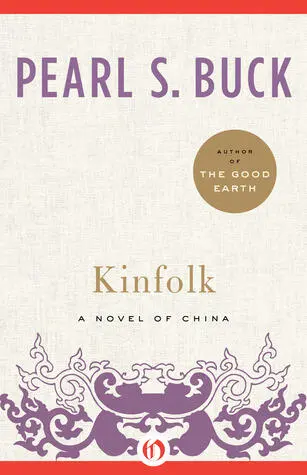
- Название:Kinfolk
- Автор:
- Издательство:Open Road Media
- Жанр:
- Год:2012
- ISBN:нет данных
- Рейтинг книги:4 / 5. Голосов: 1
-
Избранное:Добавить в избранное
- Отзывы:
-
Ваша оценка:
Kinfolk: краткое содержание, описание и аннотация
Предлагаем к чтению аннотацию, описание, краткое содержание или предисловие (зависит от того, что написал сам автор книги «Kinfolk»). Если вы не нашли необходимую информацию о книге — напишите в комментариях, мы постараемся отыскать её.
, a sharp dissection of the expatriate experience, Pearl S. Buck unfurls the story of a Chinese family living in New York. Dr. Liang is a comfortably well-off professor of Confucian philosophy, who spreads the notion of a pure and unchanging homeland. Under his influence, his four grown children decide to move to China, despite having spent their whole lives in America. As the siblings try in various ways to adjust to a new place and culture, they learn that the definition of home is far different from what they expected.
Kinfolk — читать онлайн бесплатно полную книгу (весь текст) целиком
Ниже представлен текст книги, разбитый по страницам. Система сохранения места последней прочитанной страницы, позволяет с удобством читать онлайн бесплатно книгу «Kinfolk», без необходимости каждый раз заново искать на чём Вы остановились. Поставьте закладку, и сможете в любой момент перейти на страницу, на которой закончили чтение.
Интервал:
Закладка:
In protest against what? They said, against the government. But actually it was in protest against their tuberculosis and their poverty and the miserable teaching they were given when they were hungry for true knowledge; in protest, too, against their wretched childhoods and against their own ambitions, never to be fulfilled, and most of all in protest against their broken pride and the hopelessness of their future. But the students did not know all this. They blamed only their rulers, who they insisted, had sold the country to Western imperialists.
Alone now in Chang Shan’s room Peter determined that he would not follow his friend. Yet he felt so lonely that he was terrified. He knew that he could never return to his father. If he went home he would quarrel with his father. Sooner or later he would tell his father that he was a liar and had cheated his own children. His mother had become a fool in Peter’s eyes. He did not want to see his parents again as long as he lived. Neither did he want to see his American friends. He could not tell them about China. There were no more dreams to be made, now that he knew the truth. Yet he was more impatient with James and Mary than with any of them. The paltriness of what they planned, the folly of finding satisfaction in it! There was something splendid in Chang Shan’s determination to destroy. Chang Shan was not a Communist. He did not believe that the Communists were any better than others. They, too, Chang Shan said, should be destroyed. A clean country, the old gone, the selfish swept away by the storm — this was the only hope. “Even if I destroy myself in the storm,” Chang Shan argued, “I leave cleanness behind me.”
For sheer need to have something clear and definite Peter sat down at the table and began to write on a piece of paper. It was only a small piece for even paper was too dear to waste.
“Our country is foul,” so he began to write in English. “We must make it clean. Our country is rotten. We must ruthlessly cut away what is rotten and burn it up. A prairie wind, a prairie fire, that is what I see. After the fire the ashes, the clean ashes. Who will light this fire? It can be lit by a single match held in a human hand.”
He sat a long time in thought and he kept seeing the match struck against the substance, and then the flame blazing into a fire as wide as the world. Chang Shan was right. He rose, and catching up his padded coat from the bed as he went, he wrapped it about him and went out. He was better off than Chang Shan who had no padded coat.
Whether any other friend of Chang Shan had followed he never knew. For that night he walked through the snow with his head down that it might not creep down his collar and chill him with wet. Thus he came near the bridge by the path he knew so well. Snow is so silent that it hides even footsteps. Therefore Peter heard no one and he did not know that he was followed until he felt his shoulder seized. He looked up and saw a fierce wet face under a ragged felt hat.
“Are you going to the bridge?” a voice hissed in his ear.
How do the secret police dress themselves when they spy upon children playing under a bridge? They dress themselves as common men, in ragged hats and dirty robes. These robes are better than smart uniforms for there is room under the skirts for pistols and knives and ropes.
But what did Peter know of secret police dressed as common men? He nodded, and the next moment he felt a round cold piece of metal at his temple. But this was only for the fraction of a second. Then upon a roar of thunder he felt himself lifted from earth into heaven and he knew no more.
“Dear Mr. Liang,” the president of the university wrote to James some weeks later. “For a number of days now your younger brother has not appeared in his classes. Neither has his roommate, Chang Shan. We do not know whether they have met with some unfortunate accident, or whether, as has been the case with a few others, these two have unwisely joined a brotherhood of some kind in the northwest. Unless you have further information, the name of your brother will be removed from the roll of the university.”
Upon receiving this letter, James forbade Mary to be frightened. He went at once to Peking. But where could he search? He called upon the proud and dignified president, who, as a great scholar and a famous man, received him with courtesy but without interest.
“It is unfortunate that your brother was the friend of Chang Shan,” the university president said in a loud clear voice. “I reproved Chang Shan many times for his daring behavior. A scholar, I told him, ought not to concern himself with outside affairs. Alas, Chang Shan never obeyed his elders.”
There was no more help than this to be had from the scholar who sat wrapped in his quilted satin robe, nursing his soft hands and long fingernails, and James went to Chang Shan’s room, which was pointed out to him by a shabby girl student, whose eyes were red, and there he found some of Peter’s clothes. The padded coat was gone, he saw, and this made him wonder whether Peter had run away with Chang Shan. On the other hand, his toothbrush was there and his hairbrush and comb and such small things as are needed for daily life — that is, for Peter’s daily life. But perhaps he had deliberately left them behind because to Chang Shan they would not seem necessary. Someone had already taken all the books, for books were precious.
But the shabby girl student who had been hanging about the door now drew a bit of paper from her pocket. “This was found,” she whispered.
James saw Peter’s handwriting and he took the paper and read it.
“Does it tell you anything?” the student asked. She could not read English.
“Nothing that I did not already know,” James replied. He put the paper in his pocket, and after a few more such fruitless days he went back to the village again with his miserable news. There, with Chen and Mary listening, he told them what he could and he showed them the paper. Young Wang, hearing that James was home again, came from the inn with a rack of steaming hot spinach dumplings. He set it down upon the table and listened, too, for a moment. Then very unwillingly he told them what the vendor had once said and of the yellow clay upon Peter’s shoes. “I believe they were plotting to destroy the marble bridge,” Young Wang said.
“But why?” Mary asked. “What good would it do?”
“Young men do not ask what good it will do,” Young Wang said. “They only wish to make a big noise.”
“But the bridge is not blown up,” James reminded them. “I passed it as I came and went. It stands there exactly as ever it did.”
Young Wang shrugged his shoulders. “Maybe they were caught before they could set the dynamite.”
This was all guess and conjecture and no one could know.
“Peter will write to us,” Mary insisted. “Wait — and we’ll hear.”
“Nevertheless, I should tell our parents,” James said gravely.
So he sat down that same day and wrote down all that he knew, how discontented Peter had been and how unhappy and yet that he would not go back to his father and mother.
“I feel myself at fault,” James wrote. “I blame myself. I should have compelled him to tell me what he was thinking about. As soon as we hear from him, I will go to him wherever he is.”
But he did not tell them of the bit of paper upon which Peter had written the words of destruction. When the letter was gone James sat reading again and again these words, and slowly he began to believe that Peter was dead. But how and by whose hand?
These questions were never to be answered. For at this moment Peter’s body was in an old well. The fall had not been hard, even had he known that he was falling, for Chang Shan had been thrown down before him, and his body lay upon others. Such old wells were deep. They had been dug in the palace gardens, long ago, so that the Empress might have ample water with which to water her peonies. Now they were foul with age and death and nobody drank their waters, and all the flowers were dead.
Читать дальшеИнтервал:
Закладка:
Похожие книги на «Kinfolk»
Представляем Вашему вниманию похожие книги на «Kinfolk» списком для выбора. Мы отобрали схожую по названию и смыслу литературу в надежде предоставить читателям больше вариантов отыскать новые, интересные, ещё непрочитанные произведения.


Обсуждение, отзывы о книге «Kinfolk» и просто собственные мнения читателей. Оставьте ваши комментарии, напишите, что Вы думаете о произведении, его смысле или главных героях. Укажите что конкретно понравилось, а что нет, и почему Вы так считаете.