Pearl Buck - Kinfolk
Здесь есть возможность читать онлайн «Pearl Buck - Kinfolk» весь текст электронной книги совершенно бесплатно (целиком полную версию без сокращений). В некоторых случаях можно слушать аудио, скачать через торрент в формате fb2 и присутствует краткое содержание. Год выпуска: 2012, Издательство: Open Road Media, Жанр: Классическая проза, на английском языке. Описание произведения, (предисловие) а так же отзывы посетителей доступны на портале библиотеки ЛибКат.
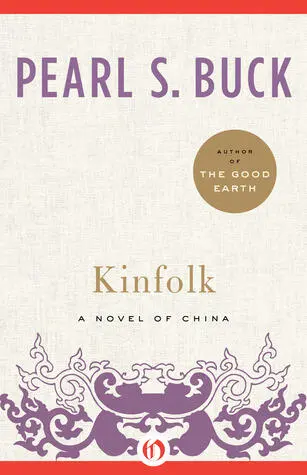
- Название:Kinfolk
- Автор:
- Издательство:Open Road Media
- Жанр:
- Год:2012
- ISBN:нет данных
- Рейтинг книги:4 / 5. Голосов: 1
-
Избранное:Добавить в избранное
- Отзывы:
-
Ваша оценка:
Kinfolk: краткое содержание, описание и аннотация
Предлагаем к чтению аннотацию, описание, краткое содержание или предисловие (зависит от того, что написал сам автор книги «Kinfolk»). Если вы не нашли необходимую информацию о книге — напишите в комментариях, мы постараемся отыскать её.
, a sharp dissection of the expatriate experience, Pearl S. Buck unfurls the story of a Chinese family living in New York. Dr. Liang is a comfortably well-off professor of Confucian philosophy, who spreads the notion of a pure and unchanging homeland. Under his influence, his four grown children decide to move to China, despite having spent their whole lives in America. As the siblings try in various ways to adjust to a new place and culture, they learn that the definition of home is far different from what they expected.
Kinfolk — читать онлайн бесплатно полную книгу (весь текст) целиком
Ниже представлен текст книги, разбитый по страницам. Система сохранения места последней прочитанной страницы, позволяет с удобством читать онлайн бесплатно книгу «Kinfolk», без необходимости каждый раз заново искать на чём Вы остановились. Поставьте закладку, и сможете в любой момент перейти на страницу, на которой закончили чтение.
Интервал:
Закладка:
She opened the door and was frightened by the utter silence. Where was Liang? “Liang!” she called. Then she saw the line of light under the door of his study and she ran to open it. He was sitting there with his brush upright in his hand, a happy smile upon his face, writing. He neither saw nor heard her. She shut the door without noise and went into the kitchen and began to cook his supper.
18
THE MONEY THAT HIS FATHER SENT James used to begin the search for his brother. How does a brother make such a search? James learned soon that the ways were devious. Young Wang went with him everywhere. Leaving his bride and the inn, both of which were now equally dear to him, he followed James, and yet led him. There were no lawful ways to seek justice for what had been done without law. But Young Wang, shrewd and accustomed to getting what he wanted and using money freely since there was hunger everywhere, heard from one hungry mouth or another, and so he was led to the palace gardens, not because of one dead lad or two, but because the old wells there had been used long ago for such things as death. Did not the concubines of emperors drown themselves in the imperial wells?
Why tell of how James and this faithful manservant crept about in the dark human caverns in a great and ancient city? These caverns were human sewers, not of the filth of bodies but of the filth of souls. Men who starve for food, who starve for opium, who gamble away wives and children, men who will kill rather than work — among these James came and went in silence, and Young Wang was always there and hidden under his coat was the big butcher knife which he had brought from the inn.
James lived during these days with Su and his young wife. They were kind to him, but they were afraid of him, and so he went out of the house before dawn and entered it after dark. James was the brother of Peter who had been killed, and it was dangerous to be a friend of James, even though he was the son of Liang Wen Hua.
There came a day at the end of sixty-three days when a vendor told of a gateman who told of a beggar who told of a band of beggars who paid him to allow them to sleep in the shelter of the empty pavilion in the imperial gardens. Among these beggars one was found who told of a night when he had heard voices muttering and whispering about in ancient well. Money — money! James spent all that his father had sent, but American money was true money and it changed for a fortune and this fortune James offered the beggar in exchange for his brother’s body.
He and Young Wang with him went to the imperial gardens on a dark night, and they waited until the moon was gone. The gate swung open and there was no gateman to see what went on, and the two of them went in and sat down under a vast old pine tree and waited half the night through. His thoughts were strange, and scarcely thoughts so much as unspoken feelings, perceptions, fears, and resolutions. From the vast gardens, miles within the high four-square walls of past empire, there came dying scents, no longer perfumes, from old trees and long grasses, from fungus upon wet bark and mosses creeping between stone and tile no longer trod by human feet. The silence was profound and yet there were sudden small gusts of wind and somewhere small bells upon a roof tinkled in a ghostly tremor. He felt life about him, dead and no longer human, and yet clinging to these haunts, strange and horrible it was to think that Peter’s young rebellion had been quenched here, where all the evils of history lad culminated and died! There was something so solemn about this possibility of his brother’s death that James could not weep. He sat crouched upon the deep bed of pine needles and leaning upon a mighty root of the pine tree that canopied above him he waited, resisting with his own inner forces the forces of the dead past that encircled him here. He was young and he was alive, and he would not allow himself to be overwhelmed. A stubbornness for life and his own life began to steady his heart and cool his mind. Peter had chosen the swift way, the gamble of violence against violence, and he lad lost. He, James, the elder, would take the slow plodding path and live, he hoped, to see his goal clear, if not to reach it.
Calmness came to him as the hours passed, and in all this time Young Wang had not spoken. Had the beggars betrayed them, after all? Young Wang had prudently held back half the money lest there be no body brought, and he promised that cash would be given after its delivery.
In the small cold hours of the night, when the owls hoot in the trees, he whispered harshly, “They are coming!” James rose and stood waiting and behind him he heard Young Wang take a stealthy step. They saw the glimmer of a paper lantern through a marble colonnade and the light fell dimly upon a cluster of human feet, staggering under a load. A half moment, and the beggars brought three water-soaked bodies and laid them under the ancient pine. It was too dark to see, but James heard the footsteps and he heard the beggars’ voices. “Take care — they are already rotting—”
Then he rose and took from his pocket the small flashlight he had brought with him from America, and this light he lit upon each dead lad, and Young Wang peered over his shoulder. The first he did not know, nor did Young Wang. The second one James did not know, but Young Wang cried softly, “It is the one in whose room he slept!” The third they both knew, for it was Peter.
Thus was certainty made sure. Now they moved quickly to do what they had earlier decided must be done. No one in the whole city would have dared to bury these bodies. Under the ancient pine the earth was soft and rich, and Young Wang had brought a spade hidden under his long Chinese coat. He began to dig swiftly and the earth came easily away. Soon he had made a bed, narrow but wide enough for three and deep enough for safety, and the bottom lay upon the stout old roots of the tree.
When it was ready the beggars helped to lift the lads, and James stooped to hold his brother’s head. They laid Peter in the middle and upon his right his friend and upon his left the unknown. Then Young Wang covered them, and when the earth was smooth he spread over them the deep pine needles which had fallen here year after year since the Old Empress herself died and was buried.
Young Wang paid the beggars and they crept away into the night. But James stood motionless under the tree and beside the new-made grave. All in him was feeling and not only that Peter was dead. For the first time he felt how small he himself was, how solitary, and how vast was the people which surrounded him, and how miserable. Had not Peter died, James could never have known of creatures who never saw light or comfort or safety. They swarmed beneath the surface of life, breeding and counterbreeding, and life pressed down upon them and held them under. In his own fashion Peter had known people more quickly than any of them and in passionate tragic fashion he had tried to help them. Yes, James told himself, in his young foolish way Peter had died to save their people.
Young Wang touched his arm. “Come,” he whispered. “This is not safe.”
And taking James’s hand with simple tenderness he led him away.
Long before dawn they were on their road again to the ancestral village. James could not quickly enough be quit of the city. Upon the surface of his mind as he rode along he thought of such things as what to tell his parents and what to tell Uncle Tao. To his parents he would simply say that he had found Peter dead and had given him burial. He might say that Peter had doubtless mixed himself with rebel students of some sort. To Uncle Tao he would only say that Peter would not come back again. It was hard to tell so half a truth but James weighed the matter well, and he knew that Uncle Tao would take fright if he knew the whole truth. Only to Mary and to Chen would he tell exactly what he had found. Beneath such surface thought he dwelled hour after hour upon the meaning of Peter’s death and how it had come about and why. It would take his lifetime to answer all he asked himself this day.
Читать дальшеИнтервал:
Закладка:
Похожие книги на «Kinfolk»
Представляем Вашему вниманию похожие книги на «Kinfolk» списком для выбора. Мы отобрали схожую по названию и смыслу литературу в надежде предоставить читателям больше вариантов отыскать новые, интересные, ещё непрочитанные произведения.



Обсуждение, отзывы о книге «Kinfolk» и просто собственные мнения читателей. Оставьте ваши комментарии, напишите, что Вы думаете о произведении, его смысле или главных героях. Укажите что конкретно понравилось, а что нет, и почему Вы так считаете.