Pearl Buck - Kinfolk
Здесь есть возможность читать онлайн «Pearl Buck - Kinfolk» весь текст электронной книги совершенно бесплатно (целиком полную версию без сокращений). В некоторых случаях можно слушать аудио, скачать через торрент в формате fb2 и присутствует краткое содержание. Год выпуска: 2012, Издательство: Open Road Media, Жанр: Классическая проза, на английском языке. Описание произведения, (предисловие) а так же отзывы посетителей доступны на портале библиотеки ЛибКат.
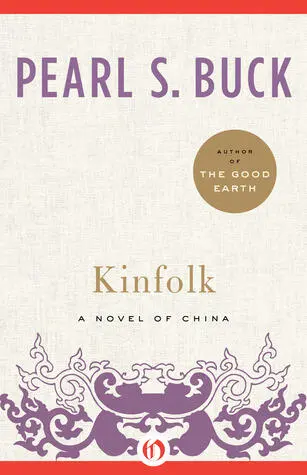
- Название:Kinfolk
- Автор:
- Издательство:Open Road Media
- Жанр:
- Год:2012
- ISBN:нет данных
- Рейтинг книги:4 / 5. Голосов: 1
-
Избранное:Добавить в избранное
- Отзывы:
-
Ваша оценка:
Kinfolk: краткое содержание, описание и аннотация
Предлагаем к чтению аннотацию, описание, краткое содержание или предисловие (зависит от того, что написал сам автор книги «Kinfolk»). Если вы не нашли необходимую информацию о книге — напишите в комментариях, мы постараемся отыскать её.
, a sharp dissection of the expatriate experience, Pearl S. Buck unfurls the story of a Chinese family living in New York. Dr. Liang is a comfortably well-off professor of Confucian philosophy, who spreads the notion of a pure and unchanging homeland. Under his influence, his four grown children decide to move to China, despite having spent their whole lives in America. As the siblings try in various ways to adjust to a new place and culture, they learn that the definition of home is far different from what they expected.
Kinfolk — читать онлайн бесплатно полную книгу (весь текст) целиком
Ниже представлен текст книги, разбитый по страницам. Система сохранения места последней прочитанной страницы, позволяет с удобством читать онлайн бесплатно книгу «Kinfolk», без необходимости каждый раз заново искать на чём Вы остановились. Поставьте закладку, и сможете в любой момент перейти на страницу, на которой закончили чтение.
Интервал:
Закладка:
The next day, after sleep so deep that he was ashamed of it, James began the clearing of the room Uncle Tao had given him. Plenty of help he had, for the place was full of children eager to see any new thing. These children he put to work so pleasantly that they thought it all a game, and thus were carried out old baskets of rubbish and broken furniture and rags and papers and all such stuff as gets itself together somehow in an old house where there are too many people. The room was large, having earlier been two rooms, and the floor was of beaten earth and the walls of brick. James bought lime from the village store and he mixed it with water and brushed the walls and sprinkled the floor. The children stood amazed to see him do everything himself, for they were not used to their elders so bestirring themselves. None had seen Uncle Tao so much as fetch his own pipe. When after this James bought boards and nails and put them into shelves they were even somewhat ashamed of him. Who had ever heard of a man who knew books turning carpenter? By now all the ancestral Liangs wondered at these new Liangs and their friend Chen who had dropped upon them from the skies. Behind their backs be sure there was much talk about them, but which of the three knew it? They went zealously about their business, full of faith that the ancestral village could become a place where all were clean and healthy and learned.
It was a healing thing they did, and the first to be healed were themselves. The spring came and went and summer spread over the land. Uncle Tao slept like a vast half-naked Buddha under the date tree, and at night the whole family moved their beds into the courts and slept there and the village street was lined with such beds. It was a gay season, for children ran about together and women gossiped and men sat late drinking hot water and tea and fanning themselves so that when they burst into sweat they were cooled. Day after day James rose early and let the sick come to him before the sun rose too hot. The fame of his healing spread over the countryside and people came to him from a long distance away and Chen helped him always, so that they worked together as closely as two hands.
Even so they could not tend all who came, and in the midst of summer James wrote letters to the three good nurses at the city hospital, Rose, Marie, and Kitty, and invited them to come and help. Of the three he hoped one might come. Yet he made his letter stern, for he did not want them deceived. “I can pay you a tenth of what you are getting now,” he wrote. “But you will have food and shelter. How then will you be paid? As I myself am paid, by healing those who have nowhere else to turn for healing.”
Out of the three two came, Rose and Kitty, for Marie had married herself to a young doctor, and he would not let her leave home and he would not come with her.
At the city hospital it was still considered folly indeed that James and Chen had buried themselves in a village and long tongues wagged and said, “They like to be lords over the poor. Who can believe that they live like the villagers?”
“We will tell you what we see,” Kitty promised.
“Why should they live like villagers if it is their wish to make the villagers themselves better?” Rose asked. The Liang house opened to these two also, and they lived together in one room next to Mary.
It must not be supposed that all things went well. Rose was a cheerful careless girl and she was happy enough. But Kitty was a third, and as the months passed she was sometimes peevish because she thought that Mary and Rose were a close two and did not take her into their friendship deeply enough, and then Chen saw with some alarm that she showed signs of leaning upon him for friendship. He went sheepishly to James one night and said that Kitty should be sent back to the city. “The country is a hard test, Jim,” he said. “Only those who are full of their own richness can bear it. Kitty is too thin of soul. She will make you trouble sooner or later.”
“I will keep her busy,” James said. He tended as he spoke the growth of a culture from some unknown disease which had come to him that day. He had never seen it before. It settled in the legs of men and women and children, and they swelled monstrously from the hips down, while above the hips they withered. Whether it was contagious, whether it caused death, these things he was trying to discover.
So Chen was obliged to speak out. “This Kitty is looking toward me, Jim,” he said with a wry face. “A woman who does not marry and cannot find her happiness in work — well, a man must be careful of such a woman.”
“Why do you not marry her?” James suggested. “Then I would not lose a helper.”
He heard Chen choke and he looked up to see his friend fiery red. “No, I thank you,” Chen said.
But James would do nothing quickly and so for a while he saw to it only that Kitty had much work to do. As for the redness of Chen’s face, he took it as a sign of his friend’s habitual delicacy where women were concerned.
At this time of his life it must be said that James was not acute to such matters. He was delving too deeply into the lives of many to dwell upon the life of any one. Thus he had begun to see that many of the illnesses which he had to heal were the fruit of other evil things. The food which the people ate was not good enough, and when he tried to teach mothers that measles could be a deadly disease here where it was new, and that one child could give it to another, they were too unlearned to understand such things, and never could they believe that cucumbers were dangerous if they were first soaked in pond water and that while it was good to boil the water they drank, it was useless if they rinsed their mouths with water that was not boiled. A cut, however slight, could not be rubbed with mud, he told them, and above all the cord that tied a child to its mother must not be cut with her kitchen scissors. The curse of this whole region was the “ten-day seizure,” as the people called it, of newborn infants, and the cause of it was in the use of rusty iron scissors.
“What shall we use then?” women asked him.
Then Rose told how in her village far to the west they had learned to use the inside leaf of a reed, and the nearer to the heart it was the more likely was the child to live. This seemed magic to the mothers, but James tried to make them see that it was still only what he had said, for the heart leaf of a reed was cleaner of invisible soil than was a pair of iron scissors used to cut anything else as well as the child’s cord. Still the truth was beyond their understanding and none could believe that what could not be seen could be a cause of death.
Uncle Tao himself declared all this was nonsense, and what Uncle Tao said had great force upon others. This was strange enough for it was not long before James saw that Uncle Tao was not well loved here in the Liang village nor by the people on the surrounding Liang lands. But he was admired and people told one another what he had said, and his half-bitter, half-joking words were carried from mouth to mouth. Yet he had a grasping hand and it could tighten secretly, and the people feared him because he was always on the side of the rulers, and their rulers from long habit the people hated. When the emperors were ended the people had rejoiced but now they were beginning to say that the emperors were better than their present rulers. There had been only one emperor, they said, and under him one viceroy in every province and under the viceroy one magistrate in every county, and though these all took their tribute, there was a limit to it. Now little rulers popped out everywhere and who knew where they came from? Each collected tax, and if a farmer refused to pay the tax a band of soldiers appeared with foreign guns. One soldier with one gun is too many anywhere.
Читать дальшеИнтервал:
Закладка:
Похожие книги на «Kinfolk»
Представляем Вашему вниманию похожие книги на «Kinfolk» списком для выбора. Мы отобрали схожую по названию и смыслу литературу в надежде предоставить читателям больше вариантов отыскать новые, интересные, ещё непрочитанные произведения.


Обсуждение, отзывы о книге «Kinfolk» и просто собственные мнения читателей. Оставьте ваши комментарии, напишите, что Вы думаете о произведении, его смысле или главных героях. Укажите что конкретно понравилось, а что нет, и почему Вы так считаете.