Michael Shaara - The Killer Angels
Здесь есть возможность читать онлайн «Michael Shaara - The Killer Angels» весь текст электронной книги совершенно бесплатно (целиком полную версию без сокращений). В некоторых случаях можно слушать аудио, скачать через торрент в формате fb2 и присутствует краткое содержание. Жанр: Историческая проза, на английском языке. Описание произведения, (предисловие) а так же отзывы посетителей доступны на портале библиотеки ЛибКат.
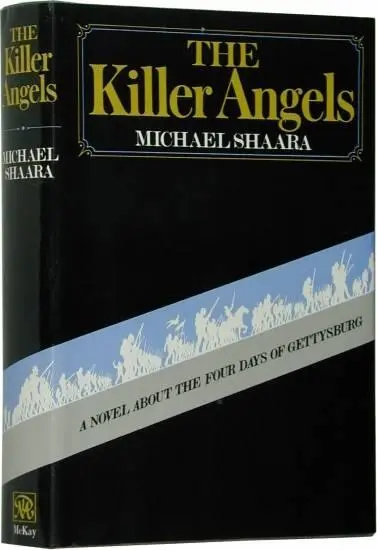
- Название:The Killer Angels
- Автор:
- Жанр:
- Год:неизвестен
- ISBN:нет данных
- Рейтинг книги:5 / 5. Голосов: 1
-
Избранное:Добавить в избранное
- Отзывы:
-
Ваша оценка:
The Killer Angels: краткое содержание, описание и аннотация
Предлагаем к чтению аннотацию, описание, краткое содержание или предисловие (зависит от того, что написал сам автор книги «The Killer Angels»). Если вы не нашли необходимую информацию о книге — напишите в комментариях, мы постараемся отыскать её.
Reading about the past is rarely so much fun as on these pages.
The Killer Angels — читать онлайн бесплатно полную книгу (весь текст) целиком
Ниже представлен текст книги, разбитый по страницам. Система сохранения места последней прочитанной страницы, позволяет с удобством читать онлайн бесплатно книгу «The Killer Angels», без необходимости каждый раз заново искать на чём Вы остановились. Поставьте закладку, и сможете в любой момент перейти на страницу, на которой закончили чтение.
Интервал:
Закладка:
They come from another age. The Age of Virginia. Must talk to Lee in the morning. He’s tired. Never saw him that tired. And sick. But he’ll listen. They all come from another age.
General Lee, I have three Union corps in front of me. They have the high ground, and they are dug in, and I am down to half my strength. He will smile and pat you on the arm and say: go do it. And perhaps we will do it.
He was approaching his own camp. He could hear laughter ahead, and there were many bright fires. He slowed, let Hero crop grass. He felt a great sense of shame.
A man should not think these things. But he could not control it. He rode into camp, back to work. He came in silently and sat back under a dark tree and Sorrel came to him with the figures. The figures were bad. Longstreet sat with his back against a tree and out in the open there was a party, sounds of joy: George Pickett was telling a story.
He was standing by a fire, wild-haired, gorgeous, stabbing with an invisible sword. He could tell a story. A circle of men was watching him; Longstreet could see the grins, flash of a dark bottle going round. Off in the dark there was a voice of a young man singing: clear Irish tenor.
Longstreet felt a long way off, a long, long way. Pickett finished with one mighty stab, then put both hands on his knees and crouched and howled with laughter, enjoying himself enormously. Longstreet wanted a drink. No. Not now. Later. In a few days. Perhaps a long bottle and a long sleep. He looked across firelight and saw one face in the ring not smiling, not even listening, one still face staring unseeing into the yellow blaze: Dick Garnett. The man Jackson had court-martialed for cowardice. Longstreet saw Lo Armistead nudge him, concerned, whisper in his ear.
Garnett smiled, shook his head, turned back to the fire.
Armistead went on watching him, worried. Longstreet bowed his head.
Saw the face of Robert Lee. Incredible eyes. An honest man, a simple man. Out of date. They all ride to glory, all the plumed knights. Saw the eyes of Sam Hood, accusing eyes. He’ll not go and die. Did not have the black look they get, the dying ones, around the eyes. But Barksdale is gone, and Semmes, and half of Hood’s Division…
”Evening, Pete.”
Longstreet squinted upward. Tall man holding a tall glass, youthful grin under steel-gray hair: Lo Armistead.
”How goes it, Pete?”
”Passing well, passing well.”
”Come on and join us, why don’t you? We liberated some Pennsylvania whisky; aint much left.”
Longstreet shook his head.
”Mind if I sit a spell?” Armistead squatted, perched on the ground sitting on his heels, resting the glass on his thigh. “What do you hear from Sam Hood?”
”May lose an arm.”
Armistead asked about the rest. Longstreet gave him the list. There was a moment of silence. Armistead took a drink, let the names register. After a moment he said, “Dick Garnett is sick. He can’t hardly walk.”
”I’ll get somebody to look after him.”
”Would you do that, Pete? He’ll have to take it, coming from you.”
”Sure.”
”Thing is, if there’s any action, he can’t stand to be out of it. But if you ordered him.”
Longstreet said nothing.
”Don’t suppose you could do that,” Armistead said wistfully.
Longstreet shook his head.
”I keep trying to tell him he don’t have to prove a thing, not to us,” Armistead brooded. “Well, what the hell.” He sipped from the glass. “A pleasant brew. The Dutchmen make good whisky. Oh. Beg your pardon.”
Longstreet looked out into the firelight. He recognized Fremantle, popeyed and grinning, rising awkwardly to his feet, tin cup raised for a toast. Longstreet could not hear.
Armistead said, “I been talking to that Englishman. He isn’t too bright, is he?”
Longstreet smiled. He thought: devious Lee.
Armistead said, “We put it to him, how come the limeys didn’t come help us. In their own interest and all. Hell, perfectly obvious they ought to help. You know what he said? He said the problem was slavery. Now what do you think of that?”
Longstreet shook his head. That was another thing he did not think about. Armistead said disgustedly, “They think we’re fighting to keep the slaves. He says that’s what most of Europe thinks the war is all about. Now, what we supposed to do about that?”
Longstreet said nothing. The war was about slavery, all right. That was not why Longstreet fought but that was what the war was about, and there was no point in talking about it, never had been.
Armistead said, “Ole Fremantle said one thing that was interestin’. He said, whole time he’s been in this country, he never heard the word ‘slave.’ He said we always call them ‘servants.’ Now you know, that’s true. I never thought of it before, but it’s true.”
Longstreet remembered a speech: In a land where all slaves are servants, all servants are slaves, and thus ends democracy. A good line. But it didn’t pay to think on it.
Armistead was saying, “That Fremantle is kind of funny. He said that we Southerners were the most polite people he’d ever met, but then he noticed we all of us carry guns all the time, wherever we went, and he figured that maybe that was why. Hee.” Armistead chuckled. “But we don’t really need the limeys, do we, Pete, you think? Not so long as we have old Bobby Lee to lead the way.”
Pickett’s party was quieting. The faces were turning to the moon. It was a moment before Longstreet, slightly deaf, realized they had turned to the sound of the tenor singing.
An Irish song. He listened.
… oh hast thou forgotten how soon we must sever?
Oh has thou forgotten how soon we must part?
It may be for years, it may be forever…
”That boy can sing,” Longstreet said. “That’s ‘Kathleen Mavourneen,’ am I right?” He turned to Armistead.
The handsome face had gone all to softness. Longstreet thought he was crying, just for a moment, but there were no tears, only the look of pain. Armistead was gazing toward the sound of the voice and then his eyes shifted suddenly and he looked straight down. He knelt there unmoving while the whole camp grew slowly still and in the dark silence the voice sang the next verse, softer, with great feeling, with great beauty, very far off to Longstreet’s dull ear, far off and strange, from another time, an older softer time, and Longstreet could see tears on faces around the fire, and men beginning to drop their eyes, and he dropped his own, feeling a sudden spasm of irrational love. Then the voice was done.
Armistead looked up. He looked at Longstreet and then quickly away. Out in the glade they were sitting motionless, and then Pickett got up suddenly and stalked, face wet with tears, rubbing his cheeks, grumbling, then he said stiffly, “Good cheer, boys, good cheer tonight.” The faces looked up at him. Pickett moved to the rail fence and sat there and said, “Let me tell you the story of old Tangent, which is Dick Ewell’s horse, which as God is my final judge is not only the slowest and orneriest piece of horseflesh in all this here army, but possibly also the slowest horse in this hemisphere, or even in the history of all slow horses.”
The faces began to lighten. A bottle began to move.
Pickett sat on the rail fence like old Baldy Ewell riding the horse. The laughter began again, and in the background they played something fast and light and the tenor did not sing. In a few moments Pickett was doing a hornpipe with Fremantle, and the momentary sadness had passed like a small mist. Longstreet wanted to move over there and sit down. But he did not belong there.
Armistead said, “You hear anything of Win Hancock?”
”Ran in to him today.” Longstreet gestured. “He’s over that way, mile or so.”
Читать дальшеИнтервал:
Закладка:
Похожие книги на «The Killer Angels»
Представляем Вашему вниманию похожие книги на «The Killer Angels» списком для выбора. Мы отобрали схожую по названию и смыслу литературу в надежде предоставить читателям больше вариантов отыскать новые, интересные, ещё непрочитанные произведения.




Обсуждение, отзывы о книге «The Killer Angels» и просто собственные мнения читателей. Оставьте ваши комментарии, напишите, что Вы думаете о произведении, его смысле или главных героях. Укажите что конкретно понравилось, а что нет, и почему Вы так считаете.