Michael Shaara - The Killer Angels
Здесь есть возможность читать онлайн «Michael Shaara - The Killer Angels» весь текст электронной книги совершенно бесплатно (целиком полную версию без сокращений). В некоторых случаях можно слушать аудио, скачать через торрент в формате fb2 и присутствует краткое содержание. Жанр: Историческая проза, на английском языке. Описание произведения, (предисловие) а так же отзывы посетителей доступны на портале библиотеки ЛибКат.
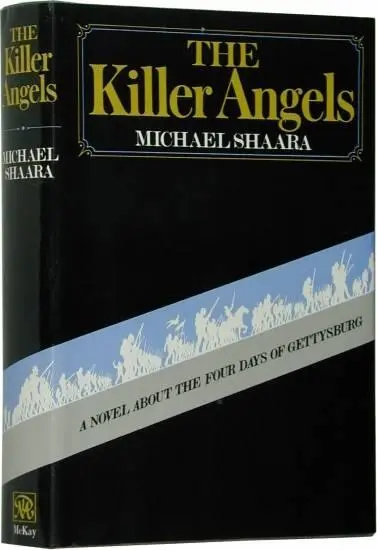
- Название:The Killer Angels
- Автор:
- Жанр:
- Год:неизвестен
- ISBN:нет данных
- Рейтинг книги:5 / 5. Голосов: 1
-
Избранное:Добавить в избранное
- Отзывы:
-
Ваша оценка:
The Killer Angels: краткое содержание, описание и аннотация
Предлагаем к чтению аннотацию, описание, краткое содержание или предисловие (зависит от того, что написал сам автор книги «The Killer Angels»). Если вы не нашли необходимую информацию о книге — напишите в комментариях, мы постараемся отыскать её.
Reading about the past is rarely so much fun as on these pages.
The Killer Angels — читать онлайн бесплатно полную книгу (весь текст) целиком
Ниже представлен текст книги, разбитый по страницам. Система сохранения места последней прочитанной страницы, позволяет с удобством читать онлайн бесплатно книгу «The Killer Angels», без необходимости каждый раз заново искать на чём Вы остановились. Поставьте закладку, и сможете в любой момент перейти на страницу, на которой закончили чтение.
Интервал:
Закладка:
There was no place for Longstreet to sit except on the edge of the table, and so he sat there. Taylor pushed by, begging Longstreet’s pardon, needing a signature on a letter to someone.
Lee raised a hand. “We’ll rest for a moment.”
Longstreet saw the old man sag, breathe deeply, his mouth open. Lines of pain around the eyes. He put the gray head down for a moment, then looked up quickly at Longstreet, shook his head slightly.
”A bit tired.”
He never said anything like that. Lee never complained.
Longstreet said, “Can I get you something?”
Lee shook his head. Aides were talking loudly about artillery, a message to Richmond. Longstreet thought: no rest here. Lee said, reading his mind, “I’ll clear them out in a minute or two.” He took another deep breath, almost a gasp, put a hand to his chest, shook his head with regret.
His face was gray and still. He looked up with a vagueness in his eyes.
”It was very close this afternoon.”
”Sir?”
”They almost broke. I could feel them breaking. I thought for a moment… I saw our flags go up the hill… I almost thought…”
Longstreet said, “It wasn’t that close.” But Lee’s eyes were gazing by him at a vision of victory. Longstreet said nothing. He rubbed his mouth. Lee eyes strange: so dark and soft. Longstreet could say nothing. In the presence of the Commander the right words would not come.
Lee said, “The attacks were not coordinated. I don’t know why. We shall see. But we almost did it, this day. I could see… an open road to Washington.” He closed his eyes, rubbed them. Longstreet felt an extraordinary confusion. He had a moment without confidence, windblown and blasted, vacant as an exploded shell. There was a grandness in Lee that shadowed him, silenced him. You could not preach caution here, not to that face. And then the moment passed and a small rage bloomed, not at Lee but at Longstreet himself. He started to try to speak, but Lee said, “It was reported that General Barksdale was killed.”
”Yes, sir.”
”And General Semmes.”
”Sir.”
”And how is it with General Hood?”
”I think he’ll live. I’ve just come from him.”
”Praise God. We could not spare General Hood.” He was gazing again into nowhere. After a moment he said, almost plaintively, “I’ve lost Dorsey Pender.”
”Yes,” Longstreet said. One by one: down the dark road. Don’t think on that now.
Lee said, “He would have made a Corps commander, I think.” The old man sat looking half asleep.
Longstreet said stiffly, “Sir, there are three Union corps dug in on the high ground in front of me.”
Lee nodded. After a moment he said, “So very close. I believe one more push…”
A burst of shouting outside. The band had come closer.
Longstreet said, “Today I lost almost half my strength.”
And felt like a traitor for saying it, the truth, the granite truth, felt a smallness, a rage. Lee nodded but did not seem to hear. Longstreet pushed on.
”The way to the right is still open, sir.”
Lee looked up slowly, focused, slowly smiled, put out a hand, touched Longstreet’s arm.
”Let me think. General.”
”We have enough artillery for one more good fight. One more.”
”I know.” Lee took a breath, sat up. “Let me think on it. But, General, I am very glad to see you well.”
Taylor pushed in again. Longstreet reached out, gripped the young man in a metal clasp.
”General Lee needs his rest. I want you to keep some of these people away.”
Taylor drew back in frosty reproach, as if Longstreet’s hand smelted badly of fish. Longstreet felt the coming of a serious rage. But Lee smiled, reached out for the papers in Taylor’s hand.
”A few more moments. General. Then I’ll send them off. Now, what have we here?”
Longstreet backed off. The white head bent down over the papers. Longstreet stood there. All his life he had taken orders and he knew the necessity for command and the old man in front of him was the finest commander he had ever known. Longstreet looked around at the faces. The gentlemen were chatting, telling lively funny stories. Out in the smoky night a band was mounting another song. Too many people, too much noise. He backed out the door. Come back later. In the night, later, when the old man is alone, we will have to talk.
He moved out into the crowd, head down, mounted his horse. Someone pulled his arm. He glared: Marshall, red-faced, waving papers, cheeks hot with rage.
”General Longstreet! Sir. Will you talk to him?”
”Who? What about?”
”I’ve prepared court-martial papers for General Stuart. General Lee will not sign them.”
Longstreet grimaced. Of course not. But not my problem. Marshall held the reins. He was standing close by and the men nearby were backed off in deference and had not heard him. Longstreet said, “When did he finally get back?”
”This evening.” Marshall, with effort, was keeping his voice down. “He was joyriding. For the fun of it. He captured about a hundred enemy wagons. And left us blind in enemy country. Criminal, absolutely criminal. Several of us have agreed to ask for court-martial, but General Lee says he will not discuss it at this time.”
Longstreet shrugged.
”General. If there is not some discipline in this army… there are good men dead, sir.” Marshall struggled.
Longstreet saw a man closing in. Fat man with a full beard. Familiar face: a Richmond reporter. Yes, a theorist on war.
A man with a silvery vest and many opinions. He came, notebook in hand. Longstreet itched to move, but Marshall held.
”I’d like your opinion, sir. You are the second-ranking officer in this army. Do you believe that these court-martial papers should be signed?”
Longstreet paused. Men were closing in, yelling more congratulations. Longstreet nodded once, deliberately.
”I do,” he said.
”Will you talk to General Lee?”
”I will.” Longstreet gathered the reins. Men were close enough now to hear, were staring up at him. “But you know, Marshall, it won’t do any good.”
”We can try, sir.”
”Right.” Longstreet touched his cap. “We can at least do that.”
He spurred toward the cool dark. They opened to let him pass. Hats were off; they were cheering. He rode head down toward the silent road. He was amazed at the air of victory.
He thought: got so that whenever they fight they assume there’s victory that night. Face of Goree. They can’t blame General Lee, not no more. But there was no victory today.
So very close, the old man said. And yet it was not a loss. And Longstreet knew that Lee would attack in the morning.
He would never quit the field. Not with the Union Army holding the field. Three Union corps on the hills above. Lee will attack.
Longstreet stopped, in darkness, looked back toward the light. A voice was calling. Longstreet turned to ride on, and then the voice registered and he looked back: a grinning Fremantle, hat held high like the cloth on the arm of a scarecrow, bony, ridiculous. He looked like an illustration Longstreet had once seen of Ichabod Crane.
”Good evening, sir! My compliments, sir! Marvelous evening, what? Extraordinary! May I say, sir, that I observed your charge this afternoon, and I was inspired, sir, inspired. Strordnry, sir, a general officer at the front of the line. One’s heart leaps. One’s hat is off to you, sir.” He executed a vast swirling bow, nearly falling from the horse, arose grinning, mouth a half moon of cheery teeth.
Longstreet smiled.
”Will you take my hand, sir, in honor of your great victory?”
Longstreet took the limp palm, knowing the effort it cost the Englishman, who thought handshaking unnatural. “Victory?” Longstreet said.
Читать дальшеИнтервал:
Закладка:
Похожие книги на «The Killer Angels»
Представляем Вашему вниманию похожие книги на «The Killer Angels» списком для выбора. Мы отобрали схожую по названию и смыслу литературу в надежде предоставить читателям больше вариантов отыскать новые, интересные, ещё непрочитанные произведения.


Обсуждение, отзывы о книге «The Killer Angels» и просто собственные мнения читателей. Оставьте ваши комментарии, напишите, что Вы думаете о произведении, его смысле или главных героях. Укажите что конкретно понравилось, а что нет, и почему Вы так считаете.