Michael Shaara - The Killer Angels
Здесь есть возможность читать онлайн «Michael Shaara - The Killer Angels» весь текст электронной книги совершенно бесплатно (целиком полную версию без сокращений). В некоторых случаях можно слушать аудио, скачать через торрент в формате fb2 и присутствует краткое содержание. Жанр: Историческая проза, на английском языке. Описание произведения, (предисловие) а так же отзывы посетителей доступны на портале библиотеки ЛибКат.
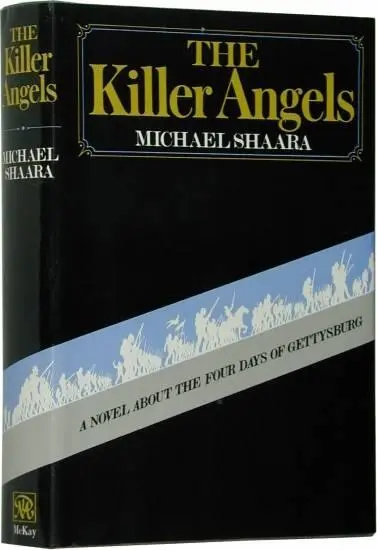
- Название:The Killer Angels
- Автор:
- Жанр:
- Год:неизвестен
- ISBN:нет данных
- Рейтинг книги:5 / 5. Голосов: 1
-
Избранное:Добавить в избранное
- Отзывы:
-
Ваша оценка:
The Killer Angels: краткое содержание, описание и аннотация
Предлагаем к чтению аннотацию, описание, краткое содержание или предисловие (зависит от того, что написал сам автор книги «The Killer Angels»). Если вы не нашли необходимую информацию о книге — напишите в комментариях, мы постараемся отыскать её.
Reading about the past is rarely so much fun as on these pages.
The Killer Angels — читать онлайн бесплатно полную книгу (весь текст) целиком
Ниже представлен текст книги, разбитый по страницам. Система сохранения места последней прочитанной страницы, позволяет с удобством читать онлайн бесплатно книгу «The Killer Angels», без необходимости каждый раз заново искать на чём Вы остановились. Поставьте закладку, и сможете в любой момент перейти на страницу, на которой закончили чтение.
Интервал:
Закладка:
”Yes, sir. But, well, it’s not easy. The men tend to suppress the truth. I hear, for example, that Harry Heth’s Division was badly hurt yesterday, but his officers did not report all the losses to General Lee because they did not want General Heth to get into trouble.”
”I want the truth. However black. But hard facts. Soon as you can. I rely on you. Also, I want an account of artillery available, rounds remaining, type of rounds, et cetera. Got that? Get out a note to Alexander.”
Up the road at a gallop: a handsome horseman, waving a plumed hat in the night. He reined up grandly, waved the hat in one long slow swop, bowed halfway down off the horse-a broad sweeping cavalier’s gesture. Fairfax, another of Longstreet’s aides.
”General Pickett’s compliments, sir. He wishes to announce his presence upon the field.”
Longstreet stared, grunted, gave an involuntary chuckle.
”Oh grand,” Longstreet said. “That’s just grand.” He turned to Sorrel. “Isn’t that grand, Major? Now, let the battle commence.” He grimaced, grunted. “Tell General Pickett I’m glad to have him here. At last.”
Fairfax had a wide mouth: teeth gleamed in moonlight.
”General Pickett is gravely concerned, sir. He wishes to inquire if there are any Yankees left. He says to tell you that he personally is bored and his men are very lonely.”
Longstreet shook his head. Fairfax went on cheerily: “General Pickett reported earlier today to General Lee, while General Longstreet was engaged in the entertainment on the right flank, but General Lee said that General Pickett’s men would not be necessary in the day’s action.
General Pickett instructs me to inform you that his is a sensitive nature and that his feelings are wounded and that he and his Division of pale Virginians awaits you in yon field, hoping you will come tuck them in for the night and console them.”
”Well,” Longstreet mused. “Fairfax, are you drunk?”
”No, sir. I am quoting General Pickett’s exact words, sir.
With fine accuracy, sir.”
”Well.” Longstreet smiled once slightly, shrugged. “You can tell General Pickett I’ll be along directly.”
Fairfax saluted, bowed, departed. Longstreet rode on into the dark. Pickett’s Division: five thousand fresh men. Damn fine men. It was like being handed a bright new shiny gun.
He felt stronger. Now talk to Lee. He spurred the horse and began to canter toward the lights on the Cashtown Road.
Headquarters could be seen from a long way off, like a small city at night. The glow of it rose above the trees and shone reflected in the haze of the sky. He could begin to hear singing. Different bands sang different songs: a melody of wind. He began to pass clusters of men laughing off in the dark. They did not recognize him. He smelted whisky, tobacco, roasting meat. He came out into the open just below the Seminary and he could see Headquarters field filled with smoke and light, hundreds of men, dozens of fires. He passed a circle of men watching a tall thin black boy dressed in a flowing red dress, dancing, kicking heels.
There was a sutler’s store, a white wagon, a man selling a strange elixir with the high blessed chant of a preacher. He began to see civilians: important people in very good clothes, some sleek carriages, many slaves. People come up from home to see how the army was doing, to deliver a package to a son, a brother. He rode out into the light and heads began to turn and fix on him and he felt the awkward flush come over his face as eyes looked at him and knew him and fingers began to point. He rode looking straight ahead, a crowd beginning to trail out after him like the tail of a comet. A reporter yelled a question. One of the foreigners, the one with the silver helmet like an ornate chamber pot, waved an intoxicated greeting. Longstreet rode on toward the little house across the road. Music and laughter and motion everywhere: a celebration. All the faces were happy. Teeth glittered through black beards. He saw pearl stickpins, silky, satiny clothing. And there against a fence: Jeb Stuart.
Longstreet pulled up.
The cavalier, a beautiful man, was lounging against a fence, a white rail fence, in a circle of light, a circle of admirers. Reporters were taking notes. Stuart was dressed in soft gray with butternut braid along the arms and around the collar and lace at his throat, and the feathered hat was swept back to hang happily, boyishly from the back of the head, and curls peeked out across the wide handsome forehead. Full-bearded, to hide a weak chin, but a lovely boy, carefree, mud-spattered, obviously tired, languid, cheery, confident. He looked up at Longstreet, waved a languid hello. He gave the impression of having been up for days, in the saddle for days, and not minding it. Longstreet jerked a nod, unsmiling. He thought: we have small use for you now. But you are Lee’s problem. Longstreet slowed, not wanting to speak to Stuart. The crowd was beginning to press in around his horse, shouting congratulations. Longstreet looked from face to breathless face, amazed. Congratulations? For what? The crowd had moved in between him and Stuart. He pressed stubbornly forward toward Lee’s cottage. It was impossible to answer questions: too much noise. He wished he had not come. Ride back later, when it’s quiet. But too late to go now. One of Lee’s people, Venable, had taken the reins of his horse. Someone was yelling in an eerie wail, “Way for General Longstreet, way for the General!” And there across the crowd he saw an open space by the door of the little house, and there in the light was Lee.
Quiet spread out from Lee. The old man stepped out into the light, came forward. Stuart swung to look. Longstreet saw men beginning to take off their hats in the old man’s presence. Lee came up to Longstreet’s horse, put out his hand, said something very soft. Longstreet took the hand.
There was no strength in it. Lee was saying that he was glad to see him well, and there was that extraordinary flame in the dark eyes, concern of a loving father, that flicked all Longstreet’s defenses aside and penetrated to the lonely man within like a bright hot spear, and Longstreet nodded, grumbled, and got down from the horse. Lee said accusingly that he had heard that Longstreet had been in the front line again and that he had promised not to do that, and Longstreet, flustered by too many people staring at him, too many strangers, said, well, he’d just come by for orders.
Lee said watchfully, smiling, “General Stuart is back.”
The crowd opened for Jeb. He came forward with extended hand. Longstreet took it, mumbled, could not meet the younger eyes. Jeb was grinning a brilliant grin; hands were patting him on the back. Longstreet felt mulish.
Damn fool. But he said nothing. Lee said that General Stuart ought to know how worried they had all been about him, and Stuart grinned like a proud child, but there was something wary in his eyes, looking at Lee, some small bit of question, and Longstreet wondered what the old man had said. Stuart said something about having seen a lot of Yankee countryside lately, and it was getting kind of dull, and slowly the noise began to grow up around them again.
They moved toward the house, Lee taking Longstreet by the arm. They moved in a lane through hundreds of people, like Moses at the parting of the Sea. Somebody began a cheer, a formal cheer, a university cheer. A band struck up, oh Lord, “Bonny Blue Flag,” again. Hands were touching Longstreet. He went up into the small house and into a small room, the roof closing in over him like the lid on a jar, but even here it was jammed with people, a tiny room no bigger than your kitchen, and all Lee’s officers and aides, working, rushing in and out, and even here some people from Richmond. A place cleared for Lee and he sat down in a rocking chair and Longstreet saw him in the light and saw that he was tired. Lee rested a moment, closing his eyes.
Читать дальшеИнтервал:
Закладка:
Похожие книги на «The Killer Angels»
Представляем Вашему вниманию похожие книги на «The Killer Angels» списком для выбора. Мы отобрали схожую по названию и смыслу литературу в надежде предоставить читателям больше вариантов отыскать новые, интересные, ещё непрочитанные произведения.




Обсуждение, отзывы о книге «The Killer Angels» и просто собственные мнения читателей. Оставьте ваши комментарии, напишите, что Вы думаете о произведении, его смысле или главных героях. Укажите что конкретно понравилось, а что нет, и почему Вы так считаете.