Michael Shaara - The Killer Angels
Здесь есть возможность читать онлайн «Michael Shaara - The Killer Angels» весь текст электронной книги совершенно бесплатно (целиком полную версию без сокращений). В некоторых случаях можно слушать аудио, скачать через торрент в формате fb2 и присутствует краткое содержание. Жанр: Историческая проза, на английском языке. Описание произведения, (предисловие) а так же отзывы посетителей доступны на портале библиотеки ЛибКат.
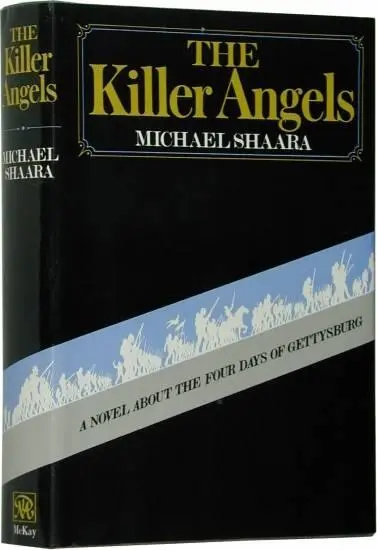
- Название:The Killer Angels
- Автор:
- Жанр:
- Год:неизвестен
- ISBN:нет данных
- Рейтинг книги:5 / 5. Голосов: 1
-
Избранное:Добавить в избранное
- Отзывы:
-
Ваша оценка:
The Killer Angels: краткое содержание, описание и аннотация
Предлагаем к чтению аннотацию, описание, краткое содержание или предисловие (зависит от того, что написал сам автор книги «The Killer Angels»). Если вы не нашли необходимую информацию о книге — напишите в комментариях, мы постараемся отыскать её.
Reading about the past is rarely so much fun as on these pages.
The Killer Angels — читать онлайн бесплатно полную книгу (весь текст) целиком
Ниже представлен текст книги, разбитый по страницам. Система сохранения места последней прочитанной страницы, позволяет с удобством читать онлайн бесплатно книгу «The Killer Angels», без необходимости каждый раз заново искать на чём Вы остановились. Поставьте закладку, и сможете в любой момент перейти на страницу, на которой закончили чтение.
Интервал:
Закладка:
”Most of ‘em.”
”Took the rocks. Really did.”
”Yes,” Longstreet lied.
Hood’s eyes blinked slowly, blearily. He put the good hand up to shade his eyes. “Devil’s Den. Good name for it.”
”Yep.”
”Worst ground I ever saw, you know that?” Hood laid the back of his hand across his eyes. His voice trembled. “Got to give my boys credit.”
Longstreet said to Cullen, “Can you save the arm?”
”We’re trying. But if we do, it won’t be much use to him.”
Hood said, “Casualties? Was casualties?”
”Don’t know yet,” Longstreet said. And then: “Not bad.” Another lie.
Cullen said gloomily, plaintively, “He ought to go to sleep. Now don’t fight it, General. Let it work. You just drift right on off.”
Longstreet said softly, “You go to sleep now, Sam. Tell you all about it tomorrow.”
”Shame not to see it.” Hood took the hand away. His eyes were dreaming, closing like small doors over a dim light. “Should have gone to the right.” He looked hazily at the hand. “You fellas try to save that now, you hear?”
”Yes, sir. General. Now why don’t you…?”
”Sure will miss it.” Hood’s eyes closed again; his face began smoothing toward sleep. Longstreet thought: he won’t die. Not like Jackson. There was a blackness around Jackson’s eyes. Longstreet reached down, touched Hood on the shoulder, then turned and went out into the moonlight.
Sorrel was there, with the silent staff. Longstreet mounted, rising up into the moonlight, looking out across the pale tents at the small fires, the black silence. He heard a boy crying, pitiful childish sobs, a deeper voice beyond soothing. Longstreet shook his head to clear the sound, closed his eyes, saw Barksdale go streaming to his death against a flaming fence in the brilliant afternoon, hair blazing out behind him like white fire. Longstreet rode up the ridge toward the darker ground under the trees.
Barksdale lies under a sheet. They have not covered his face; there is a flag over him. Semmes is dead. How many others? Longstreet cleared the brain, blew away bloody images, the brilliant fence in the bright gleaming air of the afternoon, tried to catalogue the dead. Must have figures.
But he was not thinking clearly. There was a rage in his brain, a bloody cloudy area like mud stirred in a pool. He was like a fighter who has been down once and is up again, hurt and in rage, looking to return the blow, looking for the opening. But it was a silent rage, a crafty rage; he was learning war. He rode purposefully, slowly off into the dark feeling the swelling inside his chest like an unexploded bomb and in the back of his mind a vision of that gray rocky hill(all spiked with guns, massed with blue troops at the top, and he knew as certainly as he had ever known anything as a soldier that the hill could not be taken, not any more, and a cold, metal, emotionless voice told him that coldly, calmly, speaking into his ear as if he had a companion with him utterly untouched by the rage, the war, a machine inside wholly unhurt, a metal mind that did not feel at all.
”Sir?”
Longstreet swiveled in the saddle: Sorrel. The man said warily, “Captain Goree is here, sir. Ah, you sent for him.”
Longstreet looked, saw the skinny Texan, gestured.
Sorrel backed off. Longstreet said, “T. J. Want you to get out to the right and scout the position. No more damn fool counter-marches in the morning. Take most of the night but get it clear, get it clear. I’ve got Hood’s Division posted on our right flank. Or what’s left of it. I’ve put Law in command. You need any help, you get it from Law, all right?”
The Texan, a silent man, nodded but did not move.
Longstreet said, “What’s the matter?”
”They’re blaming us,” Goree said. His voice was squeaky, like a dry wagon wheel. He radiated anger.
Longstreet stared.
”What?”
”I been talking to Hood’s officers. Do you know they blame us? They blame you. For today.”
Longstreet could not see the bony face clearly, in the dark, but the voice was tight and very high, and Longstreet thought: he could be a dangerous man, out of control.
Goree said, “You may hear of it. General. I had to hit this fella. They all said the attack was your fault and if General Lee knowed he wouldn’t have ordered it and I just couldn’t just stand there and I couldn’t say right out what I felt, so I had to hit this one fella. Pretty hard. Had to do it. Ain’ goin’ to apologize neither. No time. But. Thought you ought to know.”
”Is he dead?”
”I don’t think so.”
”Well, that’s good.” Longstreet meditated. “Well, don’t worry on it. Probably won’t hear another thing if you didn’t kill him. Probably forgotten in the morning. One thing: I want no duels. No silly damn duels.”
”Yes, sir. Thing is, if anything bad happens now, they all blame it on you. I seen it comin’. They can’t blame General Lee. Not no more. So they all take it out on you. You got to watch yourself, General.”
”Well,” Longstreet said. “Let it go.”
”Yes, sir. But it aint easy. After I saw you take all morning trying to get General Lee to move to the right.”
”Let it go. T. J. We’ll talk on it after the fight.”
Goree moved out. There goes a damn good man.
Longstreet felt the warmth of unexpected gratitude. He swung the black horse toward Lee’s headquarters back on the road to Cashtown. Time now to talk. Good long talk.
Watch the anger. Careful. But it is true. The men shied from blaming Lee. The Old Man is becoming untouchable. Now more than anything else he needs the truth. But… well, it’s not his fault, not the Old Man. Longstreet jerked the horse, almost ran into Sorrel. They came out into a patch of bright moonlight. Longstreet saw: the man was hurt.
”Major,” Longstreet said harshly. “How are you?”
”Sir? Oh, I’m fine, sir. Juss minor problem.”
”That’s a godawful piece of horse you’ve got there.”
”Yes, sir. Lost the other one, sir. They shot it out from under me. It lost both legs. I was with Dealing’s Battery.
Hot time, sir.” Sorrel bobbed his head apologetically.
Longstreet pointed. “What’s the trouble with the arm?”
Sorrel shrugged, embarrassed. “Nothing much, sir. Bit painful, can’t move it. Shrapnel, sir. Hardly broke the skin. Ah, Osmun Latrobe got hit too.”
”How bad?”
”Just got knocked off the horse, I believe. This fighting is very hard on the horses, sir. I was hoping we could get a new supply up here, but these Yankee horses are just farm stock-too big, too slow. Man would look ridiculous on a plow horse.”
”Well,” Longstreet grumbled vaguely. “Take care of yourself. Major. You aint the most likable man I ever met, but you sure are useful.”
Sorrel bowed. “I appreciate your sentiments, sir. The General is a man of truth.”
”Have you got the casualty figures yet?”
”No, sir. I regret to say. Just preliminary reports. Indications are that losses will exceed one third.”
Longstreet jerked his head, acknowledging.
Sorrel said carefully, “Possibly more. The figures could go…”
”Don’t play it down,” Longstreet said.
”No, sir. I think that casualties were much worse in Hood’s Division. Won’t have an exact count for some time. But… it appears that the Yankees put up a fight. My guess is Hood’s losses will approach fifty percent.”
Longstreet took a deep breath, turned away. Eight thousand men? Down in two hours. His mind flicked on.
Not enough left now for a major assault. No way in the world. Lee will see. Now: the facts.
”I need a hard count. Major. As quickly as possible.”
Читать дальшеИнтервал:
Закладка:
Похожие книги на «The Killer Angels»
Представляем Вашему вниманию похожие книги на «The Killer Angels» списком для выбора. Мы отобрали схожую по названию и смыслу литературу в надежде предоставить читателям больше вариантов отыскать новые, интересные, ещё непрочитанные произведения.




Обсуждение, отзывы о книге «The Killer Angels» и просто собственные мнения читателей. Оставьте ваши комментарии, напишите, что Вы думаете о произведении, его смысле или главных героях. Укажите что конкретно понравилось, а что нет, и почему Вы так считаете.