Ken Follett - World Without End
Здесь есть возможность читать онлайн «Ken Follett - World Without End» весь текст электронной книги совершенно бесплатно (целиком полную версию без сокращений). В некоторых случаях можно слушать аудио, скачать через торрент в формате fb2 и присутствует краткое содержание. Жанр: Историческая проза, на английском языке. Описание произведения, (предисловие) а так же отзывы посетителей доступны на портале библиотеки ЛибКат.
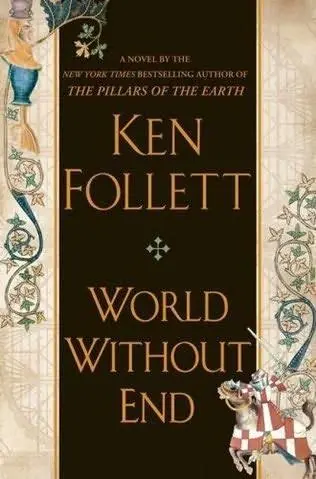
- Название:World Without End
- Автор:
- Жанр:
- Год:неизвестен
- ISBN:нет данных
- Рейтинг книги:5 / 5. Голосов: 1
-
Избранное:Добавить в избранное
- Отзывы:
-
Ваша оценка:
World Without End: краткое содержание, описание и аннотация
Предлагаем к чтению аннотацию, описание, краткое содержание или предисловие (зависит от того, что написал сам автор книги «World Without End»). Если вы не нашли необходимую информацию о книге — напишите в комментариях, мы постараемся отыскать её.
Ken Follett has 90 million readers worldwide. The Pillars of the Earth is his bestselling book of all time. Now, eighteen years after the publication of The Pillars of the Earth, Ken Follett has written the most-anticipated sequel of the year, World Without End.
In 1989 Ken Follett astonished the literary world with The Pillars of the Earth, a sweeping epic novel set in twelfth-century England centered on the building of a cathedral and many of the hundreds of lives it affected. Critics were overwhelmed-"it will hold you, fascinate you, surround you" (Chicago Tribune)-and readers everywhere hoped for a sequel.
World Without End takes place in the same town of Kingsbridge, two centuries after the townspeople finished building the exquisite Gothic cathedral that was at the heart of The Pillars of the Earth. The cathedral and the priory are again at the center of a web of love and hate, greed and pride, ambition and revenge, but this sequel stands on its own. This time the men and women of an extraordinary cast of characters find themselves at a crossroad of new ideas-about medicine, commerce, architecture, and justice. In a world where proponents of the old ways fiercely battle those with progressive minds, the intrigue and tension quickly reach a boiling point against the devastating backdrop of the greatest natural disaster ever to strike the human race-the Black Death.
Three years in the writing, and nearly eighteen years since its predecessor, World Without End breathes new life into the epic historical novel and once again shows that Ken Follett is a masterful author writing at the top of his craft.
World Without End — читать онлайн бесплатно полную книгу (весь текст) целиком
Ниже представлен текст книги, разбитый по страницам. Система сохранения места последней прочитанной страницы, позволяет с удобством читать онлайн бесплатно книгу «World Without End», без необходимости каждый раз заново искать на чём Вы остановились. Поставьте закладку, и сможете в любой момент перейти на страницу, на которой закончили чтение.
Интервал:
Закладка:
He had never before spent this much time with his daughter. They were together all day, every day, week after week. He hoped the intimacy would make up, in part, for the loss of her mother. It certainly worked the other way around: he would have been terribly lonely without her. She no longer spoke about Mama, but every now and then she would put her arms around his neck and cling to him with desperation, as if frightened to let him go.
He felt regret only when he stood in front of the great cathedral at Chartres, sixty miles outside Paris. There were two towers at its west end. The north tower was unfinished, but the south tower was three hundred and fifty feet high. It reminded him that he had once yearned to design such buildings. He was unlikely to achieve that ambition in Kingsbridge.
He lingered in Paris for two weeks. The plague had not reached here, and it was an immense relief to see the normal life of a great city, with people buying and selling and walking around, instead of empty streets with corpses on the doorsteps. His spirits lifted, and it was only then that he realized how stricken he had been by the horror he had left behind in Florence. He looked at Paris’s cathedrals and palaces, making sketches of details that interested him. He had a small notebook made of paper, a new writing material popular in Italy.
Leaving Paris, he teamed up with a noble family returning to Cherbourg. Hearing Lolla talk, the people assumed Merthin was Italian, and he did not disabuse them, for the English were hated passionately in northern France. With the family and their entourage, Merthin crossed Normandy at a leisurely pace, with Lolla on the saddle in front of him and their pack horse following on a leading rein, looking at those churches and abbeys that had survived the devastation of King Edward’s invasion almost two years ago.
He could have moved faster, but he told himself he was making the most of an opportunity that might not come again, the chance to see a rich variety of architecture. However, when he was honest with himself he had to admit that he was afraid of what he might find when he reached Kingsbridge.
He was going home to Caris, but she would not be the same Caris he had left behind nine years ago. She might have changed, physically and mentally. Some nuns became grossly fat, their only pleasure in life being food. More likely, Caris might have become ethereally thin, starving herself in an ecstasy of self-denial. By now she could be obsessed with religion, praying all day and flagellating herself for imaginary sins. Or she might be dead.
Those were his wildest nightmares. In his heart he knew she would not be enormously fat or a religious fanatic. And if she were dead he would have heard, as he had heard of the death of her father, Edmund. She was going to be the same Caris, small and neat, quick-witted, organized and determined. But he was seriously concerned about how she would receive him. How did she feel about him after nine years? Did she think of him with indifference, as a part of her past too remote to care about, the way he thought of, say, Griselda? Or did she still long for him, somewhere deep in her soul? He had no idea, and that was the true cause of his anxiety.
They sailed to Portsmouth and travelled with a party of traders. They left the group at Mudeford Crossing, the traders going on to Shiring while Merthin and Lolla forded the shallow river on horseback and took the Kingsbridge road. It was a pity, Merthin thought, that there was no visible sign of the way to Kingsbridge. He wondered how many traders continued on to Shiring simply because they did not realize that Kingsbridge was nearer.
It was a warm summer day, and the sun was shining when they came within sight of their destination. The first thing he saw was the top of the cathedral tower, visible over the trees. At least it had not fallen down, Merthin thought: Elfric’s repairs had held for eleven years. It was a pity the tower could not be seen from Mudeford Crossing – what a difference that would make to the numbers visiting the town.
As they came closer, he began to suffer a strange mixture of excitement and fear that made him feel nauseous. For a few moments he was afraid he would have to dismount and throw up. He tried to make himself calm. What could happen? Even if Caris proved to have become indifferent to him, he would not die.
He saw several new buildings on the outskirts of the suburb of Newtown. The splendid new home he had built for Dick Brewer was no longer on the edge of Kingsbridge, for the town had grown past it.
He momentarily forgot his apprehension when he saw his bridge. It rose in an elegant curve from the river bank and landed gracefully on the midstream island. On the far side of the island, the bridge sprang again to span the second channel. Its white stone gleamed in the sun. People and carts were crossing in both directions. The sight made his heart swell with pride. It was everything he had hoped it would be: beautiful, useful and strong. I did that, he thought, and it’s good.
But he suffered a shock when he got closer. The masonry of the nearer span was damaged around the central pier. He could see cracks in the stonework, repaired with iron braces in a clumsy fashion that bore the hallmark of Elfric. He was appalled. Brown dribbles of rust dripped from the nails that fixed the ugly braces in the stonework. The sight took him back eleven years, to Elfric’s repairs to the old wooden bridge. Everyone can make mistakes, he thought, but people who don’t learn from their mistakes just make the same ones again. “Bloody fools,” he said aloud.
“Bloody fools,” Lolla repeated. She was learning English.
He rode on to the bridge. The roadbed had been finished properly, he was happy to see, and he was pleased with the design of the parapet, a sturdy barrier with a carved capstone that recalled the mouldings in the cathedral.
Leper Island was still overrun with rabbits. Merthin continued to hold a lease on the island. In his absence, Mark Webber had been collecting rents from tenants, paying the nominal rent due to the priory every year, subtracting an agreed collection fee and sending the balance annually to Merthin in Florence via the Caroli family. After all the deductions it was a small sum, but it grew a little every year.
Merthin’s house on the island had an occupied look, the shutters open, the doorstep swept. He had arranged for Jimmie to live there. The boy must now be a man, he thought.
At the near end of the second span, an old man Merthin did not recognize sat in the sun collecting the tolls. Merthin paid him a penny. The man gave him a hard stare, as if trying to recall where he had seen him before, but he said nothing.
The town was both familiar and strange. Because it was almost the same, the changes struck Merthin as miraculous, as if they had happened overnight: a row of hovels knocked down and replaced by fine houses; a busy inn where once there had been a big gloomy house occupied by a wealthy widow; a well dried up and paved over; a grey house painted white.
He went to the Bell inn on the main street next to the priory gates. It was unchanged: a tavern in such a good location would probably last hundreds of years. He left his horses and baggage with an ostler and went inside, holding hands with Lolla.
The Bell was like taverns everywhere: a big front room furnished with rough tables and benches, and a back area where the barrels of beer and wine were racked and food was cooked. Because it was popular and profitable, the straw on the floor was changed frequently and the walls were freshly whitewashed, and in winter a huge fire blazed. Now, in the heat of summer, all the windows were open, and a mild breeze blew through the front room.
After a moment, Bessie Bell came out from the back. Nine years ago she had been a curvy girl; now she was a voluptuous woman. She looked at him without recognition, but he saw her appraise his clothes and judge him an affluent customer. “Good day to you, traveller,” she said. “What can we do to make you and your child comfortable?”
Читать дальшеИнтервал:
Закладка:
Похожие книги на «World Without End»
Представляем Вашему вниманию похожие книги на «World Without End» списком для выбора. Мы отобрали схожую по названию и смыслу литературу в надежде предоставить читателям больше вариантов отыскать новые, интересные, ещё непрочитанные произведения.











Обсуждение, отзывы о книге «World Without End» и просто собственные мнения читателей. Оставьте ваши комментарии, напишите, что Вы думаете о произведении, его смысле или главных героях. Укажите что конкретно понравилось, а что нет, и почему Вы так считаете.