Ken Follett - World Without End
Здесь есть возможность читать онлайн «Ken Follett - World Without End» весь текст электронной книги совершенно бесплатно (целиком полную версию без сокращений). В некоторых случаях можно слушать аудио, скачать через торрент в формате fb2 и присутствует краткое содержание. Жанр: Историческая проза, на английском языке. Описание произведения, (предисловие) а так же отзывы посетителей доступны на портале библиотеки ЛибКат.
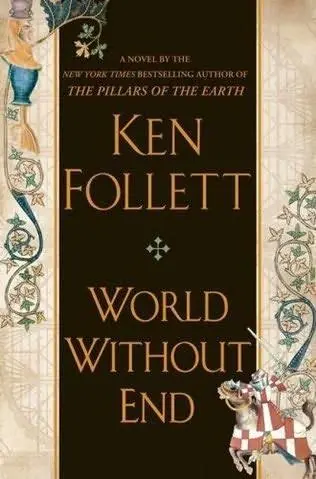
- Название:World Without End
- Автор:
- Жанр:
- Год:неизвестен
- ISBN:нет данных
- Рейтинг книги:5 / 5. Голосов: 1
-
Избранное:Добавить в избранное
- Отзывы:
-
Ваша оценка:
World Without End: краткое содержание, описание и аннотация
Предлагаем к чтению аннотацию, описание, краткое содержание или предисловие (зависит от того, что написал сам автор книги «World Without End»). Если вы не нашли необходимую информацию о книге — напишите в комментариях, мы постараемся отыскать её.
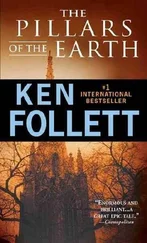
Ken Follett has 90 million readers worldwide. The Pillars of the Earth is his bestselling book of all time. Now, eighteen years after the publication of The Pillars of the Earth, Ken Follett has written the most-anticipated sequel of the year, World Without End.
In 1989 Ken Follett astonished the literary world with The Pillars of the Earth, a sweeping epic novel set in twelfth-century England centered on the building of a cathedral and many of the hundreds of lives it affected. Critics were overwhelmed-"it will hold you, fascinate you, surround you" (Chicago Tribune)-and readers everywhere hoped for a sequel.
World Without End takes place in the same town of Kingsbridge, two centuries after the townspeople finished building the exquisite Gothic cathedral that was at the heart of The Pillars of the Earth. The cathedral and the priory are again at the center of a web of love and hate, greed and pride, ambition and revenge, but this sequel stands on its own. This time the men and women of an extraordinary cast of characters find themselves at a crossroad of new ideas-about medicine, commerce, architecture, and justice. In a world where proponents of the old ways fiercely battle those with progressive minds, the intrigue and tension quickly reach a boiling point against the devastating backdrop of the greatest natural disaster ever to strike the human race-the Black Death.
Three years in the writing, and nearly eighteen years since its predecessor, World Without End breathes new life into the epic historical novel and once again shows that Ken Follett is a masterful author writing at the top of his craft.
World Without End — читать онлайн бесплатно полную книгу (весь текст) целиком
Ниже представлен текст книги, разбитый по страницам. Система сохранения места последней прочитанной страницы, позволяет с удобством читать онлайн бесплатно книгу «World Without End», без необходимости каждый раз заново искать на чём Вы остановились. Поставьте закладку, и сможете в любой момент перейти на страницу, на которой закончили чтение.
Интервал:
Закладка:
He was disappointed, but not surprised, to see that there were no masons on the scaffolding, no labourers moving the great stones, no mortar-making women stirring with their giant paddles. This site was as quiet as the other two. However, in this case he felt confident he could get the project restarted. A religious order had a life of its own, independent of individuals. He walked around the site and entered the friary.
The place was silent. Monasteries were supposed to be so, of course, but there was a quality to this silence that unnerved him. He passed from the vestibule into the waiting room. There was usually a brother on duty here, studying the scriptures in between attending to visitors, but today the room was empty. With grim apprehension, Merthin went through another door and found himself in the cloisters. The quadrangle was deserted. “Hello!” he called out. “Is anyone there?” His voice echoed around the stone arcades.
He searched the place. All the friars were gone. In the kitchen he found three men sitting at the table, eating ham and drinking wine. They wore the costly clothes of merchants, but they had matted hair, untrimmed beards and dirty hands: they were paupers wearing dead men’s garments. When he walked in they looked guilty but defiant. He said: “Where are the holy brothers?”
“All dead,” said one of the men.
“All?”
“Every one. They took care of the sick, you see, and so they caught the disease.”
The man was drunk, Merthin could see. However, he seemed to be telling the truth. These three were too comfortable, sitting in the monastery, eating the friars’ food and drinking their wine. They clearly knew there was no one left to object.
Merthin returned to the site of the new church. The walls of the choir and transepts were up, and the oculi in the clerestory were visible. He sat in the middle of the crossing, amid stacks of stones, looking at his work. For how long would the project be stalled? If all the friars were dead, who would get their money? As far as he knew, they were not part of a larger order. The bishop might claim the inheritance, and so might the pope. There was a legal tangle here that could take years to resolve.
This morning he had resolved to throw himself into his work as a way of healing the wound of Silvia’s death. Now it was clear that, at least for the present, he had no work. Ever since he began to repair the roof of St Mark’s church in Kingsbridge, ten years ago, he had had at least one building project on the go. Without one, he was lost. It made him feel panicky.
He had woken up to find his whole life in ruins. The fact that he was suddenly very rich only heightened the sense of nightmare. Lolla was the only part of his life he had left.
He did not even know where to go next. He would go home, eventually, but he could not spend all day playing with his three-year-old and talking to Maria. So he stayed where he was, sitting on a carved stone disc intended for a column, looking along what would be the nave.
As the sun rolled down the curve of the afternoon, he began to remember his illness. He had felt sure he would die. So few survived that he did not expect to be among the lucky ones. In his more lucid moments, he had reviewed his life as if it were over. He had come to some grand realization, he knew, but since recovering he had been unable to recall what it was. Now, in the tranquillity of the unfinished church, he recalled concluding that he had made one huge mistake in his life. What was it? He had quarrelled with Elfric, he had had sex with Griselda, he had rejected Elizabeth Clerk… All these decisions had caused trouble, but none counted as the mistake of a lifetime.
Lying on the bed, sweating, coughing, tormented by thirst, he had almost wanted to die; but not quite. Something had kept him alive – and now it came back to him.
He had wanted to see Caris again.
That was his reason for living. In his delirium he had seen her face, and had wept with grief that he might die here, thousands of miles away from her. The mistake of his life had been to leave her.
As he at last retrieved that elusive memory, and realized the blinding truth of the revelation, he was filled with an odd kind of happiness.
It did not make sense, he reflected. She had joined the nunnery. She had refused to see him and explain herself. But his soul was not rational, and it was telling him that he should be where she was.
He wondered what she was doing now, while he sat in a half-built church in a city nearly destroyed by a plague. The last he had heard was that she had been consecrated by the bishop. That decision was irrevocable – or so they said: Caris had never accepted what other people told her were the rules. On the other hand, once she had made her own decision it was generally impossible to change her mind. There was no doubt she was strongly committed to her new life.
It made no difference. He wanted to see her again. Not to do so would be the second-biggest mistake of his life.
And now he was free. His ties with Florence were all broken. His wife was dead, and so were all his relations by marriage except for three children. The only family he had here was his daughter, Lolla, and he would take her with him. She was so young he felt she would hardly notice that they had left.
It was a momentous move, he told himself. He would first have to prove Alessandro’s will, and make arrangements for the children – Agostino Caroli would help him with that. Then he would have to turn his wealth into gold and arrange for it to be transferred to England. The Caroli family could do that, too, if their international network was still intact. Most daunting, he would have to undertake the thousand-mile journey from Florence across Europe to Kingsbridge. And all that without having any idea how Caris would receive him when at last he arrived.
It was a decision that required long and careful thought, obviously.
He made up his mind in a few moments.
He was going home.
54
Merthin left Italy in company with a dozen merchants from Florence and Lucca. They took a ship from Genoa to the ancient French port of Marseilles. From there they travelled overland to Avignon, home of the pope for the last forty years or more, and the most lavish court in Europe – as well as the smelliest city Merthin had ever known. There they joined a large group of clergymen and returning pilgrims heading north.
Everyone travelled in groups, the larger the better. The merchants were carrying money and expensive trading goods, and they had men-at-arms to protect them from outlaws. They were happy to have company: priestly robes and pilgrim badges might deter robbers, and even ordinary travellers such as Merthin helped just by swelling the numbers.
Merthin had entrusted most of his fortune to the Caroli family in Florence. Their relatives in England would give him cash. The Carolis carried on this kind of international transaction all the time, and indeed Merthin had used their services nine years ago to transfer a smaller fortune from Kingsbridge to Florence. All the same, he knew that the system was not completely infallible – such families sometimes went bankrupt, especially if they got involved in lending money to untrustworthy types such as kings and princes. That was why he had a large sum in gold florins sewn into his undershirt.
Lolla enjoyed the journey. As the only child in the caravan, she was much fussed over. During the long days on horseback, she sat on the saddle in front of Merthin, his arms holding her safe while his hands held the reins. He sang songs, repeated rhymes, told stories and talked to her about the things they saw – trees, mills, bridges, churches. She probably did not understand half of what he said, but the sound of his voice kept her happy.
Читать дальшеИнтервал:
Закладка:
Похожие книги на «World Without End»
Представляем Вашему вниманию похожие книги на «World Without End» списком для выбора. Мы отобрали схожую по названию и смыслу литературу в надежде предоставить читателям больше вариантов отыскать новые, интересные, ещё непрочитанные произведения.




Обсуждение, отзывы о книге «World Without End» и просто собственные мнения читателей. Оставьте ваши комментарии, напишите, что Вы думаете о произведении, его смысле или главных героях. Укажите что конкретно понравилось, а что нет, и почему Вы так считаете.