Mary Russell - Doc
Здесь есть возможность читать онлайн «Mary Russell - Doc» весь текст электронной книги совершенно бесплатно (целиком полную версию без сокращений). В некоторых случаях можно слушать аудио, скачать через торрент в формате fb2 и присутствует краткое содержание. Год выпуска: 2011, ISBN: 2011, Издательство: RANDOM HOUSE, Жанр: Историческая проза, на английском языке. Описание произведения, (предисловие) а так же отзывы посетителей доступны на портале библиотеки ЛибКат.
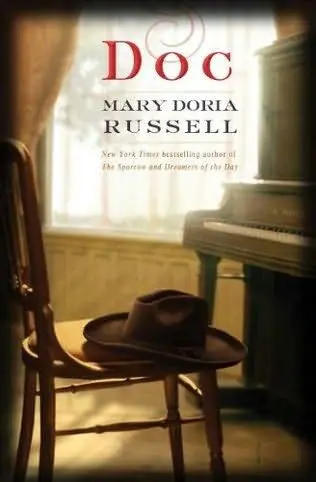
- Название:Doc
- Автор:
- Издательство:RANDOM HOUSE
- Жанр:
- Год:2011
- ISBN:978-0-679-60439-6
- Рейтинг книги:3 / 5. Голосов: 1
-
Избранное:Добавить в избранное
- Отзывы:
-
Ваша оценка:
Doc: краткое содержание, описание и аннотация
Предлагаем к чтению аннотацию, описание, краткое содержание или предисловие (зависит от того, что написал сам автор книги «Doc»). Если вы не нашли необходимую информацию о книге — напишите в комментариях, мы постараемся отыскать её.
Beautifully educated, born to the life of a Southern gentleman, Dr. John Henry Holliday is given an awful choice at the age of twenty-two: die within months in Atlanta or leave everyone and everything he loves in the hope that the dry air and sunshine of the West will restore him to health. Young, scared, lonely, and sick, he arrives on the rawest edge of the Texas frontier just as an economic crash wrecks the dreams of a nation. Soon, with few alternatives open to him, Doc Holliday is gambling professionally; he is also living with Mária Katarina Harony, a high-strung Hungarian whore with dazzling turquoise eyes, who can quote Latin classics right back at him. Kate makes it her business to find Doc the high-stakes poker games that will support them both in high style. It is Kate who insists that the couple travel to Dodge City, because 'that's where the money is.'
And that is where the unlikely friendship of Doc Holliday and Wyatt Earp really begins — before Wyatt Earp is the prototype of the square-jawed, fearless lawman; before Doc Holliday is the quintessential frontier gambler; before the gunfight at the O.K. Corral links their names forever in American frontier mythology — when neither man wanted fame or deserved notoriety.
Authentic, moving, and witty, Mary Doria Russell's fifth novel redefines these two towering figures of the American West and brings to life an extraordinary cast of historical characters, including Holliday's unforgettable companion, Kate. First and last, however, Doc is John Henry Holliday's story, written with compassion, humor, and respect by one of our greatest contemporary storytellers.
Doc — читать онлайн бесплатно полную книгу (весь текст) целиком
Ниже представлен текст книги, разбитый по страницам. Система сохранения места последней прочитанной страницы, позволяет с удобством читать онлайн бесплатно книгу «Doc», без необходимости каждый раз заново искать на чём Вы остановились. Поставьте закладку, и сможете в любой момент перейти на страницу, на которой закончили чтение.
Интервал:
Закладка:
“No taxes!” Deacon cried.
“Well … All right, then, we could fine it.”
“Same thing,” Dog said, shrugging.
“But it’s not a tax,” Bob said innocently. “And then, see, we could use the fines to pay the men we hire to enforce the regulations. Wyatt Earp, for instance.”
“Oh, hell!” Chalkie cried. “Not that prig!”
“Well, see, I’ve been thinking—”
Deacon snorted. “Don’t hurt yourself, now, Bob.”
Bob joined in the laughter at his expense, but it was right then and there that he decided to open a hotel and put the Dodge House out of business.
“Well, see, Deacon, when I heard the Times might back Wyatt for Ford County sheriff, I thought, How about if the city appoints him chief deputy? It would make reformers who read the Times happy, and it would make Wyatt beholden to us, not George Hoover. What do you fellas think?”
“If Wyatt’s enforcing the laws,” Deacon admitted, “he’ll think he’s on the side of the Lord.”
“And he’ll be makin’ money off the fines,” Dog observed. “Which means you don’t have to pay him much.”
You , Bob thought. Interesting choice of words … It was time to shorten up on Dog Kelley’s leash.
Chalkie grinned. “The bastard’s bought—and he’s bought on the cheap. I like it!”
By the end of the poker game, the new ordinances had been discussed and written up. Public drunkenness was prohibited. Why allow cowboys to wander the street when they could be corralled inside, drinking and gambling and whoring? Disorderly conduct—understood to mean prostitutes soliciting during daylight hours—was also banned. Everybody knew where to find the girls anyway. No riding on the sidewalks passed without quibble. No horses above the ground floor of any building took longer.
“Don’t need that,” Dog argued. “Can’t get a horse to the second floor without ridin’ up on the sidewalk. That’s already illegal.”
“I don’t put anything past a drunken cowboy,” Deacon said darkly.
“Two ordinances means two fines,” Bob pointed out. “Better for the city treasury.”
“Maybe we should make it No livestock above the ground floor ,” Deacon mused.
“That include dogs?” the mayor asked, leaning over to pat his greyhound’s bony haunch.
“Oh, for crissakes!” Chalkie cried. “Dogs ain’t livestock. Any fool knows that.”
There was already an ordinance against the discharge of firearms within town limits. Dog made a motion to start enforcing it. Chalkie suggested they make an exception for the Fourth of July and New Year’s. The resolution passed. Then Bob proposed that they outlaw the carrying of guns within town limits.
All hell broke loose.
“Well, see, George Hoover has people all stirred up about Ed Masterson,” Bob told them. “You fellas don’t mix with the locals much, but I hear a lot of talk down at the store. A city marshal, gunned down on Front Street! Where’s it going to end? What’s it going to take to get a little law and order around here? So I thought, well, how about if we put gun racks in our places, the way they did in Abilene, right? We write the law so’s the first place they go into, they have to hang the guns up when they get there and they get a claim number. And then when they’re ready to leave—”
“They gotta come back to our places to get their guns!” Chalkie said. “One more opportunity to sell ’em a drink ’fore they leave town!”
Bob smiled happily. “You’re right, Chalkie! I never thought of that!” Before last year …
“Texas boys won’t like Yankees disarmin’ them,” Dog pointed out.
“Aw, hell. You’re right, Dog,” Bob said, sounding abashed. “Why, just telling them to take off their guns’ll be dangerous. Arresting them if they refuse’ll be even worse. After what happened to Ed, we can’t ask the police to take chances like that. Forget the whole idea. Sorry I mentioned it.”
“Well, now, not so fast, Bob,” Deacon Cox said. He was dumber than shit, which was to say, almost dumber than Chalkie, but Deacon thought he was real sharp. “I believe that a fine, upstanding lawman like Wyatt Earp would do his duty, no matter how dangerous it is.”
“And if the sonofabitch gets killed like Ed did?” Chalkie asked. “We’ll give him a fine funeral. Fifty bucks says he’s dead before the Fourth!”
“I’ll take that,” Dog said comfortably. “I don’t like him, but Wyatt gets the job done.”
“How much should we pay him in the meantime?” Deacon asked.
Bob said, “Ed got a hundred a month, and three bucks for every arrest.”
Chalkie said, “Make it seventy-five salary, and two bucks for the arrests. The lower the fee, the more chances he’ll take.”
Dog shook his head. “Can’t see cuttin’ the pay like that.”
Bob let them argue a while before suggesting a vote on Wyatt’s salary. Dog lost. Deacon Cox made a motion that the meeting be adjourned. Chalk seconded. The men stood. Dog’s greyhound rolled off his bony back and rattled himself all over in preparation for departure.
“What do you think, Dog? Will that horse of yours win on the Fourth?” Chalkie asked as they made their way toward the stairs.
“Fastest quarter-miler in Ford County,” Dog said.
“I lost money on him last month,” Bob lied.
“Like hell you did,” Dog said over his shoulder, without even doing Bob the courtesy of glancing back. “You never lost a nickel in your life, Bob.”
“Hey, fellas?” Bob called, before they got down the stairs. “I heard something else at the store you might be interested in.”
This time, they turned to look up at him, and Bob Wright knew exactly what they saw. Good ole Bob. Simple, uncomplicated Bob.
“There’s probably no truth to it,” he said, “but people are saying maybe George Hoover paid somebody to start that fire in the Elephant Barn.”
“Why in hell would he do that?” Dog asked. There were a few more of his damn greyhounds circling at the bottom of the staircase, and Bob sighed inwardly.
“Well,” Bob said, “I guess maybe he couldn’t wait to get elected fair. Maybe he figured if Reform couldn’t close the businesses south of Front legally, he could burn ’em out. Maybe he figured the fire would spread on that side without touching his place on this side of the tracks.”
“Why start a fire in Ham Bell’s place?” Chalkie objected. “Ham’s Reform, too.”
“Throw off the suspicion,” Deacon said shrewdly, and Bob almost laughed.
They clomped down the staircase and patted Dog’s hounds, who whined and curled under their hands. Bob let them out, cleaned up some dog shit and a puddle of piss, locked the store doors, and went home satisfied by the evening’s accomplishments.
Nobody even noticed that he’d won close to $800.
“How was the game, Daddy?” Belle asked when Bob got home.
“Fine,” he said. “You didn’t have to wait up, honey.”
“Oh, but I wanted to, Daddy.”
The words were nice as pie, though there was something about the niceness that seemed false. Like father, like daughter, Bob thought. The notion did not please him.
“How much did you win, Daddy?”
“Oh, more than I lost, I reckon.”
She laughed, a shimmery musical sound. Like crystal: brilliant and brittle. It broke his heart, the chill between them now. Why, just last year, she was happy to be his little angel.
“Did you hear the news?” Belle asked. “Mr. Eberhardt killed himself.”
Bob stared.
“His son Wilfred—you remember Wilfred, Daddy. Eight years old? A little towheaded boy? So serious at his mother’s funeral, taking such good care of his sisters while his poor father sobbed! Wilfred heard the gunshot and found his father’s body in the barn. He walked the girls down to the Krauses’. Poor things, all that way, crying … Mr. Krause rode over and buried the body. Isn’t it sad, Daddy?” Belle asked, but she seemed almost … satisfied, somehow. “Mr. Eberhardt was about to go bust, I guess. He just didn’t have the gumption to go on, after his wife died. I suppose he never should have come out here. Kansas isn’t quite the agricultural Eden all those advertisements make it out to be.”
Читать дальшеИнтервал:
Закладка:
Похожие книги на «Doc»
Представляем Вашему вниманию похожие книги на «Doc» списком для выбора. Мы отобрали схожую по названию и смыслу литературу в надежде предоставить читателям больше вариантов отыскать новые, интересные, ещё непрочитанные произведения.






Обсуждение, отзывы о книге «Doc» и просто собственные мнения читателей. Оставьте ваши комментарии, напишите, что Вы думаете о произведении, его смысле или главных героях. Укажите что конкретно понравилось, а что нет, и почему Вы так считаете.