Mary Russell - Doc
Здесь есть возможность читать онлайн «Mary Russell - Doc» весь текст электронной книги совершенно бесплатно (целиком полную версию без сокращений). В некоторых случаях можно слушать аудио, скачать через торрент в формате fb2 и присутствует краткое содержание. Год выпуска: 2011, ISBN: 2011, Издательство: RANDOM HOUSE, Жанр: Историческая проза, на английском языке. Описание произведения, (предисловие) а так же отзывы посетителей доступны на портале библиотеки ЛибКат.
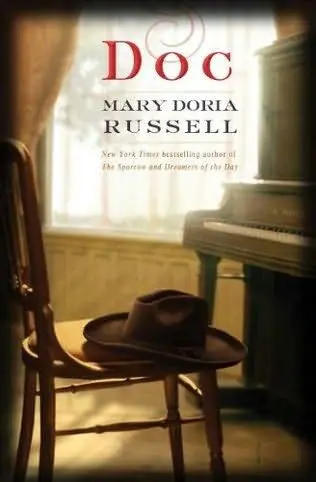
- Название:Doc
- Автор:
- Издательство:RANDOM HOUSE
- Жанр:
- Год:2011
- ISBN:978-0-679-60439-6
- Рейтинг книги:3 / 5. Голосов: 1
-
Избранное:Добавить в избранное
- Отзывы:
-
Ваша оценка:
Doc: краткое содержание, описание и аннотация
Предлагаем к чтению аннотацию, описание, краткое содержание или предисловие (зависит от того, что написал сам автор книги «Doc»). Если вы не нашли необходимую информацию о книге — напишите в комментариях, мы постараемся отыскать её.
Beautifully educated, born to the life of a Southern gentleman, Dr. John Henry Holliday is given an awful choice at the age of twenty-two: die within months in Atlanta or leave everyone and everything he loves in the hope that the dry air and sunshine of the West will restore him to health. Young, scared, lonely, and sick, he arrives on the rawest edge of the Texas frontier just as an economic crash wrecks the dreams of a nation. Soon, with few alternatives open to him, Doc Holliday is gambling professionally; he is also living with Mária Katarina Harony, a high-strung Hungarian whore with dazzling turquoise eyes, who can quote Latin classics right back at him. Kate makes it her business to find Doc the high-stakes poker games that will support them both in high style. It is Kate who insists that the couple travel to Dodge City, because 'that's where the money is.'
And that is where the unlikely friendship of Doc Holliday and Wyatt Earp really begins — before Wyatt Earp is the prototype of the square-jawed, fearless lawman; before Doc Holliday is the quintessential frontier gambler; before the gunfight at the O.K. Corral links their names forever in American frontier mythology — when neither man wanted fame or deserved notoriety.
Authentic, moving, and witty, Mary Doria Russell's fifth novel redefines these two towering figures of the American West and brings to life an extraordinary cast of historical characters, including Holliday's unforgettable companion, Kate. First and last, however, Doc is John Henry Holliday's story, written with compassion, humor, and respect by one of our greatest contemporary storytellers.
Doc — читать онлайн бесплатно полную книгу (весь текст) целиком
Ниже представлен текст книги, разбитый по страницам. Система сохранения места последней прочитанной страницы, позволяет с удобством читать онлайн бесплатно книгу «Doc», без необходимости каждый раз заново искать на чём Вы остановились. Поставьте закладку, и сможете в любой момент перейти на страницу, на которой закончили чтение.
Интервал:
Закладка:
“No percentage in a sure thing,” Dog said, scooping up the pot.
Bob Wright could have argued that point with Dog, for he had grown wealthy dealing in a sure thing. The men at this table represented half a million dollars in gambling, prostitution, and liquor, but Bob could match them—on groceries alone. It was only a month into the season and Bob had already cleared more than $12,000. Drovers ate on their way north. They ate while their herds grazed and fattened on the grassland south of Dodge. They continued to eat until the cattle were sold and loaded onto the trains to be shipped east. Occasionally, they even made time to eat while they were in the midst of drinking, whoring, and playing cards. There was money to be made, as well, supplying groceries to townspeople and to restaurants like the Iowa House and Delmonico’s, where cattle buyers and railroad officials dined. And then there was the Fort Dodge trade, and the railroad crews. Even lawmen and prostitutes had to eat. Nobody seemed inclined to legislate against the selling of canned goods, coffee beans, and soda crackers, so Bob Wright didn’t stand to get hurt all that much if the Prohibitionists took hold in west Kansas, the way they had in the eastern part of the state.
It was that steady stream of morally unobjectionable cash that allowed Bob to admire the iron self-control George Hoover needed to keep a straight face while he talked about putting brothels and gambling dens and bars out of business.
Big George aimed to be on the right side of Front Street when civilization arrived, and that was smart. Any day now, the politics and the economy of Dodge City were going to shift from one side of the tracks to the other. And when they did, there’d be no going back. Saloon owners like Chalkie and Dog considered it the cost of doing business when they replaced window glass shot out by drunken cowboys, but there were families moving into town now and random gunfire scared them. Local grangers feared the Texas longhorns would infect their own stock with tick fever, and local farmers complained that the drovers cut their fences and let the herds trample cropland. Soon, settlers like that would hold more votes than those who served the cattle interests. When they did, old-timers like the men at this table—who’d built towns up from the bare ground—they’d be on the outs. It had happened in Abilene, Ellsworth, Wichita, Caldwell. It was going to happen in Dodge, too, and soon.
Chalkie Beeson was right about half of it. George Hoover intended to run for mayor on a Reform ticket again, and this time he’d have the railroad men behind him. The Atchison, Topeka and Santa Fe had a lot invested in the roaring hell that was Dodge, but its owners had begun to back Reform demands to close the saloons and dance halls on Sundays at least. Eastern visitors were disturbed by the open drunkenness that offended George Hoover’s birdy little wife, Maggie, and by the same brazen prostitutes who annoyed Bob’s own wife, Alice.
Even Bob was starting to be concerned. He tried to keep his daughter inside when the drovers were in town, but Belle had a mind of her own. He couldn’t watch her round the clock or keep her locked up half the year. Short of posting an armed and gelded guard in the hallway, there wasn’t much more Bob could do, apart from getting her married off before she got out of hand.
Ignore it, deny it, or fight it, change was inevitable. “The smart man doesn’t just wait for the future,” Bob often told his children. “The smart man shapes it.” His whole life was proof of that.
He had come west alone in 1856, a boy possessed of nothing but a fierce desire to better his condition. He was still driving freight for the Mexico trade when he saw the commercial potential of a site where the Santa Fe Trail crossed the Arkansas River just west of Fort Dodge. It was spang in the middle of the buffalo range, but it could have been a fine homestead, with a trading post, maybe. There was a spring-fed creek nearby. Geese and duck, three seasons out of four. Fish year round. Otter, beaver, and muskrat for the fur trade.
Bob kept his eye on that piece of land, especially after he got himself appointed sutler to Fort Dodge after the war. In those days, the fort was just about the only thing on the prairie between Kansas City and Denver. Soldiers had no recreational alternative to standing at the bar in Bob’s store, spending all $13 of their monthly pay on drink. Given the fort’s atmosphere of general boredom, simmering rancor, and the assiduous cultivation of grudges, manly moments of indignation or disagreement were liable to get physical. Bob insisted it was no extra trouble to deliver whiskey to combatants who’d been hurt badly enough to require a stay in the post hospital. Didn’t even charge extra for the service!
When the medical officer complained about drunken brawls breaking out among convalescents, the fort commandant prohibited liquor on the post. Bob considered this an infringement on his constitutional right to sell whatever he wanted, wherever he wanted, to whoever had the cash to buy it, but there was no sense paying a lawyer to argue the point. The solution was to ride five miles west, stake out that creekside site on the bluffs above the Arkansas River, and invent Dodge City.
Bob knew what men saw when they looked at him. They saw a scrawny fella with a weak chin—the kind that was supposed to be a sure sign of mental inferiority and a feeble character. He hated mirrors, but Bob made himself study his reflection every morning when he shaved: to see what others saw and daily renew his determination to turn that disadvantage to his benefit. Let ’em believe what they like, he’d tell himself as he trimmed the luxuriant mustache that overhung his little jaw like a mountain crag.
All his life he’d made men pay for their slights and disregard. In Topeka, the legislative big bugs in the Kansas House of Representatives had taken one look at the storekeeper from Dodge and dismissed him as a good-natured, slightly simpleminded rube. And yet after two years in office, the Honorable Robert C. Wright had deftly blocked a boneheaded farmers’ relief bill, and then cornered the southern cattle trade for Dodge by getting the Texas tick quarantine line moved to the eastern boundary of Ford County.
Let ’em sneer, that was his motto. Stupid sonsabitches.
He was only thirty-eight, but he had already exceeded his boyhood dreams of wealth and power. In the six years since he drove his first stake into the ground, while the rest of the whole damn country was going bust, he had made himself quietly, securely rich, and groceries were the least of it.
Millions of dollars changed hands in Dodge each season and every penny of it passed through the massive safe Bob Wright had in his back room. Cattlemen, shippers, meat processors, the army, freight companies, the railway. They all had payrolls. They all needed transfers, checks, credit. They all paid fees and interest. No matter what it was or who was involved, Bob got a slice of every transaction. It all added up, and every single dollar was revenge for the snickers and jests of lesser men.
Of all the men Bob hated, and that was just about every man he knew, only Big George Hoover had ever taken Bob’s true measure. In a few months’ time, George might well take the mayoralty. Worse yet, he had applied for a license to open a real bank. There was only one conclusion: George Hoover was aiming to beat Bob Wright at his own game. And Bob would sooner sell his daughter to white slavers than let that happen.
So when the time was right, Bob brought the poker conversation back around to politics, and when it was his turn to deal again, he laid the cards aside. “Seems to me, Chalk, what you’re asking is, how do we cut the legs out from under Reform and make a buck doing it?” He looked around the table and saw no bright ideas waiting to be expressed. “How about if we don’t wait for the reformers to outlaw vice altogether? How about if we regulate it some, and tax it?” he suggested, like he was offering an idea that just occurred to him.
Читать дальшеИнтервал:
Закладка:
Похожие книги на «Doc»
Представляем Вашему вниманию похожие книги на «Doc» списком для выбора. Мы отобрали схожую по названию и смыслу литературу в надежде предоставить читателям больше вариантов отыскать новые, интересные, ещё непрочитанные произведения.






Обсуждение, отзывы о книге «Doc» и просто собственные мнения читателей. Оставьте ваши комментарии, напишите, что Вы думаете о произведении, его смысле или главных героях. Укажите что конкретно понравилось, а что нет, и почему Вы так считаете.