Robert Harris - Lustrum
Здесь есть возможность читать онлайн «Robert Harris - Lustrum» весь текст электронной книги совершенно бесплатно (целиком полную версию без сокращений). В некоторых случаях можно слушать аудио, скачать через торрент в формате fb2 и присутствует краткое содержание. Жанр: Историческая проза, на английском языке. Описание произведения, (предисловие) а так же отзывы посетителей доступны на портале библиотеки ЛибКат.
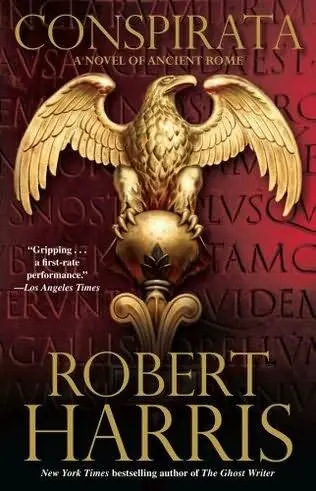
- Название:Lustrum
- Автор:
- Жанр:
- Год:неизвестен
- ISBN:нет данных
- Рейтинг книги:3 / 5. Голосов: 1
-
Избранное:Добавить в избранное
- Отзывы:
-
Ваша оценка:
Lustrum: краткое содержание, описание и аннотация
Предлагаем к чтению аннотацию, описание, краткое содержание или предисловие (зависит от того, что написал сам автор книги «Lustrum»). Если вы не нашли необходимую информацию о книге — напишите в комментариях, мы постараемся отыскать её.
Lustrum — читать онлайн бесплатно полную книгу (весь текст) целиком
Ниже представлен текст книги, разбитый по страницам. Система сохранения места последней прочитанной страницы, позволяет с удобством читать онлайн бесплатно книгу «Lustrum», без необходимости каждый раз заново искать на чём Вы остановились. Поставьте закладку, и сможете в любой момент перейти на страницу, на которой закончили чтение.
Интервал:
Закладка:
'Yesterday.'
'And when are they due to meet again?'
'Today.'
'So obviously they are in a hurry.'
'The Gauls got the impression that matters would come to a head in the next few days.'
Cicero fell silent, thinking. 'Tell them they should demand written proof of the involvement of as many of these men as possible: letters, fixed with personal seals, that they can take back and show to their fellow countrymen.'
'And if the conspirators refuse?'
'The Gauls should say it will be impossible for their tribe to take such a hazardous step as going to war with Rome without hard evidence.'
Sanga nodded, and then he said: 'I'm afraid that after this my involvement in this affair will have to end.'
'Why?'
'Because it's becoming far too dangerous to remain in Rome.' As a final favour he agreed to return with the conspirators' answer as soon as the Gauls had received it; then he would leave. In the meantime, Cicero had no alternative but to go down to Murena's trial. Sitting on the bench next to Hortensius, he put on an outward show of calm, but from time to time I would catch his gaze drifting around the court, resting occasionally on Caesar – who was one of the jurors – on Sura, who was sitting with the praetors, and finally and most often on Crassus, who was only two places further along the bench. He must have felt extremely lonely, and I noticed for the first time that his hair was flecked with grey, and that there were ridges of dark skin under his eyes. The crisis was ageing him. At the seventh hour, Cato finished his summing-up of the prosecution case, and the judge, whose name was Cosconius, asked Cicero if he would like to conclude for the defence. The question seemed to catch him by surprise, and after a moment or two of shifting through his documents he rose and requested an adjournment until the next day, so that he could gather his thoughts. Cosconius looked irritable, but conceded that the hour was getting late. He grudgingly agreed to Cicero's request, and the conclusion of Murena's trial was postponed.
We hurried home in the now-familiar cocoon of guards and lictors, but there was no sign of Sanga, nor any message from him. Cicero went silently into his study and sat with his elbows on his desk, his thumbs pressed hard to his temples, surveying the piles of evidence laid across it, rubbing at his flesh, as if he might somehow drive into his skull the speech he needed to deliver. I had never felt sorrier for him. But when I took a step towards him to offer my help, he flicked his hand at me without looking up, wordlessly dismissing me from his presence. I did not see him again that evening. Instead Terentia drew me to one side to express her worries about the consul's health. He was not eating properly, she said, or sleeping. Even the morning exercises he had practised since he was a young man had been abandoned. I was surprised she should talk to me in this intimate way, as the truth was she had never much liked me, and took out on me much of the frustration she felt with her husband. I was the one who spent the most time sequestered with him, working. I was the one who disturbed their rare moments of leisure together by bringing him piles of letters and news of callers. Nevertheless, for once she spoke to me politely and almost as a friend. 'You must reason with him,' she said. 'I sometimes believe you are the only one he will listen to, while I can only pray for him.'
When the next morning arrived and there was still no word from Sanga, I began to fear that Cicero would be too nervous to make his speech. Remembering Terentia's plea, I even suggested he might ask for a further postponement. 'Are you mad?' he snapped. 'This isn't the time to show weakness. I'll be fine. I always am.' Despite his bravado, I had never seen him shake more at the start of a speech, or begin more inaudibly. The forum was packed and noisy, even though great masses of cloud were rolling over Rome, releasing occasional flurries of rain across the valley. But as it turned out, Cicero put a surprising amount of humour into that speech, memorably contrasting the claims of Servius and Murena for the consulship.
'You are up before dawn to rally your clients,' he said to Servius, 'he to rally his army. You are woken by the call of cocks, he by the call of trumpets. You draw up a form of proceedings, he a line of battle. He understands how to keep off the enemy's forces, you rainwater. He has been engaged in extending boundaries, you in defining them.' The jury loved that. And they laughed even longer when he poked fun at Cato and his rigid philosophy. 'Rest assured that the superhuman qualities we have seen in Cato are innate; his failings due not to Nature but to his master. For there was a man of genius called Zeno, and the disciples of his teaching are called stoics. Here are some of his precepts: the wise man is never moved by favour and never forgives anyone's mistakes; only a fool feels pity; all misdeeds are equal, the casual killing of a cock no less a crime than strangling one's father; the wise man never assumes anything, never regrets anything, is never wrong, never changes his mind. Unfortunately Cato has seized on this doctrine not just as a topic for discussion but as a way of life.'
'What a droll fellow our consul is,' sneered Cato in a loud voice as everybody laughed. But Cicero hadn't finished yet.
'Now I must admit when I was younger I also took some interest in philosophy. My masters, though, were Plato and Aristotle. They don't hold violent or extreme views. They say that favour can sometimes influence the wise man; that a good man can feel pity; that there are different degrees of wrongdoing and different punishments; that the wise man often makes assumptions when he doesn't know the facts, and is sometimes angry, and sometimes forgives, and sometimes changes his mind; that all virtue is saved from excess by a so-called mean. If you had studied these masters, Cato, you might not be a better man or braver – that would be impossible – but you might be a little more kind.
'You say that the public interest led you to start these proceedings. I don't doubt it. But you slip up because you never stop to think. I am defending Lucius Murena not because of friendship, but for the sake of peace, quiet, unity, liberty, our self-preservation – in short, the very lives of us all. Listen, gentlemen,' he said, turning to the jury, 'listen to a consul who spends all his days and nights in non-stop thinking about the republic. It is vital that there are two consuls in the state on the first day of January. Plans have been laid by men among us now to destroy the city, slaughter the citizens and obliterate the name of Rome. I give you warning. My consulate is reaching its dying days. Don't take from me the man whose vigilance should succeed mine.' He rested his hand on Murena's shoulder. 'Don't remove the man to whom I wish to hand over the republic still intact, for him to defend against these deadly perils.'
He spoke for three hours, stopping only now and again to sip a little diluted wine or to mop the rain from his face. His delivery became more and more powerful as he went on, and I was reminded of some strong and graceful fish that had been tossed, apparently dead, back into the water – inert at first and belly-up; but then suddenly, on finding itself returned to its natural element, with a flick of its tail, it revives. In the same way Cicero gathered strength from the very act of speaking, and he finished to prolonged applause not only from the crowd but from the jury. It proved to be a good omen: when their ballots were counted, Murena was acquitted by a huge majority. Cato and Servius left at once in a state of great dejection. Cicero lingered on the rostra just long enough to congratulate the consul-elect, and to receive many slaps on the back from Clodius, Hortensius and even Crassus, and then we headed home.
Читать дальшеИнтервал:
Закладка:
Похожие книги на «Lustrum»
Представляем Вашему вниманию похожие книги на «Lustrum» списком для выбора. Мы отобрали схожую по названию и смыслу литературу в надежде предоставить читателям больше вариантов отыскать новые, интересные, ещё непрочитанные произведения.







Обсуждение, отзывы о книге «Lustrum» и просто собственные мнения читателей. Оставьте ваши комментарии, напишите, что Вы думаете о произведении, его смысле или главных героях. Укажите что конкретно понравилось, а что нет, и почему Вы так считаете.