Bernard Cornwell - Excalibur
Здесь есть возможность читать онлайн «Bernard Cornwell - Excalibur» весь текст электронной книги совершенно бесплатно (целиком полную версию без сокращений). В некоторых случаях можно слушать аудио, скачать через торрент в формате fb2 и присутствует краткое содержание. Год выпуска: 1999, Издательство: MacMillan Publishers, Жанр: Историческая проза, на английском языке. Описание произведения, (предисловие) а так же отзывы посетителей доступны на портале библиотеки ЛибКат.
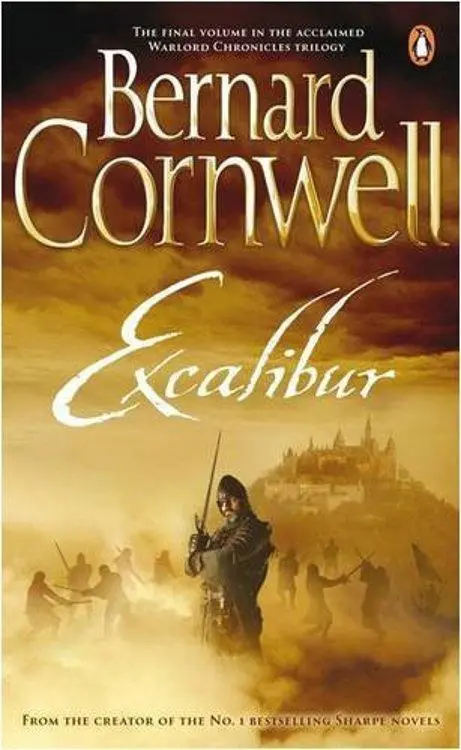
- Название:Excalibur
- Автор:
- Издательство:MacMillan Publishers
- Жанр:
- Год:1999
- ISBN:нет данных
- Рейтинг книги:4 / 5. Голосов: 2
-
Избранное:Добавить в избранное
- Отзывы:
-
Ваша оценка:
Excalibur: краткое содержание, описание и аннотация
Предлагаем к чтению аннотацию, описание, краткое содержание или предисловие (зависит от того, что написал сам автор книги «Excalibur»). Если вы не нашли необходимую информацию о книге — напишите в комментариях, мы постараемся отыскать её.
to Marion Zimmer Bradley's
, the legend of King Arthur has haunted and inspired generations of writers to reinvent the ancient story. In
and
, Bernard Cornwell demonstrated his astonishing ability to make the oft-told legend of King Arthur fresh and new for our time. Now, in this riveting final volume of the
, Cornwell tells the story of Arthur's desperate attempt to triumph over a ruined marriage and the Saxons' determination to destroy him.
Set against the backdrop of the Dark Ages, this brilliant saga continues as seen through the eyes of Derfel, an orphan brought up by Merlin and one of Arthur's warriors. In this book, the aging Arthur has been betrayed by, among others, his beloved Guinevere; but although he is alone and deeply saddened, he still embraces his dreams of a world in which civilization triumphs over brute force. Arthur and his warriors must face the dreaded Saxons — now allied with Arthur's betrayer Lancelot — for the throne of Britain.
This is the tale not only of a broken love remade but also of enemies more subtle than any Saxon spearman — of forces both earthly and unearthly that threaten everything Arthur stands for. When Merlin and Nimue embark on a dangerous quest to summon the Gods back to Britain, they unleash forces that will lead to a last desperate battle on the sands of Camlann, where it seems that Arthur must fail unless Merlin's final enchantment can avert the horror.
Peopled by princesses and bards, warriors and magicians, Excalibur is a story of love, war, loyalty, and betrayal, the unforgettable conclusion to a brilliant retelling of one of the most powerful legends of all time.
Excalibur — читать онлайн бесплатно полную книгу (весь текст) целиком
Ниже представлен текст книги, разбитый по страницам. Система сохранения места последней прочитанной страницы, позволяет с удобством читать онлайн бесплатно книгу «Excalibur», без необходимости каждый раз заново искать на чём Вы остановились. Поставьте закладку, и сможете в любой момент перейти на страницу, на которой закончили чтение.
Интервал:
Закладка:
Then, in the darkest part of the night, we made the new year’s fire. Pyrlig made the flame by rubbing two sticks while Issa dribbled shavings of larch-wood kindling onto the spark that gave off a tiny wisp of smoke. The two men stooped to the tiny flame, blew on it, added more kindling, and at last a strong flame leapt up and all of us began to sing the Chant of Belenos as Pyrlig carried the new fire to the two heaps of firewood. The sleeping children awoke and ran to find their parents as the Beltain fires sprang high and bright.
A goat was sacrificed once the fires were burning. Ceinwyn, as ever, turned away as the beast’s throat was cut and as Pyrlig scattered its blood on the grass. He tossed the goat’s corpse onto the fire where the sacred hazel was burning, then the villagers fetched their cattle and sheep and drove them between the two great blazes. We hung plaited straw collars about the cows’ necks, and then watched as young women danced between the fires to seek the blessing of the Gods on their wombs. They had danced through fire at Imbolc, but always did it again at Beltain. That was the first year Morwenna was old enough to dance between the fires and I felt a pang of sadness as I watched my daughter twirl and leap. She looked so happy. She was thinking of marriage and dreaming of babies, yet within a few weeks, I thought, she could be dead or enslaved. That thought filled me with a huge anger and I turned away from our fires and was startled to see the bright flames of other Beltain fires burning in the distance. All across Dumnonia the fires were burning to greet the newly arrived year.
My spearmen had brought two huge iron cauldrons to the hilltop and we filled their bellies with burning wood, then hurried down the hill with the two flaming pots. Once in the village the new fire was distributed, each cottage taking a flame from the fire and setting it to the waiting wood in the hearth. We went to the hall last and there carried the new fire into the kitchens. It was almost dawn by then, and the villagers crowded into the palisade to wait for the rising sun. The instant that its first brilliant shard of light showed above the eastern horizon, we sang the song of Lugh’s birth; a joyous, dancing hymn of merriment. We faced the east as we sang our welcome to the sun, and right across the horizon we could see the dark dribble of Beltain smoke rising into the ever paler sky. The cooking began as the hearth fires became hot. I had planned a huge feast for the village, thinking that this might be our last day of happiness for a long time. The common folk rarely ate meat, but on that Beltain we had five deer, two boars, three pigs and six sheep to roast; we had barrels of newly brewed mead and ten baskets of bread that had been baked on the old season’s fires. There was cheese, honied nuts and oatcakes with the cross of Beltain scorched onto their crusts. In a week or so the Saxons would come, so this was a time to give a feast that might help our people through the horrors to come. The villagers played games as the meat cooked. There were foot-races down the street, wrestling matches and a competition to see who could lift the heaviest weight. The girls wove flowers in their hair and, long before the feast began, I saw the couples slipping away. We ate in the afternoon, and while we feasted the poets recited and the village bards sang to us and the success of their compositions was judged by the amount of applause each generated. I gave gold to all the bards and poets, even the worst ones, and there were many of those. Most of the poets were young men who blushingly declaimed clumsy lines addressed to their girls, and the girls would look sheepish and the villagers would jeer, laugh and then demand that each girl reward the poet with a kiss, and if the kiss was too fleeting, the couple would be held face to face and made to kiss properly. The poetry became markedly better as we drank more.
I drank too much. Indeed we all feasted well and drank even better. At one point I was challenged to a wrestling match by the village’s wealthiest farmer and the crowd demanded I accept and so, half drunk already, I clapped my hands on the farmer’s body, and he did the same to me, and I could smell the reeking mead on his breath as he could doubtless smell it on mine. He heaved, I heaved back, and neither of us could move the other, so we stood there, locked head to head like battling stags, while the crowd mocked our sad display. In the end I tipped him over, but only because he was more drunk than I was. I drank still more, trying, perhaps, to obliterate the future.
By nightfall I was feeling sick. I went to the fighting platform we had built on the eastern rampart and there I leaned on the wall’s top and stared at the darkening horizon. Twin wisps of smoke drifted from the hilltop where we had lit our night’s new fires, though to my mead-fuddled mind it seemed as if there were at least a dozen smoke pyres. Ceinwyn climbed up to the platform and laughed at my dismal face.
‘You’re drunk,’ she said.
‘I am that,’ I agreed.
‘You’ll sleep like a hog,’ she said accusingly, ‘and snore like one too.’
‘It’s Beltain,’ I said in excuse, and waved my hand at the distant wisps of smoke. She leaned on the parapet beside me. She had sloe blossom woven into her golden hair and looked as beautiful as ever. ‘We must talk to Arthur about Gwydre,’ she said.
‘Marrying Morwenna?’ I asked, then paused to collect my thoughts. ‘Arthur seems so unfriendly these days,’ I finally managed to say, ‘and maybe he has a mind to marry Gwydre to someone else?’
‘Maybe he has,’ Ceinwyn said calmly, ‘in which case we should find someone else for Morwenna.’
‘Who?’
‘That’s exactly what I want you to think about,’ Ceinwyn said, ‘when you’re sober. Maybe one of Culhwch’s boys?’ She peered down into the evening shadows at the foot of Dun Caric’s hill. There was a tangle of bushes at the foot of the slope and she could see a couple busy among the leaves. ‘That’s Morfudd,’ she said.
‘Who?’
‘Morfudd,’ Ceinwyn said, ‘the dairy girl. Another baby coming, I suppose. It really is time she married.’ She sighed and stared at the horizon. She was silent for a long time, then she frowned. ‘Don’t you think there are more fires this year than last?’ she asked.
I dutifully stared at the horizon, but in all honesty I could not distinguish between one spiring smoke trail and another. ‘Possibly,’ I said evasively.
She still frowned. ‘Or maybe they aren’t Beltain fires at all.’
‘Of course they are!’ I said with all the certitude of a drunken man.
‘But beacons,’ she went on.
It took a few heartbeats for the meaning of her words to sink in, then suddenly I did not feel drunk at all. I felt sick, but not drunk. I gazed eastwards. A score of plumes smudged their smoke against the sky, but two of the plumes were far thicker than the others and far too thick to be the remnants of fires lit the night before and allowed to die in the dawn.
And suddenly, sickeningly, I knew they were the warning beacons. The Saxons had not waited until after their feast of Eostre, but had come at Beltain. They knew we had prepared warning beacons, but they also knew that the fires of Beltain would be lit on hilltops all across Dumnonia, and they must have guessed that we would not notice the warning beacons among the ritual fires. They had tricked us. We had feasted, we had drunk ourselves insensible, and all the while the Saxons were attacking. And Dumnonia was at war.
I was the leader of seventy experienced warriors, but I also commanded a hundred and ten youngsters I had trained through the winter. Those one hundred and eighty men constituted nearly one third of all Dumnonia’s spearmen, but only sixteen of them were ready to march by dawn. The rest were either still drunk or else so suffering that they ignored my curses and blows. Issa and I dragged the worst afflicted to the stream and tossed them into the chill water, but it did small good. I could only wait as, hour by hour, more men recovered their wits. A score of sober Saxons could have laid Dun Caric waste that morning.
Читать дальшеИнтервал:
Закладка:
Похожие книги на «Excalibur»
Представляем Вашему вниманию похожие книги на «Excalibur» списком для выбора. Мы отобрали схожую по названию и смыслу литературу в надежде предоставить читателям больше вариантов отыскать новые, интересные, ещё непрочитанные произведения.



Обсуждение, отзывы о книге «Excalibur» и просто собственные мнения читателей. Оставьте ваши комментарии, напишите, что Вы думаете о произведении, его смысле или главных героях. Укажите что конкретно понравилось, а что нет, и почему Вы так считаете.