Anchee Min - The Last Empress
Здесь есть возможность читать онлайн «Anchee Min - The Last Empress» весь текст электронной книги совершенно бесплатно (целиком полную версию без сокращений). В некоторых случаях можно слушать аудио, скачать через торрент в формате fb2 и присутствует краткое содержание. Жанр: Историческая проза, на английском языке. Описание произведения, (предисловие) а так же отзывы посетителей доступны на портале библиотеки ЛибКат.
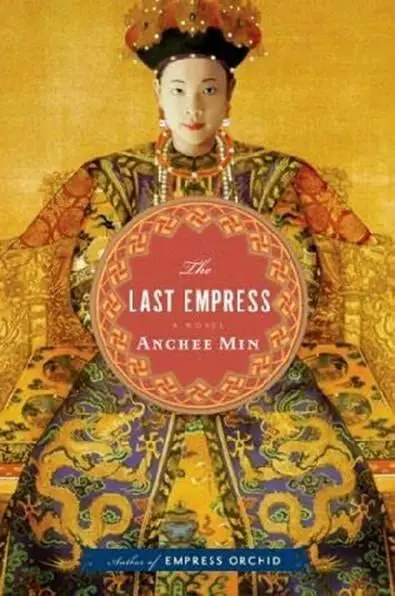
- Название:The Last Empress
- Автор:
- Жанр:
- Год:неизвестен
- ISBN:нет данных
- Рейтинг книги:4 / 5. Голосов: 1
-
Избранное:Добавить в избранное
- Отзывы:
-
Ваша оценка:
The Last Empress: краткое содержание, описание и аннотация
Предлагаем к чтению аннотацию, описание, краткое содержание или предисловие (зависит от того, что написал сам автор книги «The Last Empress»). Если вы не нашли необходимую информацию о книге — напишите в комментариях, мы постараемся отыскать её.
The Last Empress is the story of Orchid"s dramatic transition from a strong-willed, instinctive young woman to a wise and politically savvy leader. Moving from the intimacy of the concubine quarters into the spotlight of the world stage, Orchid must not only face the perilous condition of her empire but also a series of devastating personal losses, as first her son and then her adopted son succumb to early death. Yearning only to step aside, and yet growing constantly into her role, only she-allied with the progressives, but loyal to the conservative Manchu clan of her dynasty-can hold the nation"s rival
factions together.
Anchee Min offers a powerful revisionist portrait based on extensive research of one of the most important figures in Chinese history. Viciously maligned by the western press of the time as the "Dragon Lady," a manipulative, blood-thirsty woman who held onto power at all costs, the woman Min gives us is a compelling, very human leader who assumed power reluctantly, and who sacrificed all she had to protect those she loved and an empire that was doomed to die.
The Last Empress — читать онлайн бесплатно полную книгу (весь текст) целиком
Ниже представлен текст книги, разбитый по страницам. Система сохранения места последней прочитанной страницы, позволяет с удобством читать онлайн бесплатно книгу «The Last Empress», без необходимости каждый раз заново искать на чём Вы остановились. Поставьте закладку, и сможете в любой момент перейти на страницу, на которой закончили чтение.
Интервал:
Закладка:
When I woke that morning it felt as if I were surfacing from a deep well. I dressed, fed myself and went to sit on the Dragon Throne in the Hall of Spiritual Nurturing.
The court's eyes were on me, some curious, some sympathetic, some unreadable. The testimony of individual ministers confirmed what I had been told by Yuan Shih-kai. There was no doubt that a coup had been set in motion.
"Emperor Guang-hsu needs to be dealt with," Yung Lu proposed.
I gave my approval.
"Go to Ying-t'ai and break the news to Emperor Guang-hsu," I instructed Yung Lu. "If my son knew of the plot, tell him I don't want to see his face again."
On his knees, Guang-hsu begged permission to end his life. He was in his pajamas. He hadn't even finished brushing his teeth. His lips were white with toothpaste.
At the sight of him I had to turn my head away and take a breath. Finally I got up and returned to my bedroom and shut the door. Days went by and I fell ill. My stomach was burning. My tongue developed ulcers and it was painful to swallow.
"Your Majesty's internal being has caught fire." Doctor Sun Pao-tien insisted that I stay in bed. "Drink only lotus-seed soup to cool off."
I was running a fever and had no wish to recover.
Empress Lan arrived, her eyes and cheeks red and swollen. She reported that Guang-hsu had attempted suicide.
Although I could barely sit up, I delivered myself to my son. I wanted him to tell me why.
"I might have been impatient, angry. And yes, I wanted to fire Yung Lu and remove your influence," Guang-hsu said, "but I have never considered taking your life." He fumbled inside his robe and produced a sheaf of papers. "This is my edict to have Kang Yu-wei and his associates arrested and beheaded."
"How do you explain their actions?" I asked.
"I don't know how my reform project turned into assassination plans. Kang proposes one thing and carries out another. I am guilty and deserve to die because I trusted him."
Guang-hsu was more desperate than angry. I wished that he would defend himself and declare his innocence. Although I would never find out the truth, I needed to believe that he was set up. Deep in my heart I knew my child had been taken advantage of.
The bright light in Guang-hsu's eyes disappeared. The Emperor spent days on his knees beseeching me to grant him death. "So the country can move on," he said and wept. "So you can move on. Kang Yu-wei didn't invite himself to the Forbidden City, I did."
He was broken, his eyes sunken and his back hunched. "I am sick of myself and sick of living. Have mercy and pity, Mother."
Before I got a chance to let out my own rage, I was forced to confront Guang-hsu's distress. He refused food and water. Blood was found in his spittoon.
"His Majesty wants to punish himself so badly," Doctor Sun Pao-tien said. "He is willing himself to die. I have seen it in patients before. Once the decision is made, there is no stopping them."
The order to arrest Kang Yu-wei and his associates, signed by Emperor Guang-hsu, stirred the nation. The Ironhats and the court's conservatives took their seats in the Hall of Punishment, where the trial was to begin. They were ready to flex their muscles and teach a brutal lesson.
"The moderates will be hurt once the trial opens," Yung Lu said. "Their names, once exposed, will be linked to the reformers. The Iron-hats are out for blood."
Both Yung Lu and I feared armed confrontation. We received intelligence about plans for a riot, instigated by the Ironhats. It would be led by General Tung's Moslem troops. Tung took his orders from Prince Ts'eng-no friend of the throne.
"Where are General Tung's troops now?" I asked.
"They are camped on the southern outskirts of Peking. If a confrontation occurs, the troops will gallop through the streets of Peking. I am concerned about the British and American legations."
"I can imagine General Tung inviting himself into the Forbidden City. Prince Ts'eng can't wait for the chance to intimidate me. He will force me to dethrone Guang-hsu."
"That is the picture I see too," Yung Lu said.
"A painful tourniquet must be applied to avoid a fatal hemorrhage," I said to Yung Lu. "Present me a list of the must-be-executed and I'll see that the Emperor signs it. I hope it will help stop the popular displeasure that fuels the riot."
Future historians would unanimously damn me as a "villain of immense power, dedicated to evil" when referring to Emperor Guang-hsu's attempted reform, which would be called the Hundred Days, counting from the date of his first edict to the last.
On September 28, 1898, only one day into the trial, the proceedings were halted when news came of Kang Yu-wei's escape-he had been rescued by British and Japanese military agents operating behind the scenes. Fearing that there would be more "international rescues," Guang-hsu issued an edict ordering the beheading of six of the prisoners, including Kang Yu-wei's brother Kuang-jen. They became known as the Six Martyrs of the Hundred Days.
All I could say in defense of my son was that the sacrifice was made to avoid a much greater tragedy. The beheadings served as a clear statement of where Emperor Guang-hsu stood, and proved that he was no longer a threat to me. As a result, Prince Ts'eng's notoriously independent General Tung withdrew his Moslem forces eighty miles east of Peking, which meant that the possibility of disturbances, or even killings, at the British and American legations was removed.
The execution of the six spared the moderates, which prevented polarizing confrontations that could have easily escalated into civil war. And the deaths made the advocates of revenge cautious. It allowed the moderates to make a comeback, so that they could achieve what the Ironhats were afraid of-opening up the existing political system.
I was sitting in my courtyard staring at the pistachio trees when the beheadings of the six young men took place. The leaves were bright yellow and had started falling. I was told the six went bravely. None of them spoke of regrets. Two of them had turned themselves in. Tan Shih-tung, the son of Hupeh's governor, had been given a chance to escape, but refused.
Yung Lu's men would have eventually captured Kang Yu-wei if he hadn't been aided in his escape by John Otway Percy Bland, the Shanghai correspondent of the London Times. The British consul general wired instructions to the consulates up and down the China coast to be on the lookout for Kang while Yung Lu's manhunt was on.
On September 27, in company with the warship Esk, British agents escorted a steamer with Kang Yu-wei on board into Hong Kong harbor. Meanwhile, the British consulate in Canton made arrangements for Kang's mother, his wife, his concubines, his daughters and his brother's family to flee. In Hong Kong, Kang was picked up by Miyazaki Torazo, the powerful Japanese sponsor of the Genyosha, and sailed directly to Tokyo.
The executions made Tan, the governor's son, immortal. The people's sympathy was with the underdogs. The Dowager Empress hates her adopted son, therefore she beheaded his friends-so went public opinion. A poem Tan recited before his death became so famous that it was taught in elementary schools for many years:
I am willing to shed my blood
If thereby my country may be saved.
But for everyone who perishes today
A thousand will rise up to carry on my task.
36
Chinese Emperor killed. May Have Been Tortured-Some Think He Was Poisoned by Conspirators." This came from the New York Times. It was Kang Yu-wei's version of reality. I had "murdered Emperor Guang-hsu by poison and strangulation." My son "was subjected to frightful torture, a red-hot iron being thrust through his bowels."
Читать дальшеИнтервал:
Закладка:
Похожие книги на «The Last Empress»
Представляем Вашему вниманию похожие книги на «The Last Empress» списком для выбора. Мы отобрали схожую по названию и смыслу литературу в надежде предоставить читателям больше вариантов отыскать новые, интересные, ещё непрочитанные произведения.




Обсуждение, отзывы о книге «The Last Empress» и просто собственные мнения читателей. Оставьте ваши комментарии, напишите, что Вы думаете о произведении, его смысле или главных героях. Укажите что конкретно понравилось, а что нет, и почему Вы так считаете.