Anchee Min - The Last Empress
Здесь есть возможность читать онлайн «Anchee Min - The Last Empress» весь текст электронной книги совершенно бесплатно (целиком полную версию без сокращений). В некоторых случаях можно слушать аудио, скачать через торрент в формате fb2 и присутствует краткое содержание. Жанр: Историческая проза, на английском языке. Описание произведения, (предисловие) а так же отзывы посетителей доступны на портале библиотеки ЛибКат.
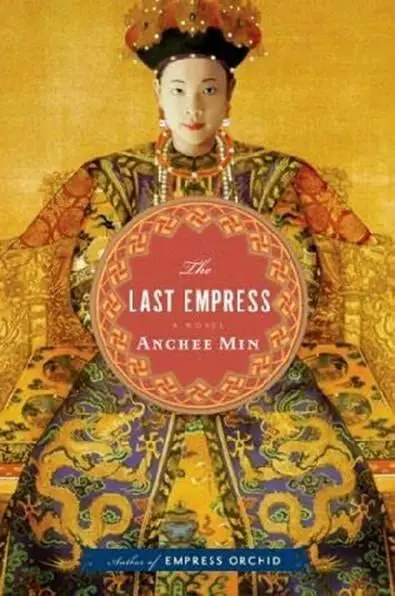
- Название:The Last Empress
- Автор:
- Жанр:
- Год:неизвестен
- ISBN:нет данных
- Рейтинг книги:4 / 5. Голосов: 1
-
Избранное:Добавить в избранное
- Отзывы:
-
Ваша оценка:
The Last Empress: краткое содержание, описание и аннотация
Предлагаем к чтению аннотацию, описание, краткое содержание или предисловие (зависит от того, что написал сам автор книги «The Last Empress»). Если вы не нашли необходимую информацию о книге — напишите в комментариях, мы постараемся отыскать её.
The Last Empress is the story of Orchid"s dramatic transition from a strong-willed, instinctive young woman to a wise and politically savvy leader. Moving from the intimacy of the concubine quarters into the spotlight of the world stage, Orchid must not only face the perilous condition of her empire but also a series of devastating personal losses, as first her son and then her adopted son succumb to early death. Yearning only to step aside, and yet growing constantly into her role, only she-allied with the progressives, but loyal to the conservative Manchu clan of her dynasty-can hold the nation"s rival
factions together.
Anchee Min offers a powerful revisionist portrait based on extensive research of one of the most important figures in Chinese history. Viciously maligned by the western press of the time as the "Dragon Lady," a manipulative, blood-thirsty woman who held onto power at all costs, the woman Min gives us is a compelling, very human leader who assumed power reluctantly, and who sacrificed all she had to protect those she loved and an empire that was doomed to die.
The Last Empress — читать онлайн бесплатно полную книгу (весь текст) целиком
Ниже представлен текст книги, разбитый по страницам. Система сохранения места последней прочитанной страницы, позволяет с удобством читать онлайн бесплатно книгу «The Last Empress», без необходимости каждый раз заново искать на чём Вы остановились. Поставьте закладку, и сможете в любой момент перейти на страницу, на которой закончили чтение.
Интервал:
Закладка:
Kang Yu-wei "informed me," J.O.P. Bland wrote in the London Times, "that he left Peking in compliance with a secret message from the Emperor warning him of his danger. He further stated that the recent events were entirely due to the action of the Manchu party, headed by the Dowager Empress and Viceroy Yung Lu… Kang Yu-wei urges that England has an opportunity to intervene and restore the Emperor to the throne… Unless protection is afforded to the victims of the coup, it will be impossible henceforward for any native official to support British interests."
I had told Li Hung-chang to stop sending me the newspapers, but he pretended to be deaf. I couldn't blame him for trying to educate the Emperor. Li made sure two copies arrived at the same time, one for me and the other for His Majesty. I tried to stay calm, but whatever I read made me miserable. It was painful to remember that Guang-hsu had called Kang Yu-wei a genius, his "best friend" and his "like-mind."
Kang went on a worldwide tour. The newspapers quoted a speech he gave at a conference held in England: "Since the Emperor began to display an interest in affairs of state, the Dowager Empress has been scheming his deposition. She used to play cards with him, and gave him intoxicating drinks in order to prevent him from attending to state affairs. For the greater part of the last two years, the Emperor has been relegated to the role of figurehead against his own wishes."
Both my son and I were poisoned by our own remorse. It didn't matter how I tried to justify the situation; what remained was the undeniable fact that Guang-hsu had allowed a plot for my murder to be hatched.
Kang Yu-wei continued his traveling campaign: "You all know that the Dowager Empress is not educated, that she is very conservative… that she has been very reluctant to give the Emperor any real power in managing the affairs of the empire. In the year 1887 it was decided to set aside thirty million taels for the creation of China's navy… The Dowager Empress appropriated the balance of the money for the repair of [the Summer Palace]." Such slander went on and on.
My son sat idle in his chair for hours on end. I no longer wished that he would come to me or beg me to talk with him. I lost the courage to face him. A distance settled between us. It was frightening. The more Guang-hsu read the newspapers, the deeper he withdrew. When asked to resume his audiences, he refused. He could no longer look me in the eye, and I could no longer tell him that I loved him despite everything that had happened.
Yesterday I found him sobbing after reading Kang Yu-wei's newest calumny: "There is a sham eunuch in the palace who has practically more power than any of the ministers. Li Lien-ying is the sham eunuch's name… All the viceroys have secured their official positions through bribing this man, who is immensely wealthy."
If I ever were to forgive my son, what happened next made it impossible. I was given no chance to defend myself, while Kang Yu-wei was free to harm me by calling himself the spokesman of the Chinese Emperor and me a "murderous thief" and "the scourge of the people."
The world's reputable publishers printed Kang's malicious accusations detailing my life. They were then translated into Chinese and circulated among my people as the discovered truth. In teahouses and at drinking parties stories of how I had poisoned Nuharoo and murdered Tung Chih and Alute spread like a disease.
The underground publication of Kang Yu-wei's version of the Hundred Days reform became a sensation. In it Kang wrote: "In combination with one or two traitorous statesmen, the Dowager Empress has secluded our Emperor and is secretly plotting to usurp his throne, falsely alleging that she is counseling in government… All the scholars of my country are enraged that this meddling palace concubine should seclude [the Emperor]…She has appropriated the proceeds of the government's Good Faith Bonds to build more palaces to give rein to her libidinous desires. She has no feelings for the degradation of the state and the misery of the people."
My son shut himself inside his Ying-t'ai office. Outside the door lay piles of newspapers he had finished reading. Among them were reports of Kang Yu-wei's life in Japanese exile and his glad-handing Cantonese rebel leader Sun Yat-sen, whom the Genyosha had hired to be a front man for my assassination. In the name of the Emperor of China, Kang asked the Japanese Emperor to "take action to remove the Dowager Empress Tzu Hsi."
Over the next eight years, even as my son issued repeated edicts condemning his former mentor, Kang Yu-wei would continue to plot my murder.
Now I begged Guang-hsu to open the door. I said I had lost Tung Chih and I could not go on living if I had to lose him.
Guang-hsu told me he was ashamed and would never forgive himself for what he had done. He said that he could see in my eyes that I no longer had any love for him.
Yet I could not tell him that my love for him hadn't been affected. "I am not myself because I am hurting," I confessed. I dared not speak further-I felt the anger beneath my skin. To give voice to that anger would only cause more harm. I was on the lookout to keep the damage to myself and those around me to a minimum.
Guang-hsu asked what I wanted from "a worthless skin-bag" like him.
I said that I was willing to work to mend our relationship. I let him know that his refusal to pick himself up hurt me more than anything. Yet I could feel myself giving up too. I knew that I had failed with this boy I had adopted and raised since the age of four. I had also failed to keep my promise to my sister Rong. "After Tung Chih's death, I invested my hope in you," I said to Guang-hsu. Not only had I lost hope, but also the courage to try again.
Some part of me would never believe that Guang-hsu meant to murder me. But he had made a grievous error, and it was too big even for me to fix.
Guang-hsu begged to be dethroned and said that all he wanted was to retreat from the public eye and never be seen again.
It was the saddest moment of my life. I refused to accept such defeat. Turning cold and hard, I said to him, "No, I will not grant you the right to quit."
"Why?" he cried.
"Because it will only prove to the world that what Kang has said about me is true."
"Aren't my seals on his arrest warrant proof enough?"
Suddenly I wondered what my son would regret more, the loss of my affection or Kang Yu-wei's incompetence in having me killed.
Yung Lu abandoned the manhunt for Liang Chi-chao-Kang Yu-wei's right-hand man and disciple-because "the subject had made a successful escape to Japan."
Liang Chi-chao was a journalist and translator who had worked as a Chinese secretary for the Welsh Baptist and political activist Timothy Richard, whose goal was to subvert the Manchu regime. Liang was known for his powerful writing and was called by the court "the poison pen."
When the edict ordering Liang Chi-chao's arrest and beheading was issued, he was still in Peking. Yung Lu's men secured the city gates, and Liang sought refuge at the Japanese legation. It must have been a sweet surprise for the fugitive to find out that Ito Hirobumi happened to be a guest there.
"Liang was disguised as a Japanese and sent off to Tientsin," Yung Lu reported. "His escort was an infamous agent of the Genyosha."
My son looked like a blind man, gazing blankly into the middle distance as he listened to Yung Lu.
"Under the protection of the Japanese consul, Liang Chi-chao reached the anchorage at Taku and boarded the gunboat Oshima, " Yung Lu continued. "Since we had been watching his movements closely, we caught up with the Oshima on the open sea. My men demanded the fugitive's surrender, but the Japanese captain refused to hand him over. He claimed that we had violated international law. It was impossible to carry out a search, although we knew Liang was hiding in one of the cabins."
Читать дальшеИнтервал:
Закладка:
Похожие книги на «The Last Empress»
Представляем Вашему вниманию похожие книги на «The Last Empress» списком для выбора. Мы отобрали схожую по названию и смыслу литературу в надежде предоставить читателям больше вариантов отыскать новые, интересные, ещё непрочитанные произведения.







Обсуждение, отзывы о книге «The Last Empress» и просто собственные мнения читателей. Оставьте ваши комментарии, напишите, что Вы думаете о произведении, его смысле или главных героях. Укажите что конкретно понравилось, а что нет, и почему Вы так считаете.