Anchee Min - The Last Empress
Здесь есть возможность читать онлайн «Anchee Min - The Last Empress» весь текст электронной книги совершенно бесплатно (целиком полную версию без сокращений). В некоторых случаях можно слушать аудио, скачать через торрент в формате fb2 и присутствует краткое содержание. Жанр: Историческая проза, на английском языке. Описание произведения, (предисловие) а так же отзывы посетителей доступны на портале библиотеки ЛибКат.
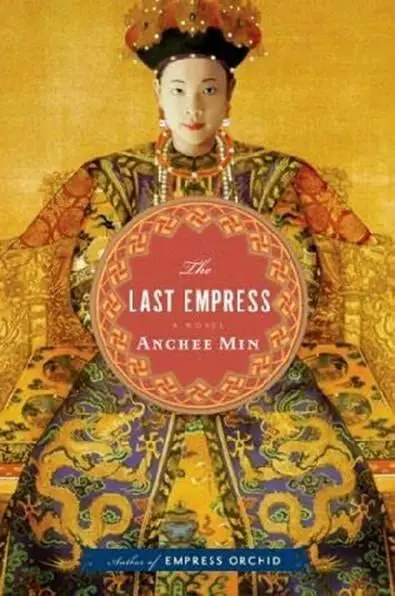
- Название:The Last Empress
- Автор:
- Жанр:
- Год:неизвестен
- ISBN:нет данных
- Рейтинг книги:4 / 5. Голосов: 1
-
Избранное:Добавить в избранное
- Отзывы:
-
Ваша оценка:
The Last Empress: краткое содержание, описание и аннотация
Предлагаем к чтению аннотацию, описание, краткое содержание или предисловие (зависит от того, что написал сам автор книги «The Last Empress»). Если вы не нашли необходимую информацию о книге — напишите в комментариях, мы постараемся отыскать её.
The Last Empress is the story of Orchid"s dramatic transition from a strong-willed, instinctive young woman to a wise and politically savvy leader. Moving from the intimacy of the concubine quarters into the spotlight of the world stage, Orchid must not only face the perilous condition of her empire but also a series of devastating personal losses, as first her son and then her adopted son succumb to early death. Yearning only to step aside, and yet growing constantly into her role, only she-allied with the progressives, but loyal to the conservative Manchu clan of her dynasty-can hold the nation"s rival
factions together.
Anchee Min offers a powerful revisionist portrait based on extensive research of one of the most important figures in Chinese history. Viciously maligned by the western press of the time as the "Dragon Lady," a manipulative, blood-thirsty woman who held onto power at all costs, the woman Min gives us is a compelling, very human leader who assumed power reluctantly, and who sacrificed all she had to protect those she loved and an empire that was doomed to die.
The Last Empress — читать онлайн бесплатно полную книгу (весь текст) целиком
Ниже представлен текст книги, разбитый по страницам. Система сохранения места последней прочитанной страницы, позволяет с удобством читать онлайн бесплатно книгу «The Last Empress», без необходимости каждый раз заново искать на чём Вы остановились. Поставьте закладку, и сможете в любой момент перейти на страницу, на которой закончили чтение.
Интервал:
Закладка:
My son turned away when Yung Lu placed a copy of Japan's Kobe Chronicle in front of him. The paper claimed that on October 22 the Oshima was bringing to Japan "a very valuable present."
Japan had reason to celebrate. In exile Kang Yu-wei and Liang Chi-chao were reunited. As the houseguest of Japan's foreign minister, Shig-enobu Okuma, for five months, Kang was well fed and his braided hair, according to one report, had a "healthy, glossy shine." Over the next several years the two men worked together tirelessly. They succeeded in cobbling together a portrait of me as an evil tyrant, confirming everyone's worst suppositions and prejudices.
Kang and Liang achieved the international recognition they craved. The West regarded them as the heroes of China's reform movement. The "moon-faced" Kang Yu-wei was described as "the sage of modern China." His interviews and articles were made into books that sold thousands of copies in many lands. Readers far from China had their first authoritative glimpse of who I was.
But more than my pride was at stake. Kang and Liang's salacious attacks provided opportunities for those who wished war on China. Since "the true leaders of China are begging the country to be saved," what more excuse did anyone need to oust a "corrupt," "besotted," "reptilian" female dictator?
Western audiences that gathered to hear Kang Yu-wei wanted so much to see China transformed into a Christian utopia that they were susceptible to Kang's lies. From Li Hung-chang I learned that Japan had provided funds for Kang Yu-wei to make a separate tour of the United States, where he was lauded by critics and scholars as "the man who would have brought China American-style democracy."
"Heaven gave us this saint to save China," Kang would open his speeches praising my son. "Although His Majesty has been imprisoned and dethroned, luckily he is still with us. Heaven has not yet abandoned China!"
Collecting more than $300,000 from overseas Chinese merchants who wanted to guarantee the goodwill of any new regime, and with the assistance of Japan's Genyosha secret agents who operated from inland China, Kang Yu-wei began to prepare an armed uprising.
The duet of Kang Yu-wei and Liang Chi-chao was picked up by the New York Times, the Chicago Tribune and the London Times. "All Dowager Empress Tzu Hsi knows is a life of pleasure-seeking, and all Yung Lu knows is a lust for power. Has the Empress ever spared a thought for the good of her country? A tortoise cannot grow hair, a rabbit cannot sprout horns, a cockerel cannot lay eggs, and a withered tree cannot produce blossoms, because it is not in her nature to do so-we cannot expect what doesn't exist in her heart!"
37
On top of the reform disaster, 1898 also turned out to be a long and bitter year of flood and famine. First the harvest failed in Shantung and surrounding provinces, then the Yellow River engulfed hundreds of villages in a savage flood. Thousands became homeless, making it impossible to sow the next year's crops. Worse, locusts descended to devour the meager remains. The squatters, the out-of-work, the discontented and the dispossessed longed for a reason, a cause, a scapegoat.
I was kept busy trying to put out the fires. The Ironhats had proposed hanging Pearl Concubine as a means of making the Emperor bear responsibility. Pearl was found guilty of violating numerous palace rules. I rejected the trumped-up charges, offering no explanation.
The anti-foreign riots continued. An English missionary was murdered in the southwest province of Kweichow, and a French priest was tortured and killed in Hupeh. In the provinces where foreigners lived in close quarters with Chinese, grievances fomented unrest, particularly in German-controlled Kiaochow, the birthplace of Confucius. Locals resented Christianity. In the British- and Russian-controlled areas of Weihaiwei and Liaotung violence broke out when the foreigners decided that they, as leaseholders, were entitled to benefit from Chinese taxes.
In the name of protecting me, Prince Ts'eng and his sons called for the Emperor's abdication. Ts'eng's faction was backed by the Manchu Clan Council and General Tung's Moslem army. Though hard for me to continue to support Guang-hsu, I knew the dynasty would fall with Prince Ts'eng in power. All of the industries and international connections Li Hung-chang had built, including our diplomatic relationships with Western countries, would end. A civil war would give the foreign powers a perfect excuse to intervene.
Stability would require Guang-hsu's continuation as Emperor. I granted an alternative plan presented by the conservatives which said I was to resume the regency. Guang-hsu signed his name but wanted nothing more to do with it.
"The affairs of the nation are at present in a difficult position," the edict read, "and everything awaits reform. I, the Emperor, am working day and night with all my powers. But despite my careful toil, I constantly fear being overwhelmed by the press of work. Moved by a deep regard for the welfare of the nation, I have repeatedly implored Her Majesty to be graciously pleased to advise me in government, and have received her assent. This is an assurance of prosperity to the whole nation, its officials and its people."
It was a humiliation for both Guang-hsu and me. It spoke of the Emperor's incompetence as well as my poor judgment in putting him on the throne in the first place.
Shortly after the edict was issued, Guang-hsu fell ill. I had to rush through my audiences in order to be with him. Soon my son was bedridden. All Doctor Sun Pao-tien's efforts failed, his herbal medicines exhausted. The rumor that the Emperor was dying, or had already died, spread. It seemed to prove Kang Yu-wei's earlier assertion that the poison I was said to have been giving Guang-hsu was now "showing its deadly effect."
I-kuang, our minister of foreign affairs, received numerous inquiries regarding the throne's "disappearance." I-kuang was no Prince Kung. All he could say to me was "Invasions have been discussed among the legations."
My son knew that he must show himself in the court, but he could barely get out of bed.
"If you insist that His Majesty attend, he could easily pass out in the middle of an audience," Sun Pao-tien warned.
Yung Lu agreed. "His Majesty's appearance would do more harm than good."
After witnessing a fit of vomiting that left my son wrung out and sobbing, I put out an urgent call to all the provinces for able physicians. No Chinese doctors dared to come forward. Surprisingly, I received a collective request from the foreign legations. From the letter's wording, the legations seemed to give credence to Kang Yu-wei's version of events: "Only a thorough medical examination of His Majesty will clear the air of the corrosive rumors and restore British and international confidence in the regime." The letter offered the assistance of Western doctors.
But the court and Guang-hsu himself declined the offer. To the court, the throne's health was a matter of national pride and his current condition a secret. As for Guang-hsu, he had suffered enough humiliation as Emperor and didn't want to suffer more as a man. He knew his own condition, and didn't want the world to find out why he was childless.
I was reluctant to subject my son and China to further embarrassment, but as a mother I was committed to try everything to save my son's life. A Western doctor might be Guang-hsu's last hope for regaining his health. I might not have been a worldly woman, but I wasn't stupid. I believed that "in a tiny piece of spotted skin one could visualize an entire leopard." My French hair dyes, English clocks and German telescope spoke of the people who created them. The industrial marvels of the West-telegraph, railroad, military armaments-spoke even louder.
Читать дальшеИнтервал:
Закладка:
Похожие книги на «The Last Empress»
Представляем Вашему вниманию похожие книги на «The Last Empress» списком для выбора. Мы отобрали схожую по названию и смыслу литературу в надежде предоставить читателям больше вариантов отыскать новые, интересные, ещё непрочитанные произведения.




Обсуждение, отзывы о книге «The Last Empress» и просто собственные мнения читателей. Оставьте ваши комментарии, напишите, что Вы думаете о произведении, его смысле или главных героях. Укажите что конкретно понравилось, а что нет, и почему Вы так считаете.