Anchee Min - The Last Empress
Здесь есть возможность читать онлайн «Anchee Min - The Last Empress» весь текст электронной книги совершенно бесплатно (целиком полную версию без сокращений). В некоторых случаях можно слушать аудио, скачать через торрент в формате fb2 и присутствует краткое содержание. Жанр: Историческая проза, на английском языке. Описание произведения, (предисловие) а так же отзывы посетителей доступны на портале библиотеки ЛибКат.
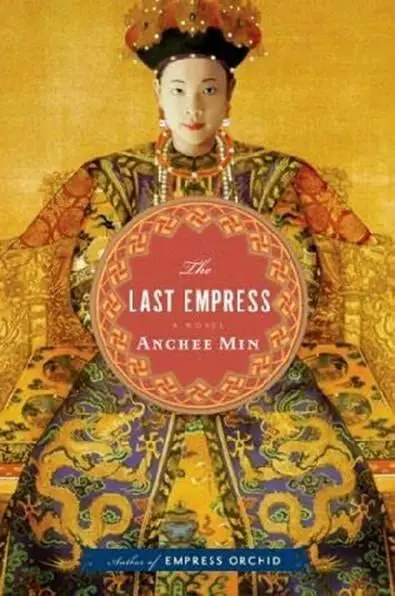
- Название:The Last Empress
- Автор:
- Жанр:
- Год:неизвестен
- ISBN:нет данных
- Рейтинг книги:4 / 5. Голосов: 1
-
Избранное:Добавить в избранное
- Отзывы:
-
Ваша оценка:
The Last Empress: краткое содержание, описание и аннотация
Предлагаем к чтению аннотацию, описание, краткое содержание или предисловие (зависит от того, что написал сам автор книги «The Last Empress»). Если вы не нашли необходимую информацию о книге — напишите в комментариях, мы постараемся отыскать её.
The Last Empress is the story of Orchid"s dramatic transition from a strong-willed, instinctive young woman to a wise and politically savvy leader. Moving from the intimacy of the concubine quarters into the spotlight of the world stage, Orchid must not only face the perilous condition of her empire but also a series of devastating personal losses, as first her son and then her adopted son succumb to early death. Yearning only to step aside, and yet growing constantly into her role, only she-allied with the progressives, but loyal to the conservative Manchu clan of her dynasty-can hold the nation"s rival
factions together.
Anchee Min offers a powerful revisionist portrait based on extensive research of one of the most important figures in Chinese history. Viciously maligned by the western press of the time as the "Dragon Lady," a manipulative, blood-thirsty woman who held onto power at all costs, the woman Min gives us is a compelling, very human leader who assumed power reluctantly, and who sacrificed all she had to protect those she loved and an empire that was doomed to die.
The Last Empress — читать онлайн бесплатно полную книгу (весь текст) целиком
Ниже представлен текст книги, разбитый по страницам. Система сохранения места последней прочитанной страницы, позволяет с удобством читать онлайн бесплатно книгу «The Last Empress», без необходимости каждый раз заново искать на чём Вы остановились. Поставьте закладку, и сможете в любой момент перейти на страницу, на которой закончили чтение.
Интервал:
Закладка:
The day Li Lien-ying hung the new mirror, I dreamed of journeying to a Buddhist temple high in the mountains. The upward path by a cliff was less than a foot wide. Hundreds of feet below was a mirror-like lake. It sat in a valley between two hills. In my dream the donkey I rode refused to move. Its legs were shaking.
I woke remembering a summer holiday, traveling on a river with my family. Our boat was infested with fleas. They didn't seem to bother anyone but me. In the evening, when I brushed the dirt off my sheet to get ready for sleep, the dirt jumped right back and covered the sheet again. It was then that I discovered that it was not dirt but fleas.
Drifting on the water, I could hear the boatmen sing songs to keep each other in rhythm. I remembered reaching out and dipping my hands in the dark green river. The sunset was red, then gray, and then instantly the sky was black. The water flowed through my fingers, warm and smooth.
Yung Lu had been visiting me in my dreams. He always stood on top of a fortress in the middle of a desert. Many years later, when I described to him what my mind's eye saw, he was surprised by its accuracy. His skin was weatherbeaten and he wore a Bannerman's uniform. His posture was as erect as the stone guards made for tomb burial.
In the middle of the night I heard something hit my roof. A rotted branch had dropped from an old tree. I followed my astrologer's advice to avoid omens and moved from the Palace of Concentrated Beauty to the Palace of Peaceful Longevity, which was on the far east side of the Forbidden City. The new palace was quieter, and its greater distance from the audience hall encouraged Guang-hsu's independence, for now it was less convenient for him to consult me.
At the age of fifty-one, I realized how much I wanted Yung Lu back. Not only for personal reasons: his presence would calm Guang-hsu and the court. I needed him to perform the same function Prince Kung did for the young Emperor.
In a letter to Yung Lu, I reported Nuharoo's death, Guang-hsu's upcoming ceremony of mounting the throne and Prince Kung's resignation. I made no mention of how I had survived the seven long years without him. To ensure his return, I enclosed a copy of a petition signed by the ministers at the court demanding Li Hung-chang's beheading.
I had never expected that this would be the scene of our reunion: Yung Lu wolfing down dumplings in my dining room, his hunger giving me an opportunity to observe him. Wrinkles now crossed his face like valleys and rivers. The biggest change I noticed, though, was that he was no longer stiffly formal.
Time, distance and marriage seemed to have calmed him. I didn't experience the anxiety I had anticipated. I had visualized his return so many times-like variations of the same scene in an opera, he would enter again and again but in different settings and in different costumes, offering me different words.
"Willow asked me to apologize." Yung Lu pushed away the empty dish and wiped his mouth. "She is still unpacking."
I did not think Yung Lu understood his wife's sacrifice. Or he pretended not to understand.
Yung Lu continued, "Guang-hsu demands independence, and I wonder if you think him ready."
"You are the throne's last standing advisor," I said.
"If the court wants Li's beheading," he said slowly, "then Emperor Guang-hsu has a long way to go."
I agreed. "I hope I get to retire before I die."
22
I no longer celebrated the Chinese New Year after Tung Chih died. I found myself living more in the past than the present. I dreaded the moment when I would hear the sound of distant fireworks, because I couldn't help but keep count of Tung Chih's age, as if he had lived. He would be twenty-six. Ever so vivid, Tung Chih would appear in my mind's eye.
My son would look pale. His sad eyes would say, "I didn't mean to abandon you, Mother," his expression full of remorse.
I would freeze until Tung Chih's image evaporated, then get down on my knees, facing where he had stood, and weep.
Over the years certain images would grow and sharpen while others would alter or fade. I could clearly see Tung Chih running toward me holding his red-eyed rabbit. I could smell berries on his breath. However, I could no longer remember what he said to me.
An-te-hai often came to my mind as well. I missed his vibrancy, humor and enlightenment. I remembered his poems. I would see his image appear and disappear at the corner of a pavilion or behind a bush. He would smile and sometimes be holding a comb in his right hand. He would ask, "What hairstyle has my lady in mind for today?" or "Time for your longevity walk, my lady."
The ghostly images of Emperor Hsien Feng and Nuharoo also visited me. My husband was always distant and cold, while Nuharoo, unlike the living, breathing person, was affectionate and even humorous. She would order me to create a ceramic opera troupe to bring to her altar.
I regularly inspected the tombs of my husband, Tung Chih and Nuharoo. I wanted to make sure the provincial governor did his job, that no robbers had raided the sites. I wanted to reassure myself that the surrounding sculptures, forests and gardens were well maintained.
Nuharoo's burial ceremony had been elaborate, just the way she'd requested. I followed her instructions: masses of gardenias piled high as snowdrifts, and I wore a black satin court robe embroidered with three hundred bats. I hated it because it made me look like a vulture.
I could have ignored her wishes, but I decided to honor them. It was her way of making sure that I didn't steal her last show. She wanted an open casket, a custom favored by nobles in the West, but rejected the idea at the last minute. She loved the idea that people would admire her eternal robe, a work of such craftsmanship it had taken thirty royal tailors several years to complete.
I remembered the day when Nuharoo and I first inspected the tomb, shortly after Hsien Feng died. She stood tall in her white ceremonial robe and expressed her dissatisfaction with the design of her coffin. The day was as cold as today. The desert wind never ceased. My earrings sang like wind chimes.
I also remembered that I walked alone into the tomb. An-te-hai, like a crazy matchmaker in a comic opera, was determined to see Yung Lu and me together. And his plan had worked. But reality had swept back and life had gone on.
More than half of the people who had made up my life were now dead. I had seen them off to their next lives in glorious fashion, all except for An-te-hai. His remains were nowhere to be found, so he went without a burial. Years later, and after many bribes, I would finally find him. My favorite was wrapped in dirty rags and shipped back to me. His head was loosely sewed back onto his neck. I knew he wanted to be buried "in one piece" because he dreaded returning as a "tailless dog." When An-te-hai had become the highest-ranking eunuch, he had been able to buy back his penis from the butcher who castrated him. He spent a fortune for his "dried-up root."
I remember his eyes lit up when describing his next life, which he would live as a normal man. It touched me profoundly. He knew his place in life, and it was with his charm that he fought against misfortune. I admired his effort and wished that I had his courage. Until I lost him, I didn't realize how much I had loved him-his presence, his birds, his plants, and his wild imagination.
The night I mourned for An-te-hai I wore my pink dress, his favorite. I blew out the memorial candles and slipped into the heated bed. Closing my eyes, I summoned An-te-hai's spirit.
Li Lien-ying was in awe of An-te-hai's "luck." He watched me with tears in his eyes when I burned candles and incense on An-te-hai's birthdays. And on every birthday I would tell Li Lien-ying the same stories: "When I first met An-te-hai, he was a shy fifteen-year-old boy with bright eyes and rouge lips…"
Читать дальшеИнтервал:
Закладка:
Похожие книги на «The Last Empress»
Представляем Вашему вниманию похожие книги на «The Last Empress» списком для выбора. Мы отобрали схожую по названию и смыслу литературу в надежде предоставить читателям больше вариантов отыскать новые, интересные, ещё непрочитанные произведения.

Обсуждение, отзывы о книге «The Last Empress» и просто собственные мнения читателей. Оставьте ваши комментарии, напишите, что Вы думаете о произведении, его смысле или главных героях. Укажите что конкретно понравилось, а что нет, и почему Вы так считаете.