Anchee Min - The Last Empress
Здесь есть возможность читать онлайн «Anchee Min - The Last Empress» весь текст электронной книги совершенно бесплатно (целиком полную версию без сокращений). В некоторых случаях можно слушать аудио, скачать через торрент в формате fb2 и присутствует краткое содержание. Жанр: Историческая проза, на английском языке. Описание произведения, (предисловие) а так же отзывы посетителей доступны на портале библиотеки ЛибКат.
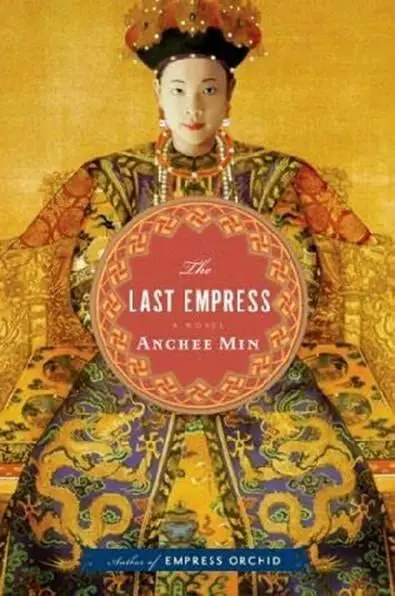
- Название:The Last Empress
- Автор:
- Жанр:
- Год:неизвестен
- ISBN:нет данных
- Рейтинг книги:4 / 5. Голосов: 1
-
Избранное:Добавить в избранное
- Отзывы:
-
Ваша оценка:
The Last Empress: краткое содержание, описание и аннотация
Предлагаем к чтению аннотацию, описание, краткое содержание или предисловие (зависит от того, что написал сам автор книги «The Last Empress»). Если вы не нашли необходимую информацию о книге — напишите в комментариях, мы постараемся отыскать её.
The Last Empress is the story of Orchid"s dramatic transition from a strong-willed, instinctive young woman to a wise and politically savvy leader. Moving from the intimacy of the concubine quarters into the spotlight of the world stage, Orchid must not only face the perilous condition of her empire but also a series of devastating personal losses, as first her son and then her adopted son succumb to early death. Yearning only to step aside, and yet growing constantly into her role, only she-allied with the progressives, but loyal to the conservative Manchu clan of her dynasty-can hold the nation"s rival
factions together.
Anchee Min offers a powerful revisionist portrait based on extensive research of one of the most important figures in Chinese history. Viciously maligned by the western press of the time as the "Dragon Lady," a manipulative, blood-thirsty woman who held onto power at all costs, the woman Min gives us is a compelling, very human leader who assumed power reluctantly, and who sacrificed all she had to protect those she loved and an empire that was doomed to die.
The Last Empress — читать онлайн бесплатно полную книгу (весь текст) целиком
Ниже представлен текст книги, разбитый по страницам. Система сохранения места последней прочитанной страницы, позволяет с удобством читать онлайн бесплатно книгу «The Last Empress», без необходимости каждый раз заново искать на чём Вы остановились. Поставьте закладку, и сможете в любой момент перейти на страницу, на которой закончили чтение.
Интервал:
Закладка:
In the meantime, I advised Guang-hsu to accept Li Hung-chang's proposal to upgrade Taiwan's status from that of a prefecture of Fujian to a full-fledged province. If it was inevitable that we would lose the island, at least the gesture might gain us honor. Guang-hsu's 1887 edict declared that Taiwan would be "the twentieth province in the country, with its capital at Taipei," and that Taiwan's modernization drive would "include the building of the first railroad and the beginning of a postal service." We fooled no one but ourselves.
21
It snowed last night. Although it was not heavy, it continued until dawn. It had been a tough week. My head felt battered and swollen. Tutor Weng had given the Emperor and me an intensive introduction to Japan's transformation through political reform. Tutor Weng elaborated on the importance of freedom of expression.
"The general view regarding scholars as subversives must be changed." The grand tutor's gray beard hung in front of his chest like a curtain, making him look like a kitchen god. "We must follow the Japanese model."
"First I'll ban the practice of prosecuting heretics." Guang-hsu was excited.
"But how will you convince the court?" I asked him. "We must keep in mind that the Manchu Dynasty was founded on military power. Our ancestors secured their position by purging and slaughtering all subversives."
"Mother." My son turned to me. "You are the senior member of the royal clan and have earned great authority. The court can say no to me, but it will have difficulty saying no to you."
I promised to help. In front of the court, I granted permission to Tutor Weng's proposal, which would introduce Japanese-style reforms. However, behind the Forbidden City gates I expressed my private concern to Tutor Weng. I told him that I lacked confidence in the intelligence of our scholars, especially the group who named themselves Ming-shih, "men of wisdom." By reputation they were inclined to petty chatter and self-indulgence. As a young girl back in Wuhu, I remembered such men as my father's friends. They spent their days reciting poetry, discussing philosophy, singing operas and drinking. They were known to frequent playhouses and "flower boats"-floating brothels.
I was more concerned about Japan's growing aggression and encouraged the Emperor to work with Li Hung-chang in setting up an admiralty board to oversee naval affairs. I asked Guang-hsu to personally see to the Imperial funding of vessels and munitions of war.
My biggest challenge had been the outrage expressed by the Manchu royals over cuts in their annual taels. To quiet them, I appointed Prince Ch'un as the comptroller of the new board. The man was not the equal of his brother the brilliant Prince Kung, whom I would have preferred to work with. But Prince Kung had made a fatal mistake, which put him on the sidelines. Prince Ch'un was ineffective in all things, but he was the father of the Emperor and I had no other candidate. Aware of his shortcomings, I appointed Li Hung-chang and Tseng Chi-tse, son of Tseng Kuo-fan, as his advisors, knowing that they would more than fulfill their roles.
Future historians would describe Prince Ch'un's appointment as my revenge against Prince Kung and as another example of my thirst for power. The truth was that Kung was a victim of Manchu inner-court politics. His liberal views made him a target not only of the Iron-hats but also of his own jealous brothers, including Prince Ch'un and Prince Ts'eng.
During the conflict with France, the Ironhats advocated that China go immediately to war. Prince Ch'un was encouraged to claim his authority in his son's government. By the time I became involved, Prince Kung's trouble with the court's majority was out of control. Believing that China should do everything to avoid a war, Kung worked independently with envoys whom he sent to Paris to negotiate. With Robert Hart's assessment of the situation, Prince Kung brought France to a compromise settlement, and Li Hung-chang was dispatched to formalize the agreement.
When Li's settlement turned Indochina into a joint protectorate of China and France, the nation's emotions were stirred. Prince Kung and Li Hung-chang were attacked as traitors. Letters denouncing the two piled up on my desk.
Although I supported Prince Kung, I couldn't ignore the growing dissension in the court. Emperor Guang-hsu was being pushed around by his hot-blooded brother and Ironhat leader Prince Ch'un Junior.
I realized that the only way to get Prince Kung out of trouble was to fire him for relatively benign reasons: arrogance, nepotism and inefficiency. I convinced my brother-in-law that an edict of dismissal would clear him of the charge of treason.
In anger and disappointment, Kung offered his resignation, and it was granted.
Li Hung-chang was left vulnerable. To save his own skin, he switched sides-a move I could not criticize and for which I could offer only sympathy. Then Prince Ch'un replaced Prince Kung as the chief minister.
The nation suffered the consequences of the departure of Prince Kung, a man I had depended on for security for so many years. With both Yung Lu and Prince Kung gone, I became nervous. China was now almost solely in the hands of the Manchu hardliners-a notoriously grasping, villainous and uneducated group that numbered in the thousands.
The Manchu ancestors had set up a system of rotating appointments every two or three years to prevent officials from establishing private interests. The rotation often meant that a new governor would fall into the grip of his clerks and underlings, who knew their area well. I was suspicious of the new governors who came to tell the Emperor of "recent achievements."
According to Li Hung-chang, thirty percent of the nation's annual revenue was siphoned off through extortion, fraud and corruption. Our government was bedeviled by the lack of competent and honest men. And, above all, by a shortage of funds and the means to generate them.
Guang-hsu had been talking about remitting land taxes. I pleaded with him to stay his hand. Past summers had brought ruin to half of China. In the poorest provinces families exchanged their children-parents could not bear to watch their own die and then be forced to eat them. In the meantime, our exports lagged perilously behind imports. Even the tea trade, which we had virtually monopolized in 1876, had been stolen by British-run India. We now supplied only a quarter of the world's consumption of tea.
My room was stuffed with papers. Brushes, paint, ink stones and signature stamps cluttered every surface. My walls were covered with paintings in progress. My subjects continued to be floral studies and landscapes, but my strokes revealed my increasing anxiety.
I sent my painting instructor away because I was driving her crazy. She could not understand why I couldn't paint the way I used to. She was terrified by my mad brushstrokes. Her eyebrows were like two peaks and her mouth gaped with silent shock as she fixed my strokes. She dotted the black ink everywhere until the painting dripped and my rose turned into a zebra.
Li Lien-ying told me that my paintings were not selling because the collectors believed that they were not mine.
"The new pieces lack elegance and calmness," my eunuch said.
I told him that the beauty of the Imperial parks no longer inspired me. "Hostile and inhuman, the pavilions stand there only to help rally oppression!"
"But my lady, we who inhabit the Forbidden City live like bats in caves. Darkness is our mean."
I threw my brush across the room. "I am sick of looking at the shady courtyards and the long, dark, narrow stone paths! The identical Forbidden City apartments whisper murder in my ears!"
"It's a sickness of the mind, my lady. I'll make arrangements to hang a large mirror by the entrance. It will help deflect the intruding evil spirits."
Читать дальшеИнтервал:
Закладка:
Похожие книги на «The Last Empress»
Представляем Вашему вниманию похожие книги на «The Last Empress» списком для выбора. Мы отобрали схожую по названию и смыслу литературу в надежде предоставить читателям больше вариантов отыскать новые, интересные, ещё непрочитанные произведения.







Обсуждение, отзывы о книге «The Last Empress» и просто собственные мнения читателей. Оставьте ваши комментарии, напишите, что Вы думаете о произведении, его смысле или главных героях. Укажите что конкретно понравилось, а что нет, и почему Вы так считаете.