Anchee Min - The Last Empress
Здесь есть возможность читать онлайн «Anchee Min - The Last Empress» весь текст электронной книги совершенно бесплатно (целиком полную версию без сокращений). В некоторых случаях можно слушать аудио, скачать через торрент в формате fb2 и присутствует краткое содержание. Жанр: Историческая проза, на английском языке. Описание произведения, (предисловие) а так же отзывы посетителей доступны на портале библиотеки ЛибКат.
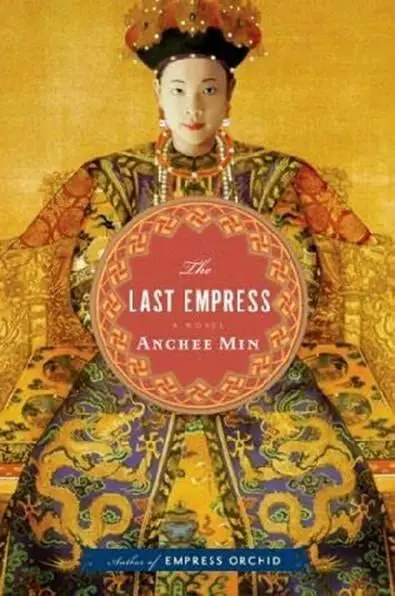
- Название:The Last Empress
- Автор:
- Жанр:
- Год:неизвестен
- ISBN:нет данных
- Рейтинг книги:4 / 5. Голосов: 1
-
Избранное:Добавить в избранное
- Отзывы:
-
Ваша оценка:
The Last Empress: краткое содержание, описание и аннотация
Предлагаем к чтению аннотацию, описание, краткое содержание или предисловие (зависит от того, что написал сам автор книги «The Last Empress»). Если вы не нашли необходимую информацию о книге — напишите в комментариях, мы постараемся отыскать её.
The Last Empress is the story of Orchid"s dramatic transition from a strong-willed, instinctive young woman to a wise and politically savvy leader. Moving from the intimacy of the concubine quarters into the spotlight of the world stage, Orchid must not only face the perilous condition of her empire but also a series of devastating personal losses, as first her son and then her adopted son succumb to early death. Yearning only to step aside, and yet growing constantly into her role, only she-allied with the progressives, but loyal to the conservative Manchu clan of her dynasty-can hold the nation"s rival
factions together.
Anchee Min offers a powerful revisionist portrait based on extensive research of one of the most important figures in Chinese history. Viciously maligned by the western press of the time as the "Dragon Lady," a manipulative, blood-thirsty woman who held onto power at all costs, the woman Min gives us is a compelling, very human leader who assumed power reluctantly, and who sacrificed all she had to protect those she loved and an empire that was doomed to die.
The Last Empress — читать онлайн бесплатно полную книгу (весь текст) целиком
Ниже представлен текст книги, разбитый по страницам. Система сохранения места последней прочитанной страницы, позволяет с удобством читать онлайн бесплатно книгу «The Last Empress», без необходимости каждый раз заново искать на чём Вы остановились. Поставьте закладку, и сможете в любой момент перейти на страницу, на которой закончили чтение.
Интервал:
Закладка:
"It is inconceivable that Yehonala did not know of the shameful exploits of her son and Nuharoo," one Chinese translation read, "and the fatal consequences of such adventures. It was within her power to forbid these revels, yet she did nothing to prevent them."
Day after day, slanderers from around the world poured their venom: "We see how complete was the Dowager Empress's estrangement from her son and how total her lust for power."
"For the young girl from the poorest province in China, no price is too high to maintain her despotic grip on the Celestial Empire."
I dreamed that Yung Lu would come back to defend me. I cried at Tung Chih's altar and walked back in the middle of the night through the Hall of Spiritual Nurturing like a ghost. During the day's audiences, I would break down and weep like a schoolgirl. Guang-hsu kept passing me handkerchiefs until he started to weep himself.
20
The powerful strategist and businessman Li Hung-chang told me that not only was China facing an unavoidable war, but we were already deeply into it. For a week the court had discussed nothing but France's ambitions in our southern border provinces, including Vietnam, which China had long ago ruled before the Vietnamese gained a quasi-independence in the tenth century.
Soon after my husband's death in 1862, France colonized southern Vietnam, or Cochin China. Like the British, the French were hungrily drawn to trade in our southwestern provinces and had set their sights on control of the navigable Red River in northern Vietnam. In 1874 France forced the King of Vietnam to accept a treaty giving it the privileges of overlordship that China had traditionally enjoyed. Much to France's irritation, the King continued to send tribute to my son in exchange for protection.
To help hold the Vietnamese territory in the south, I granted freedom to a former Taiping rebel leader and sent him to repel the French. The rebel had been born in the area and considered it his homeland. He fought valiantly and succeeded in keeping the French at bay. But when the King died, the French negotiated another treaty with his successor, which stated, "Vietnam recognizes and accepts the protectorate of France."
In response to our court's ultimatum, the French launched a surprise military attack. Since we hadn't expected to go to war, our southwestern borders were neither strengthened nor prepared. By March of 1884 Li Hung-chang came to report that all of the major cities in Vietnam had fallen into French hands.
My court was divided over the crisis. Publicly, the dispute was over how best to deal with French aggression. Beneath the surface, however, was a widening gap between two political factions: the conservative Manchu Ironhats and the progressives, led by Prince Kung and Li Hung-chang.
I asked Guang-hsu, who had just turned fourteen, how he felt about the situation, and he replied, "As yet I do not know."
I wasn't sure whether or not my son meant to be humble. Months of sitting through court audiences seemed to have worn the boy down. He looked bored and listless. He had told me half jokingly that he would prefer a game of chess over attending an audience. When I told him that he must do what duty dictated, Guang-hsu responded, "I'm trying to glue myself to the dragon chair."
I tried to encourage him. "You are saving the nation, Guang-hsu."
"I haven't achieved anything. I just listen to the same arguments, day in and day out."
It was then that I discovered that Guang-hsu had skipped his audiences during the entire time I was making preparations for Nuharoo's funeral. This upset me more than receiving the news of cities falling in Vietnam.
I didn't know what else I could do to inject a sense of urgency into the young Emperor. One day during lunch I illustrated our position on a napkin, drawing a triangle representing the divided court with the Emperor caught in the middle.
I tried not to push too hard. I remembered how Tung Chih ran away while appearing obedient. I remembered his resentment and the irritation that had come into his voice. I told myself to make life Guang-hsu's game instead of mine.
The first thing I did was waive Guang-hsu's duty to officiate at the Confucian rites. Although I agreed with the court that Tung Chih's spirit required the performance of time-honored prayers and rituals for the comfort and security of his departed soul, I believed that Guang-hsu needed a break.
I didn't want Guang-hsu to live in Tung Chih's shadow. However, the court regarded his ascent to the throne as nothing but that. Without Nuharoo's supervision I began to bend the rules. A few ministers questioned my actions, but most court members understood it when I said, "Only when Guang-hsu has succeeded will Tung Chih's soul truly be at rest."
"Uncle Prince Ts'eng threatened suicide when I agreed to allow foreigners to live and trade in China," Guang-hsu reported. "He has asked my father to join him in funding the Boxers."
I was all too aware of the Boxers, a peasant movement with deep roots in traditional Chinese culture-or so their leaders claimed. Their numbers were growing rapidly.
"Unfortunately," I informed my son, "the Boxers' mission is to murder foreigners."
"Are you on Prince Kung's side, then?" Guang-hsu asked.
I let out a sigh.
"My father is full of nonsense," Guang-hsu went on. "His poems and calligraphy are exhibited everywhere."
"Prince Ch'un wants China to stay closed. What are your thoughts?"
"I agree with Uncle Kung," Guang-hsu replied. Then, looking me straight in the eye, he said, "I don't understand why you tell me to cease when I try to let the court know my opinion."
"The Emperor's job is to unite the court," I gently pointed out.
"Yes, Mother," Guang-hsu said obediently.
"I heard that you want to inspect the new navy."
Guang-hsu nodded. "Yes, very much. Li Hung-chang is ready, but the court won't give me permission to receive him. My father thinks he is the real Emperor, though I wear the clothes."
"What do you think of Prince I-kuang's handling of the Board of Foreign Affairs?"
"He seems to be more capable than the rest. But I don't really like him, or my other uncles." Guang-hsu paused for a moment and then continued. "To tell you the truth, Mother, I have been establishing contacts with people outside the court circle. Thinkers and reformers, people who know how to really help me."
"Make sure you understand what reform means in practice." I didn't want to admit that I had little idea myself.
"I do, Mother. I have been working up a reform plan."
"What would be your first edict?"
"It would be to remove privileges from those who enjoy government salaries while contributing nothing."
"Are you aware of the size of this group?"
"I know there are hundreds of royal pests who are paid for their princeships and governorships. My father, uncles, brothers and cousins are their patrons."
"Your younger brother, Prince Ch'un Junior, has become the new star of the Ironhats," I warned him. "His gang vowed to destroy anyone who supports Prince Kung and Li Hung-chang."
"I'll be issuing the edicts, not Prince Ch'un Junior."
"Support Prince Kung and Li Hung-chang and maintain good relations with the conservative party," I advised.
"I am prepared to abandon them," Guang-hsu said in a calm voice. His determination pleased me, although I knew I couldn't afford to encourage him further.
"You should not abandon them, Guang-hsu."
The Emperor pivoted his head toward me and stared.
"They are the heart of the Manchu ruling class," I explained. "You must not turn blood relatives into enemies."
"Why?"
"They can use the family law to overthrow you."
Guang-hsu seemed unsure. He got off his chair and paced the hall.
Читать дальшеИнтервал:
Закладка:
Похожие книги на «The Last Empress»
Представляем Вашему вниманию похожие книги на «The Last Empress» списком для выбора. Мы отобрали схожую по названию и смыслу литературу в надежде предоставить читателям больше вариантов отыскать новые, интересные, ещё непрочитанные произведения.




Обсуждение, отзывы о книге «The Last Empress» и просто собственные мнения читателей. Оставьте ваши комментарии, напишите, что Вы думаете о произведении, его смысле или главных героях. Укажите что конкретно понравилось, а что нет, и почему Вы так считаете.