Anchee Min - The Last Empress
Здесь есть возможность читать онлайн «Anchee Min - The Last Empress» весь текст электронной книги совершенно бесплатно (целиком полную версию без сокращений). В некоторых случаях можно слушать аудио, скачать через торрент в формате fb2 и присутствует краткое содержание. Жанр: Историческая проза, на английском языке. Описание произведения, (предисловие) а так же отзывы посетителей доступны на портале библиотеки ЛибКат.
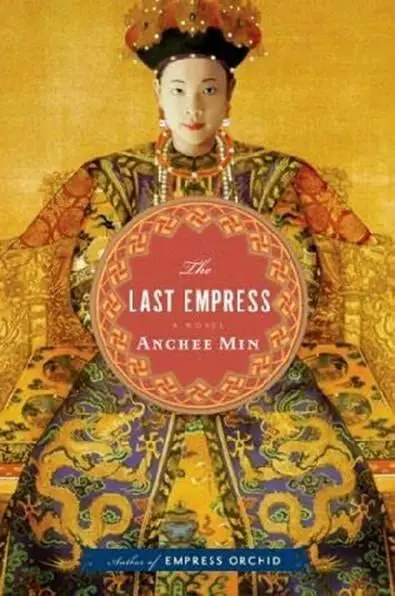
- Название:The Last Empress
- Автор:
- Жанр:
- Год:неизвестен
- ISBN:нет данных
- Рейтинг книги:4 / 5. Голосов: 1
-
Избранное:Добавить в избранное
- Отзывы:
-
Ваша оценка:
The Last Empress: краткое содержание, описание и аннотация
Предлагаем к чтению аннотацию, описание, краткое содержание или предисловие (зависит от того, что написал сам автор книги «The Last Empress»). Если вы не нашли необходимую информацию о книге — напишите в комментариях, мы постараемся отыскать её.
The Last Empress is the story of Orchid"s dramatic transition from a strong-willed, instinctive young woman to a wise and politically savvy leader. Moving from the intimacy of the concubine quarters into the spotlight of the world stage, Orchid must not only face the perilous condition of her empire but also a series of devastating personal losses, as first her son and then her adopted son succumb to early death. Yearning only to step aside, and yet growing constantly into her role, only she-allied with the progressives, but loyal to the conservative Manchu clan of her dynasty-can hold the nation"s rival
factions together.
Anchee Min offers a powerful revisionist portrait based on extensive research of one of the most important figures in Chinese history. Viciously maligned by the western press of the time as the "Dragon Lady," a manipulative, blood-thirsty woman who held onto power at all costs, the woman Min gives us is a compelling, very human leader who assumed power reluctantly, and who sacrificed all she had to protect those she loved and an empire that was doomed to die.
The Last Empress — читать онлайн бесплатно полную книгу (весь текст) целиком
Ниже представлен текст книги, разбитый по страницам. Система сохранения места последней прочитанной страницы, позволяет с удобством читать онлайн бесплатно книгу «The Last Empress», без необходимости каждый раз заново искать на чём Вы остановились. Поставьте закладку, и сможете в любой момент перейти на страницу, на которой закончили чтение.
Интервал:
Закладка:
"Funding the Boxers is one of the Ironhats' strategies," I said, taking a sip of tea. "They are backed by our friend the Canton governor, Chang Chih-tung."
"I know, I know, they are the influential leaders and are resentful if not hostile toward all foreigners." Guang-hsu went back to his chair and sat down. He let out a heavy sigh.
I rose to add hot water to his teacup.
"Should I trust Li Hung-chang?" Guang-hsu asked. "He seems to be the most successful dealmaker with the foreign powers."
"Trust him," I replied. "However, keep in mind that your brother Ch'un cares about the Manchu Dynasty no less than Li Hung-chang."
The spring air was gritty with sand blown by the strong desert wind. It wasn't until April that the wind softened to a breeze. Under the warm sun the eunuchs let go of their brown winter robes that made them look like bears. The Imperial backyard concubines slipped into their ankle-length chipaos, dresses of Manchu design that cleverly complimented the female figure.
I missed strolling the streets of Peking under the sunshine. It had been over a quarter of a century since I'd had the pleasure. Images of the city came to me only in my dreams. I missed looking into lanes and courtyards where fermiana trees were in bud and loquat trees bloomed in bunches. I missed the baskets of the peony sellers by the busy crossroads. I remembered the scent of their freshly cut flowers and the sweet smell of date trees.
Ball-like willow catkins chased each other inside the Forbidden City. They flew over the inner walls and through the windows and landed on my desk while I outlined what I had read in reports from overseas.
Guang-hsu sat beside me. "Li Hung-chang says he has sent reinforcements to the trouble spot, but from others I hear different," Guang-hsu said, cupping his hands together under his chin.
No one else was in the room. We could hear the echoes of our own voices. I reminded the Emperor of the possibility that people would say anything to discredit Li.
"It is difficult to know who's telling the truth," Guang-hsu agreed.
I wished that there were others whom I could depend on for information. Li Hung-chang was the only one who had established his credibility beyond the shadow of a doubt. I liked him, although never his news. Whenever I heard my eunuch's voice announcing Li's arrival, my insides would stir. I had to make an effort to sit up straight so that I could hold the bad news in my stomach.
On August 22, 1885, the French opened fire without warning, yet they refused to call it a war. The message from Li Hung-chang read, "Our junks and numerous ships were set ablaze and they sank within minutes."
Guang-hsu's hands shook slightly as he turned the pages. "Our supplies are strangled now that the French navy blockades the straits between Taiwan and Fukien. Where is Li Hung-chang's Northern Army?"
"You sent him to deal with Japan over the issue of Korea," I reminded him. "Li's army must remain in the north."
With both hands Guang-hsu held his head.
"Have some tea, Guang-hsu" was all I could say.
Pressing his eyes with his fingers, he said, "We can't afford not to deal with Japan."
I agreed. "To Japan, Korea is the point of access to Pechili Bay and then to Peking itself."
Guang-hsu rose and went to read the court's memorandum. "What else can the court advise me? 'Exercise restraint… Do not arouse conflict with Japan while at war with the French…'"
"The court had hoped that Japan would be grateful after we let them have Taiwan."
"Tutor Weng said that our kindness and sense of self-restraint should not be regarded as an invitation for invasion."
"He's not wrong, but-"
"Mother," Guang-hsu interrupted me, "do you know that the week the Americans signed the treaty with Korea, Tutor Weng became constipated? He tried to punish himself by eating nothing but breadsticks."
I sighed and tried to concentrate. "America's involvement only complicates matters."
Guang-hsu held himself with both of his arms and sat down again.
We stared at each other.
"Mother, is the United States implying that Korea is now an equal among nations and independent of China?" I nodded.
"I don't feel well, Mother. My body wants to desert me."
I wanted to say "Shame and self-punishment don't inspire courage," but instead I turned my head away and began to weep.
As Emperors, both of my sons had no way to escape. Guang-hsu had to continue to live Tung Chih's nightmare. I felt like the ghost who came to snatch a substitute so the dead son's soul could be given a new life. I felt that it was my hands that were pulling and tightening the rope around Guang-hsu's neck.
"Who else is on the way to invade us?" Guang-hsu asked in a panicked tone. "I am sick of being told after the battle is lost and the treaty drafted!"
"It's not your fault that we lost Taiwan, Vietnam and Korea," I managed to say. "Since 1861 China has been like a mulberry tree nipped away at by worms. Your frustration is no different from my husband's."
My words of understanding didn't comfort Guang-hsu. He began to lose his playfulness. In the months to come, the distress would claim him. Unlike Tung Chih, who chose to escape, Guang-hsu did nothing but endure the bad news.
Li Hung-chang negotiated with the French, and Prince Kung invited Robert Hart of our customs service to conduct diplomacy on our behalf. We were lucky, because in the end Hart proved to be a true friend of China.
Before the end of summer, we had unceremoniously ceded Vietnam to France. Li Hung-chang volunteered his disgrace in order for the throne to save face.
A painful moment came when Guang-hsu realized that after protracted war, long suffering, capricious decision-making and the tragic death of thousands, China had obtained only the abolition of the original indemnity to France.
In the meantime, Korea, financed by Japan, began Western-style reforms and proclaimed independence.
"Korea is the thumb of China's hand!" Guang-hsu shouted during an audience.
"Yes, Your Majesty," the court echoed.
"We are weakened, but not shattered!" The Emperor waved his fist.
Everyone's attitude was "Let the boy blow off steam." In the end, Guang-hsu consented to the resolution of the Sino-French War in order to concentrate our defenses in the north, against Japan.
Often, by the time news reached the throne, the moment for action would have already passed. It was written clearly in the dynastic laws that authority was to be fully respected and etiquette strictly followed, but I was forced to adapt the laws to changing situations. Greater autonomy had brought efficiency and successful outcomes on a number of occasions. Many times the initiative was Li Hung-chang's, who was doing all he could to hold back the Japanese.
With the force Li Hung-chang sent into Korea went a man who would soon be playing an important role on China's political stage. His name was Yuan Shih-kai, a stocky twenty-three-year-old who was ambitious and courageous. When the pro-Japanese faction had attempted a coup in December 1884 at a ceremonial banquet in Seoul, Yuan, the chief of staff of the garrison, took the King of Korea hostage after a fierce struggle in the palace's very courtyard and silenced the Japanese and their Korean disciples.
Yuan Shih-kai's prompt and confident military action averted the fall of Korea to Japan. For this Guang-hsu rewarded him. Besides a rank-jumping promotion, Yuan was made the Chinese Resident in Seoul.
The treaty Li Hung-chang negotiated with Japan in 1885 stated that both countries would withdraw their troops from Korea. It stipulated that a third power would organize reforms in Korea, and that China and Japan could intervene with military assistance only after notifying each other. Five years later Korean envoys would come to Peking and kowtow like vassals before Guang-hsu. It brought my son great relief, although both he and I knew it was only a matter of time before we would lose control again.
Читать дальшеИнтервал:
Закладка:
Похожие книги на «The Last Empress»
Представляем Вашему вниманию похожие книги на «The Last Empress» списком для выбора. Мы отобрали схожую по названию и смыслу литературу в надежде предоставить читателям больше вариантов отыскать новые, интересные, ещё непрочитанные произведения.




Обсуждение, отзывы о книге «The Last Empress» и просто собственные мнения читателей. Оставьте ваши комментарии, напишите, что Вы думаете о произведении, его смысле или главных героях. Укажите что конкретно понравилось, а что нет, и почему Вы так считаете.