Frances Itani - Requiem
Здесь есть возможность читать онлайн «Frances Itani - Requiem» весь текст электронной книги совершенно бесплатно (целиком полную версию без сокращений). В некоторых случаях можно слушать аудио, скачать через торрент в формате fb2 и присутствует краткое содержание. Город: Toronto, Год выпуска: 2012, ISBN: 2012, Издательство: A Phyllis Bruce Book, Жанр: Историческая проза, на английском языке. Описание произведения, (предисловие) а так же отзывы посетителей доступны на портале библиотеки ЛибКат.
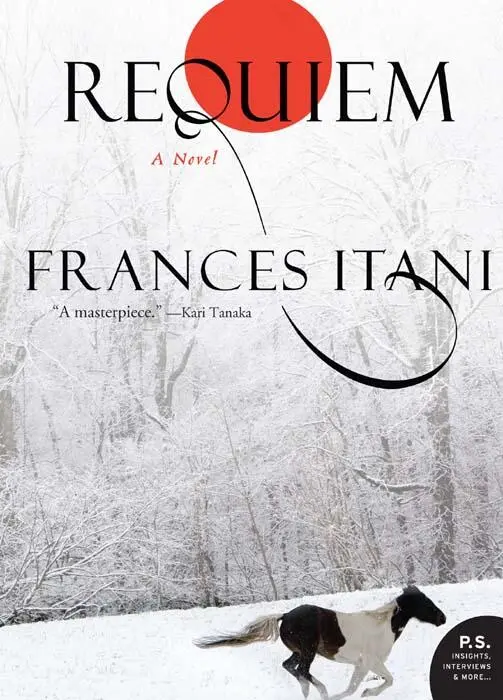
- Название:Requiem
- Автор:
- Издательство:A Phyllis Bruce Book
- Жанр:
- Год:2012
- Город:Toronto
- ISBN:978-1-44340-690-1
- Рейтинг книги:4 / 5. Голосов: 1
-
Избранное:Добавить в избранное
- Отзывы:
-
Ваша оценка:
Requiem: краткое содержание, описание и аннотация
Предлагаем к чтению аннотацию, описание, краткое содержание или предисловие (зависит от того, что написал сам автор книги «Requiem»). Если вы не нашли необходимую информацию о книге — напишите в комментариях, мы постараемся отыскать её.
delicately probes the complex adjustments we make to live with our sorrows…. [A] perfectly modulated novel.”
—
An extraordinary researcher and scholar of detail, Frances Itani—author of the best-selling novel
—excels at weaving breathtaking fiction from true-life events. In her new novel, she traces the lives, loves, and secrets in one Japanese-Canadian family during and after their internment in the 1940s.
In 1942, in retaliation for the attack on Pearl Harbor, the Canadian government removed Bin Okuma’s family from their home on British Columbia’s west coast and forced them into internment camps. They were allowed to take only the possessions they could carry, and Bin, as a young boy, was forced to watch neighbors raid his family’s home before the transport boats even undocked. One hundred miles from the “Protected Zone,” they had to form new makeshift communities without direct access to electricity, plumbing, or food—for five years.
Fifty years later, after his wife’s sudden death, Bin travels across Canada to find the biological father who has been lost to him. Both running from grief and driving straight toward it, Bin must ask himself whether he truly wants to find First Father, the man who made a fateful decision that almost destroyed his family all those years ago. With his wife’s persuasive voice in his head and the echo of their love in his heart, Bin embarks on an unforgettable journey into his past that will throw light on a dark time in history.
Requiem — читать онлайн бесплатно полную книгу (весь текст) целиком
Ниже представлен текст книги, разбитый по страницам. Система сохранения места последней прочитанной страницы, позволяет с удобством читать онлайн бесплатно книгу «Requiem», без необходимости каждый раз заново искать на чём Вы остановились. Поставьте закладку, и сможете в любой момент перейти на страницу, на которой закончили чтение.
Интервал:
Закладка:
In Canada, under the War Measures Act, more than 20,000 people were moved to inland camps. In the United States, more than 114,000 were interned in ten camps stretching throughout six states from California to Arkansas. This was imprisonment based on ancestry. It was highly organized racism. No person of Japanese descent was ever charged with any act of sabotage or disloyalty in either country.
I recall trying to describe, during a class with W.O. Mitchell in the seventies, a visit to the site of a former camp beside the Fraser River in British Columbia, where my husband had been interned as a child for almost seven years—five years in the camp and two subsequent years of restricted movement, going from place to place while his father tried to find work.
The trip to the Fraser Valley was revelatory. When we reached the site of the camp, before my eyes my husband turned into someone I did not know. We were standing at the side of a mountain in the midst of a bulldozed, abandoned field where there was no proof of human habitation. No road, no path, no graves, no building fragments. And yet, he began to pace off the territory of his childhood. He was suddenly on his knees, digging in the earth. Although he had been only eight years old when he left the camp, he was able to recognize patterns in the grass, patterns of earth cellars below now-invisible shacks—sixty-three of them, the contours of which he held only in memory.
He continued to dig. I went to the woods and returned with branches, and the two of us scraped away at the location he insisted had been his own. Moments later, we began to find dishes. Splendid blue and white rice bowls, broken into large fragments that we were able to piece together. After that, we drove to the Okanagan Valley to visit his parents. We excitedly showed my mother-in-law our discovery. With dignity, she walked to her kitchen cupboard and opened a door. She pulled out a bowl that was identical to those we had found in the dirt, hundreds of miles away. A glued-together rice bowl, missing one triangular piece of rim, is now on a special shelf in our own dining room.
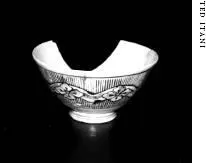
When our children were young, I wrote this experience into a poem called “The Camp Revisited—1976.” At the University of Alberta, I took a sociology course taught by Professor Gordon Hirabayashi, a former resident of Seattle who had been a student at the University of Washington when Japanese Americans were rounded up and detained in 1942. Hirabayashi v. United States (1943) became a landmark case. Hirabayashi defied the order to evacuate from the coastal area and was arrested, convicted and imprisoned. He later appealed to the U.S. Supreme Court, but it wasn’t until the 1980s that his conviction was overturned. In May 2012, Gordon Hirabayashi was posthumously awarded the Presidential Medal of Freedom by U.S. President Barack Obama.
I continued to write about this always-interesting betrayal of democracy: a book of poems, short stories, essays. I advertised in various papers asking to meet Canadian citizens of Japanese origin who wished to be interviewed. I was impressed with the dignity and resilience of those who came forward. I collected documents, hard-to-find histories and memoirs. I visited Neys Provincial Park in Ontario, a former POW and internment camp—barbed-wire enclosed—where my husband’s uncle was detained and required to wear a target depicting a large red sun on his back. I listened to documentaries and attended relevant film screenings. My extensive library on the subject includes both Canadian and American novels, poetry and photographic accounts, one of which is the beautiful book Manzanar , which contains photographs by Ansel Adams and commentary by John Hersey. These resources gave me unforgettable glimpses into a world I had already begun to know intimately.
I returned again to the site of the camp where my husband had lived during his childhood. As recently as 2009, I stayed in the town on the opposite side of the Fraser River, a town that Japanese Canadians had not been permitted to enter during most of the war years. I visited a museum and purchased copies of available documentation. I was told by the Caucasian attendant that two or three families from the camp had moved into town after the war. “That’s how good we were to them,” she said.
In fact, the camp detainees had few places to go. Having no vote in Canada, their own country, until 1949, they were not permitted to return to the West Coast until that time. Unbelievably, almost 4,000 were expelled and exiled to Japan in early 1946. An attempt at further expulsions—which in some circumstances could now be considered a crime against humanity—was stopped because of appeals to the newly formed United Nations. Most of the remaining camp occupants were dispersed to eastern parts of the country. The story was similar in the United States, although Japanese Americans left the camps earlier and were permitted an earlier return to the West Coast. Despite this, having lost everything they owned, they mainly dispersed to other parts of America.
I suppose it was inevitable that I would write a novel about this period. These events happened on a continent celebrated for its democratic ideals. Could it all happen again?
Book Club Questions
When Bin and his family were forced from their home, they carried with them only a few belongings, including a rice pot and a dismantled stove. If you were ordered to abandon your home with only two hours’ notice, what would you take with you?
What did you discover about this period in Canadian history—both about the treatment of Japanese Canadians and about their strength and resilience in the face of it—through Bin’s memories of his time at the camp?
In what ways did Bin’s adoption by Okuma-san change his life’s course? What did he gain? What did he lose?
If you were to embark on a physical journey to a place important in your memory, where would it be? What answers would you seek there?
How accurate was First Father’s prediction of Bin’s fate? How might having your fate foretold affect your self-image, positively or negatively? How might it affect your life decisions?
If you had been through everything that Bin had, would you make the journey he did? Would you be able to forgive? Do you believe Bin ever forgives?
Read on
A Child in Prison Camp by Shizuye Takashima
Justice in Our Time by Roy Miki and Cassandra Kobayashi
Manzanar by John Armor and Peter Wright; photographs by Ansel Adams; commentary by John Hersey
Obasan by Joy Kogawa
Snow Falling on Cedars by David Guterson
Steveston by Daphne Marlatt and Robert Minden
Steveston Recollected edited by Daphne Marlatt
Teaching in Canadian Exile by Frank Moritsugu and the Ghost Town Teachers Historical Society
The Ghost Brush by Katherine Govier
The Jade Peony by Wayson Choy
The Politics of Racism by Ann Gomer Sunahara
Years of Sorrow, Years of Shame by Barry Broadfoot
For a look at some of the creations of Ottawa-based Japanese Canadian Norman Takeuchi, one of the artists I interviewed while writing Requiem , visit the following websites:
www.themilitarymuseums.ca/gallery-founders-past-exhibits
Читать дальшеИнтервал:
Закладка:
Похожие книги на «Requiem»
Представляем Вашему вниманию похожие книги на «Requiem» списком для выбора. Мы отобрали схожую по названию и смыслу литературу в надежде предоставить читателям больше вариантов отыскать новые, интересные, ещё непрочитанные произведения.





Обсуждение, отзывы о книге «Requiem» и просто собственные мнения читателей. Оставьте ваши комментарии, напишите, что Вы думаете о произведении, его смысле или главных героях. Укажите что конкретно понравилось, а что нет, и почему Вы так считаете.