Ben Elton - Two Brothers
Здесь есть возможность читать онлайн «Ben Elton - Two Brothers» весь текст электронной книги совершенно бесплатно (целиком полную версию без сокращений). В некоторых случаях можно слушать аудио, скачать через торрент в формате fb2 и присутствует краткое содержание. Город: London, Год выпуска: 2012, ISBN: 2012, Издательство: Transworld Publishers, Жанр: Историческая проза, на английском языке. Описание произведения, (предисловие) а так же отзывы посетителей доступны на портале библиотеки ЛибКат.
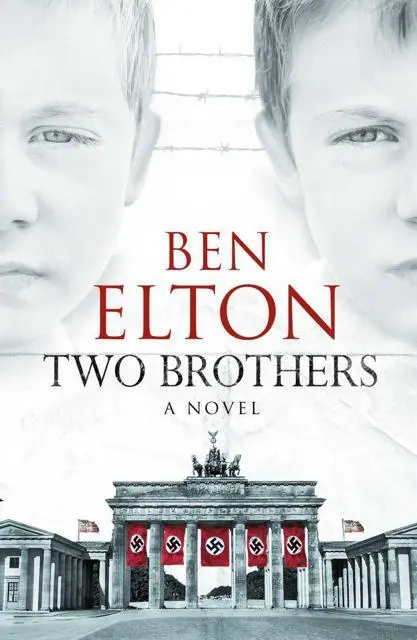
- Название:Two Brothers
- Автор:
- Издательство:Transworld Publishers
- Жанр:
- Год:2012
- Город:London
- ISBN:9780593062050
- Рейтинг книги:4 / 5. Голосов: 1
-
Избранное:Добавить в избранное
- Отзывы:
-
Ваша оценка:
Two Brothers: краткое содержание, описание и аннотация
Предлагаем к чтению аннотацию, описание, краткое содержание или предисловие (зависит от того, что написал сам автор книги «Two Brothers»). Если вы не нашли необходимую информацию о книге — напишите в комментариях, мы постараемся отыскать её.
Two Brothers BEN ELTON’s career as both performer and writer encompasses some of the most memorable and incisive comedy of the past twenty years. In addition to his hugely influential work as a stand-up comic, he is the writer of such TV hits as
and
. Most recently he has written the BBC series
on the subject of young parenthood. Elton has written three musicals,
and
and three West End plays. His internationally bestselling novels include *
,
,
,
and
. He wrote and directed the successful film
based on his novel
starring Hugh Laurie and Joely Richardson. About the Author
Two Brothers — читать онлайн бесплатно полную книгу (весь текст) целиком
Ниже представлен текст книги, разбитый по страницам. Система сохранения места последней прочитанной страницы, позволяет с удобством читать онлайн бесплатно книгу «Two Brothers», без необходимости каждый раз заново искать на чём Вы остановились. Поставьте закладку, и сможете в любой момент перейти на страницу, на которой закончили чтение.
Интервал:
Закладка:
Now Dagmar noticed that there was no sign advertising discounts hung above the door as Herr Fischer had promised there would be. Nor was there a large and prominent memorial to the war dead.
‘What have you done with my banner, please?’ Fischer asked again.
The Brownshirts began to snigger, one or two of them mimicking Herr Fischer’s cultured accent: What have you done with my banner, please? Others were glancing down gleefully at the pavement. Dagmar saw why they were laughing: at their feet was a great quantity of rope and painted cloth. Her father’s proud banners, a war memorial and the notice of a discount sale, torn and shredded amongst the rough hobnailed boots.
‘Oh,’ said one of the thugs, a man who by the badges on his sleeve affected the rank of some kind of sergeant, a Truppführer , as the Nazis styled it. ‘So this is your banner, is it? Well, I must say, that’s very unfortunate.’
‘Stand out of my way,’ Fischer demanded, ‘all of you. I wish to open my store.’
‘Stand out of your way?’ the Truppführer roared in sudden, spitting fury. ‘ Stand out of your fucking way! Who the FUCK do you think you are, you Jew cunt! ’
Fischer stepped backwards as if he had been struck. Dagmar reached out for her mother, who was shaking violently.
To be spoken to in such a manner.
On the Kurfürstendamm — outside their own shop.
It was impossible. Unheard of. It could not be happening.
But it was.
The Fischer family of Fischer’s department store of Berlin were discovering that not one single rule of civilization applied to them any more. Their wealth, their accomplishments, their cultured and educated ways counted for nothing. They were without rights and utterly defenceless.
The lead SA man spoke again, or screamed, in fact, in fair imitation of his leader.
‘How dare you give orders to a Truppführer of the Sturmabteilung ! You fucking rodent! You fucking germ . How about this, Jew boy! How about some of this !’
And with that, the young man, who was no more than twenty-two or twenty-three years of age, took a step forward and knocked Isaac Fischer, a slight man in his late forties, to the ground. In a single moment he had taken a knuckle-duster from his pocket, slipped it into his clenched fist and slammed it into the side of Fischer’s head, collapsing him, semi-concussed, to the floor. Then the Truppführer kicked him, burying his great jackboots into Fischer’s prostrate and undefended body several times.
It was all so sudden, so utterly out of proportion.
Such violence. From nowhere , for nothing . In seconds .
For a moment Dagmar and her mother stood motionless, their reluctant minds struggling to catch up with the evidence of their eyes and ears. Then with guttural screams they both stepped towards the fallen head of their family, the husband, the father. The protector. The man on whom they relied utterly and who they trusted without question.
But they could offer him no comfort or support. Before they could help him they were seized and pulled roughly away by other members of the brown troop. The chauffeur had also leapt in, perhaps hoping to get Herr Fischer back into the car, but he too was grabbed and blows were raining down on him.
As Dagmar struggled in the arms of the laughing SA men, feeling their hands upon her, pulling, it seemed to her, at her coat, their hands everywhere, she saw that across the traffic, in the middle of the wide boulevard, on the central reservation, beneath the row of plane trees, two policemen had stopped to watch. For a moment she imagined that their ordeal was over. She knew the Berlin Police, Paulus and Otto’s grandfather was one. Her father made regular contributions to their benevolent fund. They had kept the peace in Berlin through all the violent years without fear or favour. Surely they must keep the peace now.
‘Are they Jews?’ one of the officers shouted.
‘Yes,’ a trooper replied. ‘Dirty Jews who thought they could order National Socialist comrades around.’
At this the policeman smiled and waved. He and his colleague watched for a moment or two more and then moved on.
Now the SA attackers dragged Fischer to his feet.
The chauffeur they dismissed with a few further kicks but they had not yet finished with the Fischer family.
‘So now,’ the Truppführer snarled into Fischer’s face, on the right cheek of which a great swelling was rising. ‘Let’s start again, shall we? You say that this is your banner, is that right, Mr Yid?’
The scene spun and rocked before Dagmar’s eyes. Her ears were ringing, an orchestra seemed to be playing inside her head, an orchestra whose instruments were broken glass and blaring horns, harsh cries and the crunch of steel on stone. She saw a hand thrust forward at her father’s chest. She saw him fall to the pavement for a second time. Then she felt a blow herself, a violent shove in the small of the back, her knees buckling, and then she also was on the pavement, her mother beside her, sprawling amongst the black and the brown boots.
‘If it’s your banner, cunt , then you and your bitches need to clean it up,’ she heard the troop leader saying through the strange cacophony that was pounding in her head. ‘It’s littering the street, if you hadn’t noticed.’
Had he said it?
Was it real?
In that moment Dagmar truly felt she had gone mad. She was on the pavement on the Kurfürstendamm outside her father’s store. That great castle of commerce of which she was the princess. Not standing on the pavement, but sprawled on it . The breath knocked from her body. Her beloved parents, those symbols of strength and authority to whom she had always looked for comfort and certainty , were helpless on their knees beside her. Her father’s face swollen and bruised. His blood was on the stones.
On the Kurfürstendamm.
Minutes earlier, not even as many as three, they had all been driving together in the family Mercedes. In one of the family Mercedes. These were the stones across which she had stepped a thousand times. Alone. With her friends. With her parents. Occasionally (and discreetly) with Paulus and Otto, who simply could not believe it when she had been saluted at the door by a smiling doorman.
This was her kingdom. It had been so only yesterday.
‘You’re not cleaning up your dad’s banner, Fräulein Fischer,’ a voice called out, half shout, half sneer. ‘Maybe we should teach you some respect for a German pavement.’
Mechanically Dagmar began to reach out and collect a piece or two of the torn and shredded banners.
She heard a cry beside her. It was her mother, who, having collected a number of scraps, had then had them kicked from her hand.
‘I thought you were told to pick up your rubbish,’ a brown-shirted thug shouted at her. ‘ Pick it fucking up, Jew bitch .’
They were speaking to her mother .
In Berlin.
On the Kurfürstendamm.
Dagmar looked up. She could see that beyond the circle of SA men people were hurrying by. Heads down, faces turned away, seeing no evil. Others stopped, not many but enough, and they had smiles on their faces, one or two held small children up to watch as they shouted encouragement to the troopers.
Make them pay .
Make them crawl .
Make those rich fat Jew bastards pay for what they’ve done to us .
What they’ve done? What had she done?
Dagmar felt that she would faint. She wished that she would faint.
Die, in fact, that would be a relief.
Читать дальшеИнтервал:
Закладка:
Похожие книги на «Two Brothers»
Представляем Вашему вниманию похожие книги на «Two Brothers» списком для выбора. Мы отобрали схожую по названию и смыслу литературу в надежде предоставить читателям больше вариантов отыскать новые, интересные, ещё непрочитанные произведения.








Обсуждение, отзывы о книге «Two Brothers» и просто собственные мнения читателей. Оставьте ваши комментарии, напишите, что Вы думаете о произведении, его смысле или главных героях. Укажите что конкретно понравилось, а что нет, и почему Вы так считаете.