Ben Elton - Two Brothers
Здесь есть возможность читать онлайн «Ben Elton - Two Brothers» весь текст электронной книги совершенно бесплатно (целиком полную версию без сокращений). В некоторых случаях можно слушать аудио, скачать через торрент в формате fb2 и присутствует краткое содержание. Город: London, Год выпуска: 2012, ISBN: 2012, Издательство: Transworld Publishers, Жанр: Историческая проза, на английском языке. Описание произведения, (предисловие) а так же отзывы посетителей доступны на портале библиотеки ЛибКат.
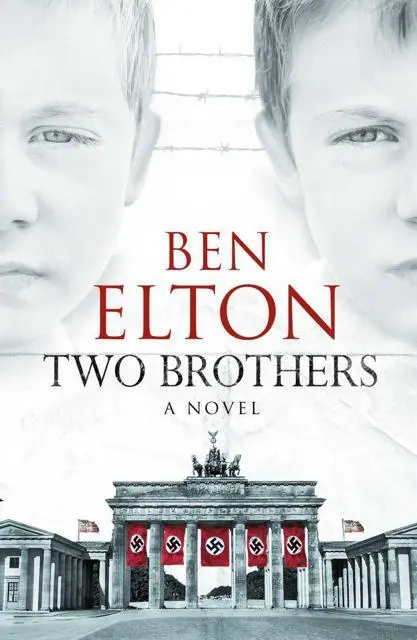
- Название:Two Brothers
- Автор:
- Издательство:Transworld Publishers
- Жанр:
- Год:2012
- Город:London
- ISBN:9780593062050
- Рейтинг книги:4 / 5. Голосов: 1
-
Избранное:Добавить в избранное
- Отзывы:
-
Ваша оценка:
Two Brothers: краткое содержание, описание и аннотация
Предлагаем к чтению аннотацию, описание, краткое содержание или предисловие (зависит от того, что написал сам автор книги «Two Brothers»). Если вы не нашли необходимую информацию о книге — напишите в комментариях, мы постараемся отыскать её.
Two Brothers BEN ELTON’s career as both performer and writer encompasses some of the most memorable and incisive comedy of the past twenty years. In addition to his hugely influential work as a stand-up comic, he is the writer of such TV hits as
and
. Most recently he has written the BBC series
on the subject of young parenthood. Elton has written three musicals,
and
and three West End plays. His internationally bestselling novels include *
,
,
,
and
. He wrote and directed the successful film
based on his novel
starring Hugh Laurie and Joely Richardson. About the Author
Two Brothers — читать онлайн бесплатно полную книгу (весь текст) целиком
Ниже представлен текст книги, разбитый по страницам. Система сохранения места последней прочитанной страницы, позволяет с удобством читать онлайн бесплатно книгу «Two Brothers», без необходимости каждый раз заново искать на чём Вы остановились. Поставьте закладку, и сможете в любой момент перейти на страницу, на которой закончили чтение.
Интервал:
Закладка:
Paulus did not hang around to find out how long it would take the trooper to ask himself why a thirteen-year-old boy who was not even in a Hitler Youth uniform would be running around the streets collecting prisoners for a Hauptsturmführer SA. Instead he dragged his brother and Dagmar off the kerb and into the road, oblivious to the beeping horns and screeching tyres as he headed for the central reservation where the trams ran constantly up and down the street.
The folding middle doors of an east-bound carriage were just closing as Paulus reached it, but (much to the annoyance of the passengers already on board) he was able to get an arm in and force the doors wide again.
Once they were seated on the tram, Otto took his chance to protest.
‘Shit, Pauly, you didn’t have to whack me in the side of the head!’
‘Never mind that, you arsehole,’ Paulus replied. ‘Are you OK, Dag? What happened?’
But for the time being at least Dagmar was incapable of speech. She simply stared ahead of her, unable even to cry. Simply trying to breathe.
The Banks of the Red Sea
Berlin, 1 April 1933
‘EVERYONE IS LOOKING for Moses.’
Frieda smiled as she said it. She felt she had to smile.
The horror and the shock on the faces that surrounded her was so absolute that some show of spirit seemed to her essential. For if Frieda Stengel knew nothing else on that dreadful day, that awful, ill-starred day when the Nazis began truly to show their hand, truly began to give some glimpse of the limitless darkness into which they would be prepared to take their crazed philosophy, she knew that from that point on in all their lives, spirit would be the only thing that could possibly sustain them.
If they were to be sustained at all.
She looked around at the faces assembled in her living room.
Faces that had only recently been familiar but which seemed now to stare back at her as if belonging to new and different people. Blank, bewildered people, lost and helpless. Babies, it seemed to Frieda, born that very morning, ejected screaming from the warmth and comfort of the womb of their previous lives to find themselves blinking and struggling for breath in the harsh and unforgiving glare of a totally alien and entirely brutal new world.
New and different people. Quite literally.
Previously respectable citizens of the German Republic. Parents, workers, taxpayers, war veterans. Human beings.
Now Untermensch . Subhumans. Despised outcasts. Officially despised. Legally outcast. Barred from their businesses. Ejected from their work. Beaten and bewildered, they had come to her, to Frieda Stengel. The good doctor.
Fear twitching in their nostrils. Standing red wet in their eyes.
Wringing, pulling and twisting at their fingers until the knuckles turned white with the effort of self-control.
Katz the Chemist, with his wife and grown-up daughter. The Loebs, who ran the little tobacco and newspaper kiosk at the steps to the U-Bahn . Morgenstern the book dealer. Schmulewitz, a broker of insurance. The Leibovitzes, who owned the little restaurant on Grünberger Strasse. A garbage man. An employee of the wire factory. A brewer’s assistant. Two men currently looking for work. Wives. One or two children too scared to go to school.
The Jews of Friedrichshain.
Citizens yesterday. Today just Jews.
They had gravitated to the Stengels’ apartment in search of some comfort, some meaning. Frieda was a community lynchpin. Loved for her kindness, respected for her intelligence and her tireless energy. Perhaps she would have an answer. Some crumb of comfort to offer, some semblance of an explanation. After all, the good Frau Doktor had always had answers in the past.
But Frieda had no answers this time.
For there were none.
All she could do was smile and find herself, to her surprise, taking refuge in imagery from legends in which she neither believed nor had a spiritual interest and yet which were without doubt appropriate.
‘I guess the poor old tribe is on the move again,’ she said, trying to impose some brightness on her tone. ‘We’re standing on the shores of the Red Sea, chucked out of Egypt for the umpteenth time. Hitler’s just another pharaoh, isn’t he, really? The question is how to save our skins this time? Everybody is looking for Moses .’
But no one knew of a Moses at that point and so, with nowhere to go on a day when their own streets were occupied by the Brown Army, they sat. Strange and stilted. Counting the seconds that led to nowhere.
Coffee was served, there were various cakes and small treats which people had brought. Sweet pretzels, Butterstollen , Streuselkuchen . More coffee.
Wolfgang played a little quiet piano. Nothing too mournful, gentle show-tunes mostly.
‘This is rather like how I imagine it was in the last hour on the Titanic ,’ he said. ‘Always admired the boys in that band. Never thought I’d be a member myself.’
Frau Katz began to cry at this.
‘Wolfgang, please,’ Frieda admonished.
Wolfgang apologized and returned to his playing.
Occasionally there were exclamations of anger and frustration.
They pushed me .
They spat at me .
Frau So-and-So said nothing .
Herr So-and-So turned away .
I’ve known them years. I gave them credit after the crash. They did nothing when those thugs broke my window. When they shoved the dog’s mess through. Nothing .
But for the most part they made polite conversation. Papering over the chasmic, vault-like, hellish darkness lying just below the surface of every word they spoke.
How are your children?
Is Frau So-and-So recovered from her flu?
Hasn’t the blossom come early in the Tiergarten this year?
While all the time the strained voices and nervous rattle of Frieda’s best china coffee cups screamed WHY? WHY! WHY!
Why us?
And, of course, what next?
Once or twice, non-Jewish friends did drop by to show their support. The chairman of the housing collective. The man who swept the street and who every morning for ten years had stood by his dusty hand barrow as Frieda emerged from her building, leant on his broom and told her how lovely she looked. Wolfgang had always thought this was a bit creepy but he was grateful to the man now.
‘And you look lovely today, Frau Doktor ,’ the man said, standing shyly in the doorway, holding his cap and staring at his feet. He had brought flowers which he left on the little table by the door as he hurried away.
Doctor Schwarzschild, a colleague of Frieda’s from the surgery, came in his lunch break. He explained that they had thought about closing the medical centre in solidarity but had decided it would be a counterproductive gesture. Frieda agreed.
‘People still need doctors,’ she said.
‘Just be sure to treat the Jews too, eh?’ Wolfgang added.
Schwarzschild looked confused. ‘Of course,’ he stammered. ‘How could you think otherwise, Wolfgang?’
‘Oh I don’t know, mate,’ Wolfgang replied with a hint of angry sarcasm. ‘Can’t imagine.’
‘Stop it, Wolf,’ Frieda said for the second time. ‘It isn’t Rudi’s fault.’
‘Whose fault is it then?’ Wolfgang asked.
Already a gap was opening up.
And the gap was wide. As wide as that universe that lies between life and death.
And those on the death side, those who now knew themselves to be Jews, could not help but be bitter, angry and resentful of the status of those on the life side. Those people now called Aryans. And since no Nazi or even silent fellow traveller would speak to them or look them in the eye, they found themselves taking out their feelings on the only ‘Aryans’ who would still acknowledge them, their remaining non-Jewish friends.
Читать дальшеИнтервал:
Закладка:
Похожие книги на «Two Brothers»
Представляем Вашему вниманию похожие книги на «Two Brothers» списком для выбора. Мы отобрали схожую по названию и смыслу литературу в надежде предоставить читателям больше вариантов отыскать новые, интересные, ещё непрочитанные произведения.







Обсуждение, отзывы о книге «Two Brothers» и просто собственные мнения читателей. Оставьте ваши комментарии, напишите, что Вы думаете о произведении, его смысле или главных героях. Укажите что конкретно понравилось, а что нет, и почему Вы так считаете.