Emily Rubin - Stalina
Здесь есть возможность читать онлайн «Emily Rubin - Stalina» весь текст электронной книги совершенно бесплатно (целиком полную версию без сокращений). В некоторых случаях можно слушать аудио, скачать через торрент в формате fb2 и присутствует краткое содержание. Город: Las Vegas, Год выпуска: 2010, ISBN: 2010, Издательство: AmazonEncore, Жанр: Историческая проза, на английском языке. Описание произведения, (предисловие) а так же отзывы посетителей доступны на портале библиотеки ЛибКат.
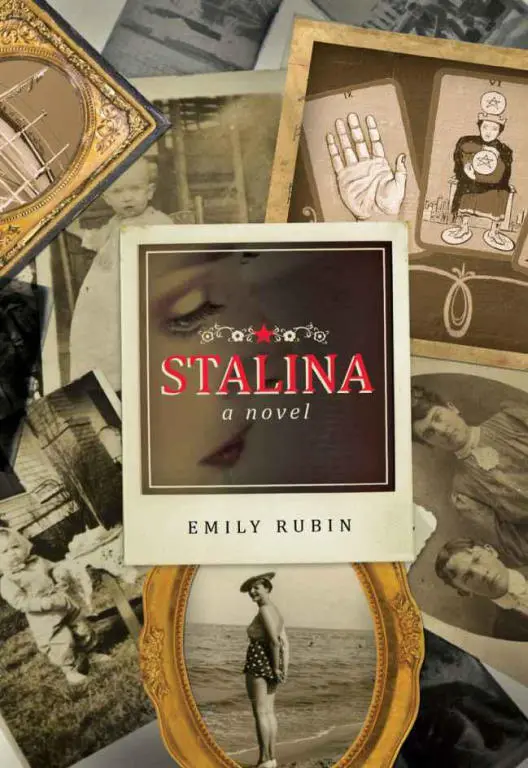
- Название:Stalina
- Автор:
- Издательство:AmazonEncore
- Жанр:
- Год:2010
- Город:Las Vegas
- ISBN:978-1-935597-17-9
- Рейтинг книги:4 / 5. Голосов: 1
-
Избранное:Добавить в избранное
- Отзывы:
-
Ваша оценка:
Stalina: краткое содержание, описание и аннотация
Предлагаем к чтению аннотацию, описание, краткое содержание или предисловие (зависит от того, что написал сам автор книги «Stalina»). Если вы не нашли необходимую информацию о книге — напишите в комментариях, мы постараемся отыскать её.
Stalina — читать онлайн бесплатно полную книгу (весь текст) целиком
Ниже представлен текст книги, разбитый по страницам. Система сохранения места последней прочитанной страницы, позволяет с удобством читать онлайн бесплатно книгу «Stalina», без необходимости каждый раз заново искать на чём Вы остановились. Поставьте закладку, и сможете в любой момент перейти на страницу, на которой закончили чтение.
Интервал:
Закладка:
The vaulted ceiling of the café is painted with elaborate medieval-style tapestry hunting scenes. Knights on horseback in full armor pursuing unicorns and lions with wings. The restaurant was originally called “The Gryphon and the Unicorn,” but Leo Tolstoy supposedly ate here and enjoyed himself tremendously, so the owners renamed it Café Karenina. The paintings are still a tourist attraction, of almost equal popularity as the famous beef goulash. The original owner’s twin daughters painted the murals and were renowned for their ability to paint a canvas simultaneously without speaking about its contents.
The waiter has delivered my stew and refilled my wine glass. I thank you for offering me a portion of your mother’s ashes. I will spread some in the Gulf of Finland as per her request. I will use my few connections to get the documents needed to safely send the ashes to you. Expect them soon. I hear Brighton Beach in the winter can be very much like Leningrad, only a bit warmer. It is up to you to honor your mother’s request to spread her ashes near Nadia’s parents. Revenge is a strange animal. The past does not change. They were wrong to give your father up. An easy target because he wrote poetry when he was angry and wore that odd chapeau. I am much more passive, and that could be the reason your father tolerated me. He knew I would be there for your mother. It was difficult for us all, but please know that I did my best to make her happy.
I have your mother’s copy of Through the Looking Glass. We used to read it to each other. The pages still smell of her rose attar perfume. If you don’t mind, I would like to keep the book. She must have held it after holding a leaky ink pen because her thumbprint is smudged permanently onto the first page. If I remember correctly, this book was also a favorite of yours.
I am deeply sorry for your loss.
Sincerely, Maxim K.I can see why my mother loved Maxim, but I think he may be mistaken about the thumbprint. My father’s fingers were always covered in ink from his writing. His thumbprint decorated the first page of my copy of the same book. I know the beginning of the story from memory.
“Chapter One, Looking Glass House. One thing was certain, that the white kitten had had nothing to do with it—it was the black kitten’s fault entirely. For the white kitten had been having its face washed by the old cat for the last quarter of an hour (and bearing it up pretty well considering): so you see it couldn’t have had any hand in the mischief.”
When my father read about the naughty kitten unraveling the ball of yarn Alice had been tending to in the quiet of the afternoon, he made it all seem so real. It was snowing in the story, just like it is here today. Alice thought the snow hitting the windows sounded like kisses. “Just as if someone was kissing the window all over outside,” she told the kitten as she settled in for her famous nap.
Here at the Liberty Motel, Svetlana has grown full and round in the care of the crow under the pines. I named the crow Zarzamora, like my hair dye from Cuba. I like to call her ZZ for short. Svetlana goes out every day to see her, even though I have started to leave food for her in the linen room. She goes out when it snows to visit with ZZ even though there are no worms to be had from the frozen ground. When Svetlana walks in the snow, she shakes out her paws every couple of steps as she makes her way toward the pine trees. After some initial squawking and mewling, both animals settle down and sit together quietly. They linger. The cat’s nose and the bird’s beak twitch when they smell something on the wind. A car coming up the drive, or the linen room door opening, interrupting their business of shuffling through pine needles to find slow bugs. I started taking photographs of these two, but it felt like I was intruding. I have no desire to exploit their love. Leave the lovers alone. This is the policy I have adopted for my customers at the Liberty as well.
Chapter Twenty: To Come Again
My mother’s ashes arrived from Maxim in a cigar box wrapped in the yellow apron my mother always wore. The pockets were decorated with traditional embroidery in red, yellow, and blue dancers skipping along the front of the apron. My father bought it for her when he was on a trip to Warsaw. She wore it every day, taking it off only when she went to bed. She often looked at aprons sold in the markets, but she never purchased a new one. Maxim included a note with his package.
Dear Stalina,
As you know, your mother, Sophia, was very dear to me, and I mourn her passing. I visited her even when she did not recognize me anymore. I have taken care to spread her ashes in the Gulf of Finland. The days are getting a little longer now, and I had a sunny afternoon for the travel to Peterhof. There were people swimming in the gulf even though the temperature was close to freezing. The cold water does not appeal to me, but the swimmers all looked vigorous and pleased with themselves. Your mother was a wonderful swimmer. There may have been someone swimming that day who swam with her at the Academy. I threw her ashes out across the top of the water. They stayed on the surface and formed a cloud that changed shapes as the current moved back and forth. I stood at the water’s edge and watched as the cloud of ashes first came toward me and then drifted steadily out to sea. The small, gentle waves were like your mother’s elegant, long-armed strokes taking her farther and farther away from shore.
One of the nurses at the rooming house told me that the night your mother died, there was some confusion over fish balls in the commissary. She became hysterical and threw them across the room. They brought her back to her room to calm down. She put on this apron, which she had hidden under her mattress, and demanded that the staff let her do the cooking. They finally calmed her down by offering her a lipstick. She painted her lips and then used the lipstick to write something on her bedsheet. There is a mark on the apron where she patted her lips. I thought you might like to have the apron. Your mother was a wonderful cook. I hope you learned her recipe for cherry pie, which was a favorite of mine. It is good to know you seek happiness in America. This concept seems very foreign, but very commendable, if not a bit lovely and naive.
Nostrovya, Maxim K.I was surprised Maxim did not know the poem my mother wrote on her top sheet. I did not want to break the spell of his ardor. Maybe the people at the rooming house knew he was not her husband and hid my father’s words from him. I was inspired by his story of the ashes and was excited to be taking them to their requested liberation.
“I have to go to New York to pick up my mother’s ashes. There is some regulation,” I explained to Nadia. Maxim had in fact sent them to me directly, but I lied to Nadia. “I also want to take this opportunity to see the Statue of Liberty, and if I have time I will go to Brighton.”
“The Statue of Liberty—I have only seen it in pictures. It will be good for you to see Brighton Beach. My parents will be happy to have you visit.”
Revenge is filled with subversion like a blini stuffed with mushrooms.
Nadia continued, “They will walk you along the boardwalk and you will see the ocean.”
“I would like that.”
“Take a day away from the motel; you have been working without a break. I’ll have one of my boys cover for you.”
“Thank you, I could use a day off. It has been a hard time for me,” I said.
Perhaps Nadia had no idea how her parents betrayed mine.
“Stalina, what happened with you and Amalia?”
Читать дальшеИнтервал:
Закладка:
Похожие книги на «Stalina»
Представляем Вашему вниманию похожие книги на «Stalina» списком для выбора. Мы отобрали схожую по названию и смыслу литературу в надежде предоставить читателям больше вариантов отыскать новые, интересные, ещё непрочитанные произведения.







Обсуждение, отзывы о книге «Stalina» и просто собственные мнения читателей. Оставьте ваши комментарии, напишите, что Вы думаете о произведении, его смысле или главных героях. Укажите что конкретно понравилось, а что нет, и почему Вы так считаете.