Eleanor Catton - The Luminaries
Здесь есть возможность читать онлайн «Eleanor Catton - The Luminaries» весь текст электронной книги совершенно бесплатно (целиком полную версию без сокращений). В некоторых случаях можно слушать аудио, скачать через торрент в формате fb2 и присутствует краткое содержание. Год выпуска: 2013, ISBN: 2013, Издательство: Granta Publications, Жанр: Историческая проза, Современная проза, на английском языке. Описание произведения, (предисловие) а так же отзывы посетителей доступны на портале библиотеки ЛибКат.
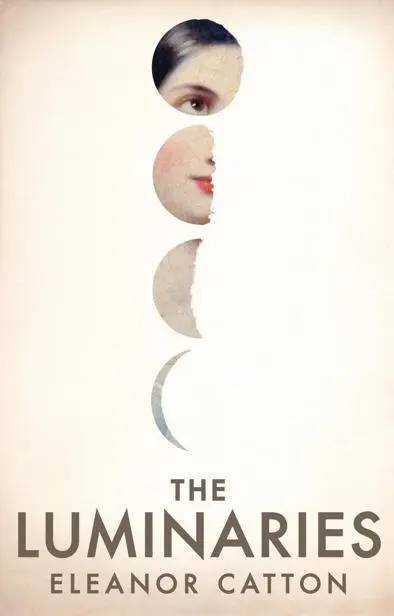
- Название:The Luminaries
- Автор:
- Издательство:Granta Publications
- Жанр:
- Год:2013
- ISBN:9781847085931
- Рейтинг книги:5 / 5. Голосов: 1
-
Избранное:Добавить в избранное
- Отзывы:
-
Ваша оценка:
The Luminaries: краткое содержание, описание и аннотация
Предлагаем к чтению аннотацию, описание, краткое содержание или предисловие (зависит от того, что написал сам автор книги «The Luminaries»). Если вы не нашли необходимую информацию о книге — напишите в комментариях, мы постараемся отыскать её.
The Luminaries — читать онлайн бесплатно полную книгу (весь текст) целиком
Ниже представлен текст книги, разбитый по страницам. Система сохранения места последней прочитанной страницы, позволяет с удобством читать онлайн бесплатно книгу «The Luminaries», без необходимости каждый раз заново искать на чём Вы остановились. Поставьте закладку, и сможете в любой момент перейти на страницу, на которой закончили чтение.
Интервал:
Закладка:
But Pritchard did not have an opinion about the widow. ‘Clinch doesn’t stand to gain a penny—from Crosbie Wells, maybe,’ he said. ‘But think on this. Staines leases the Gridiron to Clinch, doesn’t he?’
‘What are you driving at?’
‘Only that a fellow’s never sorry when his creditor is dead.’
Nilssen turned red. ‘Clinch wouldn’t take another man’s life. None of them would. Charlie Frost? Come off it, Jo! The man’s a mouse.’
‘You can’t tell from looking at a man what he’s capable of doing. And you certainly can’t tell what he’s done.’
‘This kind of speculation—’ Nilssen began, but he did not know what form his protestation was to take, and he again fell silent.
Nilssen did not know the vanished prospector, Emery Staines, at all well—though if asked, he would have declared the opposite, for Nilssen tended to profess intimacy whenever it flattered him to do so, and Staines was very much the kind of man with whom Nilssen would have liked to forge an intimate acquaintance. Nilssen loved to be dazzled, and never was he more dazzled than by the selfhood of a man he very much admired. Emery Staines, being possessed of both youth and conviction, was naturally an enviable type. Calling him to mind now, Nilssen had to agree with Pritchard that it was exceedingly unlikely that Staines had departed Hokitika in secret, of his own volition, in the middle of the night. His claims required constant maintenance and supervision, and there were more than fifty men in his employment—why, his absence would be costing more than pennies, Nilssen thought, and the debt would be mounting every day. No: Pritchard was right. Staines had either been kidnapped, or—far more likely—he had been killed, and his body had been very effectively concealed.
The current information held that Emery Staines had last been seen around sundown on the 14th of January, walking south down Revell-street in the direction of his house. What happened after that, nobody knew. His barber came calling at eight the next morning, and found his door unlocked; he reported that the bed was rumpled, as if recently slept in, but the fire was cold. All valuables were present and untouched.
Emery Staines had no enemies, as far as Nilssen was aware. His disposition was bright and very open, and he had the rare gift of managing to act both generously and humbly at once. He was very rich, but there were many rich men in Hokitika, and most of them were a good deal more unpleasant than he. It was unusual that he was young, of course, and that might be a cause for envy in an older, more disappointed man—but envy was rather a weak motive for murder, Nilssen thought, if indeed the young man had been killed.
‘What would drive any man to quarrel with Staines?’ Nilssen said aloud. ‘That boy radiates luck—the Midas touch, he has.’
‘Luck is not a virtue.’
‘Killed for his money, then—?’
‘Let’s put Staines aside for the moment.’ Pritchard leaned forward. ‘You took home a fair cut of Crosbie Wells’s fortune.’
‘Yes—I told you, ten per cent,’ Nilssen said, turning back to the yellow bill of sale on the desk before him. ‘Commission on the sale of his effects, you know; but now that the will’s been disputed, the payment’s void. I shall have to pay it all back again. The property ought not to have been sold.’
He touched the edge of the bill with his finger. He had signed the document, and its copy, at this very desk two weeks prior—and how his heart had sunk as he had penned his name. In Hokitika the sale of effects on a deceased estate was never a profitable venture, but his business was not prospering, and he was desperate. How shameful it was (he had thought), to have travelled half the girth of the globe only to see his fortunes fall so far—only to scrabble for scraps beneath the tables of richer, luckier men. The name on the bill—Crosbie Wells—had meant nothing to him. From what he knew Wells was just a loner, a wretched twist of a man who drank himself into a stupor every night and dreamed of nothing. Nilssen signed his name in bitterness, in exhaustion. He was going to have to rent a horse, sacrifice a day of work, ride out—where?—to the forsaken Arahura, and pick over this dead man’s effects as a vagrant trawls through a gutter, looking for food.
And then, wedged into the flour canister, the powder box, the meat safe, the bellows, the cracked basin of an old commode—and all of it glistering, heavy, and soft. His commission had come in at just over four hundred pounds; for the first time in his life, he was flush. He might have packed up and sailed to Sydney; he might have returned home; he might have begun anew; he might have married. But he had no time to enjoy it. The day his commission was finally cleared was the very day of Mrs. Wells’s arrival; within hours, the sale of the estate had been appealed, the inheritance disputed, and the fortune seized by the bank. If the appeal was granted—as it certainly would be—Nilssen would be obliged to pay his commission back again, in full. Four hundred pounds! It was more money than he earned in a year. He ran his finger down the edge of the bill, and felt a lonely stab of outrage. He wished, as he had wished many times in the last week, that he could be given someone to blame.
But Pritchard was shaking his head: he wasn’t interested in the dead man’s will, nor in the legal implications of its contest. ‘Never mind all that, for the moment,’ he said. ‘Think back to the cottage. You saw the pile with your own eyes?’
‘I was the one to discover it.’ Nilssen spoke with a touch of pride. He relaxed a little at the memory. ‘Oh—if you’d seen it—I might have turned it into leaf and covered a whole billiard table, legs and all. Heavy as anything. And how it shone .’
Pritchard didn’t smile. ‘You said that it wasn’t dust and it wasn’t nugget. Do I have that right?’
Nilssen sighed. ‘Yes, that’s right: it had all been pressed into squares.’
‘Retorted,’ Pritchard said, nodding, ‘—which takes equipment, and skill. So who was the smith? Not Wells himself.’
Nilssen paused. This was a point that had not crossed his mind. The way that Pritchard was setting forth his argument—confidently, arrogantly—was unpleasant to him, but he had to concede that the chemist had made several connexions already that he himself had missed. He sucked on his pipe.
Nilssen had no great knowledge of the workings of a goldfield. He had only attempted to prospect for the colour once, and found it miserable work—lugging pails of water to and from the river to sluice the stones, slapping at the sandflies that crept up his jacket until he was mad enough to dance. Afterwards his back ached and his fingers stung and his feet stayed spongy and swollen for days. The pinch of grit he had taken home, knotted into the corner of his kerchief, was taxed and taxed and then weighed to the smallest fraction of an ounce—yielding, at last, five dirty shillings, an impossible disappointment, barely enough to cover the rental of his horse to and from the gorge. Nilssen did not try his luck again. He was by natural faculty and self-styling a Renaissance man, accustomed to showing immediate promise in whatever field to which he applied himself; if he did not master a trick on his first attempt, he gave up the trade. (He was not without humour about this practice: he often recounted his abortive episode in the Hokitika gorge, exaggerating the discomforts he had sustained in light-hearted deprecation of his own constitutional delicacy—but this was an interpretation that was reserved for him alone, and he became embarrassed if another man took on this same perspective, so to speak, or agreed with him.)
The theory that Joseph Pritchard had put to him was logical enough, up to a point. Somebody—more than one person, perhaps—must have known about the fortune hidden on Crosbie Wells’s estate. The fortune was too large, and the sale of his property too furtive and too swift, to deny that probability altogether. Furthermore, the phial of laudanum that had been discovered in close proximity to the man’s dead body suggested that somebody—perhaps the same somebody—had been present in the cottage either just prior to or just after the hermit’s death, presumably with some intention of harm. The phial was Pritchard’s, purchased from his emporium and bearing a label signed in his hand: its bearer must therefore have been a Hokitika man, travelling northward, not a stranger, travelling south. This ruled out the dignitaries who had first discovered Crosbie’s body, and had brought the news of his death to the town.
Читать дальшеИнтервал:
Закладка:
Похожие книги на «The Luminaries»
Представляем Вашему вниманию похожие книги на «The Luminaries» списком для выбора. Мы отобрали схожую по названию и смыслу литературу в надежде предоставить читателям больше вариантов отыскать новые, интересные, ещё непрочитанные произведения.



Обсуждение, отзывы о книге «The Luminaries» и просто собственные мнения читателей. Оставьте ваши комментарии, напишите, что Вы думаете о произведении, его смысле или главных героях. Укажите что конкретно понравилось, а что нет, и почему Вы так считаете.