Eleanor Catton - The Luminaries
Здесь есть возможность читать онлайн «Eleanor Catton - The Luminaries» весь текст электронной книги совершенно бесплатно (целиком полную версию без сокращений). В некоторых случаях можно слушать аудио, скачать через торрент в формате fb2 и присутствует краткое содержание. Год выпуска: 2013, ISBN: 2013, Издательство: Granta Publications, Жанр: Историческая проза, Современная проза, на английском языке. Описание произведения, (предисловие) а так же отзывы посетителей доступны на портале библиотеки ЛибКат.
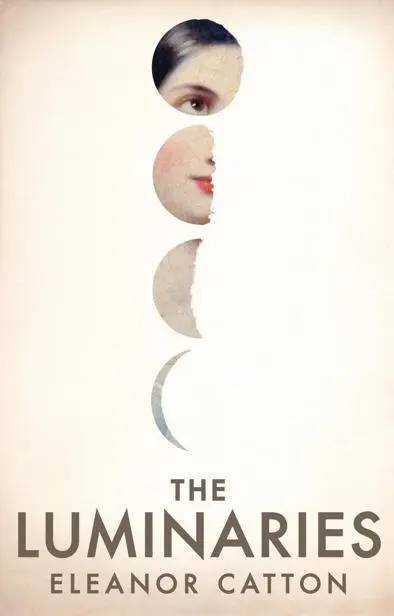
- Название:The Luminaries
- Автор:
- Издательство:Granta Publications
- Жанр:
- Год:2013
- ISBN:9781847085931
- Рейтинг книги:5 / 5. Голосов: 1
-
Избранное:Добавить в избранное
- Отзывы:
-
Ваша оценка:
The Luminaries: краткое содержание, описание и аннотация
Предлагаем к чтению аннотацию, описание, краткое содержание или предисловие (зависит от того, что написал сам автор книги «The Luminaries»). Если вы не нашли необходимую информацию о книге — напишите в комментариях, мы постараемся отыскать её.
The Luminaries — читать онлайн бесплатно полную книгу (весь текст) целиком
Ниже представлен текст книги, разбитый по страницам. Система сохранения места последней прочитанной страницы, позволяет с удобством читать онлайн бесплатно книгу «The Luminaries», без необходимости каждый раз заново искать на чём Вы остановились. Поставьте закладку, и сможете в любой момент перейти на страницу, на которой закончили чтение.
Интервал:
Закладка:
Harald Nilssen was famous in Hokitika for the high style of his dress. That afternoon he was wearing a knee-length frock coat with silk-faced lapels of a charcoal hue, a dark red vest, a grey bow tie, and cashmere striped morning trousers. His silk hat, which was hanging on a hatstand behind his desk, was of the same charcoal hue as his coat; beneath it was propped a silver-tipped stick with a curved handle. To complete this costume (for so he perceived of his daily dress: as a costume that could be completed, to effect) he smoked a pipe, a fat calabash with a bitten-down stem—though his affection for the instrument had less to do with the pleasures of the habit than for the opportunity for emphasis it provided. He often held it in his teeth unlit, and spoke out of the corner of his mouth like a comic player delivering an aside—a comparison which suited him, for if Nilssen was vain of the impressions he created, it was because he knew that he created them very well. Today, however, the mahogany bowl was warm, and he was pulling on the stem with considerable agitation. The hour of his luncheon was past, but he was not thinking of his stomach, and nor of the ruddy-cheeked barmaid at the Nonpareil, who called him Harry and always saved the choicest edges of the piecrust for his plate. He was frowning down at a yellow bill upon his desktop, and he was not alone.
At length he pulled his pipe from his teeth and lifted his eyes to meet the gaze of the man sitting opposite him. He said, in a low voice, ‘I’ve done no wrong. I’ve done nothing below the law.’
He spoke with only a very slight Norwegian accent: thirty years in Bath had made him all but British in his inflexions.
‘It’s who stands to profit,’ said Joseph Pritchard. ‘That’s what a justice will be looking for. Seems you made a very tidy profit by this man’s death.’
‘By the legal sale of his estate! Which I took on after he was already in the ground!’
‘In the ground—but warm, I think.’
‘Crosbie Wells drank himself to death,’ said Nilssen. ‘There was no cause for an inquest, nothing untoward. He was a drunk and a hermit, and when I received these papers I believed his estate would be small. I had no idea about the ’bounder.’
‘You’re saying this was just a lucky piece of business.’
‘I’m saying I’ve done nothing below the law.’
‘But someone has,’ Pritchard said. ‘ Someone is behind this. Who knew about the ’bounder? Who waited till Crosbie Wells was six feet deep, then sold off his land so quiet and so quick, without ever going to auction—who put the papers in? And who planted my laudanum under his cot?’
‘You say planted —’
‘It was planted,’ Pritchard said. ‘I’ll take my oath on that. I never sold that man a dram. I know my faces, Harald. I never sold a single dram to Crosbie Wells.’
‘Well then, there you are! You can prove that! Show your records, and receipts—’
‘We have to look beyond our own part in this design!’ Pritchard said. When he spoke vehemently he did not raise his voice, but lowered it. ‘We’re associated. Trace it back far enough, and you’ll find an author. It’s all of a piece.’
‘Do you suggest this was planned—in advance?’
Pritchard shrugged. ‘Looks like murder to me,’ he said.
‘Conspiracy to murder,’ Nilssen corrected him.
‘What’s the difference?’
‘The difference is in the charge. It would be conspiracy to murder—we’d be convicted for the intention, not for the act itself. Crosbie wasn’t killed by another man’s hand, you know.’
‘So we’ve been told,’ Pritchard said. ‘Do you trust the coroner, Mr. Nilssen? Or will you take a spade in your own hands, and bring the hermit’s body up?’
‘Don’t be ghastly.’
‘I’ll tell you this: you’d find more than one corpse in the hole.’
‘Don’t, I said!’
‘Emery Staines,’ Pritchard said, relentlessly. ‘What the devil happened to him, if he wasn’t killed? You think he turned to vapour?’
‘Of course not.’
‘Wells died, Staines vanished. All in a matter of hours. Wells is buried two days later … and what better place to hide a body, than in another man’s grave?’
Joseph Pritchard always sought the hidden motive, the underlying truth; conspiracy enthralled him. He formed convictions as other men formed dependencies—a belief for him was as a thirst—and he fed his own convictions with all the erotic fervour of the willingly confirmed. This rapture extended to his self-regard. Whenever the subterranean waters of his mind were disturbed, he plunged inward, and struggled downward—kicking strongly, purposefully, as if he wished to touch the mineral depths of his own dark fantasies; as if he wished to drown.
Nilssen said, ‘That’s useless speculation.’
‘Buried together,’ said Pritchard. He sat back. ‘I’d bet my life.’
‘What does it matter what you guess—what you wager?’ Nilssen burst out. ‘ You didn’t kill him. You didn’t murder anybody. It’s on another man’s head.’
‘But somebody certainly wants to make it seem as if I did. And somebody’s certainly made you look like a d—ned fool, for chasing a herring that turned out to be red!’
‘You’re talking appearances.’
‘Juries care about appearances.’
‘Come,’ said Nilssen, somewhat weakly. ‘You can’t really think that a jury —’
‘—Will be necessary? Don’t be an ass. Emery Staines is Hokitika royalty. Strange as that sounds. Folk who couldn’t pick the Commissioner from a line-up of drunks know Staines’s name. There’s no doubt there’ll be an inquest. If he fell down the stairs and broke his neck with a dozen men to witness, there would be an inquest. All it’s going to take is one shred of evidence to connect him to the Crosbie Wells affair—his body, probably, whenever they find it—and bang, you’re implicated. You’re a co-conspirator. You’re on trial. And then what are you going to say to defend yourself?’
‘That I’m not—that we didn’t— conspire —’
But uselessness overcame him, and he did not go on.
Pritchard did not interrupt the silence. He stared intently at his host and waited. At length Nilssen resumed, struggling to keep his voice calm and practical:
‘We mustn’t keep anything back. We must go to the justice ourselves—’
‘And risk the charge?’ Pritchard’s voice became lower still. ‘We don’t know half the players, man! If Staines was murdered—look, even if you don’t believe the rest of what I’m saying, you must admit that it’s a d—ned coincidence he disappeared when he did. If he was murdered—and let’s say he was—well, somebody in town has got to know about it.’
Nilssen tried to be haughty. ‘I for one am not going to stand about and wait with a noose around my neck—’
‘I am not proposing that we stand about and wait.’
The commission merchant sagged a little. ‘What then?’
Pritchard grinned. ‘You say there’s a noose—well, all right. Follow the rope.’
‘Back to the banker, you mean?’
‘Charlie Frost? Maybe.’
Nilssen looked sceptical. ‘Charlie’s no double-crosser. He was as surprised as anyone when the ’bounder turned up.’
‘Surprised, that’s easy to fake. And what about the fellow who purchased the land? Clinch—of the Gridiron Hotel. He must have been tipped off somehow.’
Nilssen shook his head. ‘I can’t believe it.’
‘Perhaps you ought to try.’
‘Anyway,’ Nilssen said, frowning, ‘Clinch doesn’t stand to gain a penny, now that the widow’s made her claim. She’s the one you should be worried about.’
Читать дальшеИнтервал:
Закладка:
Похожие книги на «The Luminaries»
Представляем Вашему вниманию похожие книги на «The Luminaries» списком для выбора. Мы отобрали схожую по названию и смыслу литературу в надежде предоставить читателям больше вариантов отыскать новые, интересные, ещё непрочитанные произведения.



Обсуждение, отзывы о книге «The Luminaries» и просто собственные мнения читателей. Оставьте ваши комментарии, напишите, что Вы думаете о произведении, его смысле или главных героях. Укажите что конкретно понравилось, а что нет, и почему Вы так считаете.