Eleanor Catton - The Luminaries
Здесь есть возможность читать онлайн «Eleanor Catton - The Luminaries» весь текст электронной книги совершенно бесплатно (целиком полную версию без сокращений). В некоторых случаях можно слушать аудио, скачать через торрент в формате fb2 и присутствует краткое содержание. Год выпуска: 2013, ISBN: 2013, Издательство: Granta Publications, Жанр: Историческая проза, Современная проза, на английском языке. Описание произведения, (предисловие) а так же отзывы посетителей доступны на портале библиотеки ЛибКат.
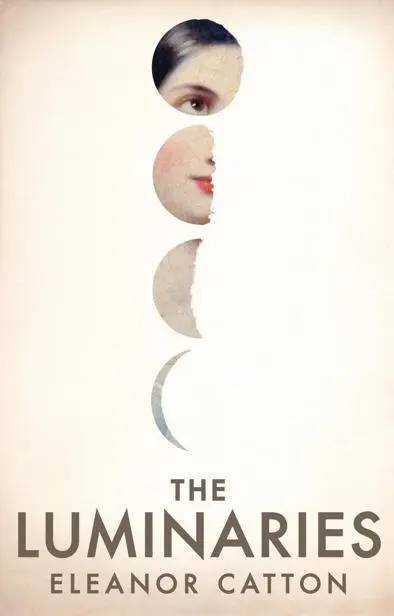
- Название:The Luminaries
- Автор:
- Издательство:Granta Publications
- Жанр:
- Год:2013
- ISBN:9781847085931
- Рейтинг книги:5 / 5. Голосов: 1
-
Избранное:Добавить в избранное
- Отзывы:
-
Ваша оценка:
The Luminaries: краткое содержание, описание и аннотация
Предлагаем к чтению аннотацию, описание, краткое содержание или предисловие (зависит от того, что написал сам автор книги «The Luminaries»). Если вы не нашли необходимую информацию о книге — напишите в комментариях, мы постараемся отыскать её.
The Luminaries — читать онлайн бесплатно полную книгу (весь текст) целиком
Ниже представлен текст книги, разбитый по страницам. Система сохранения места последней прочитанной страницы, позволяет с удобством читать онлайн бесплатно книгу «The Luminaries», без необходимости каждый раз заново искать на чём Вы остановились. Поставьте закладку, и сможете в любой момент перейти на страницу, на которой закончили чтение.
Интервал:
Закладка:
It rankled Nilssen to be ordered about in this way. ‘I don’t see why you can’t talk to Quee yourself, if your beef is with the other fellow.’
‘I’m under the hammer. Call it laying low.’
Nilssen called it something rather different in his mind. Aloud he said, ‘What on earth would induce a johnny chink to speak to me?’—taking refuge, finally, in petulance. He pushed the yellow bill away from him.
‘At least you’re neutral,’ Pritchard said. ‘You’ve given none of them cause to judge you one way or another—have you?’
‘The celestials?’ Nilssen sucked on his pipe; the leaf was almost ash. ‘No.’
‘You say it with an Ah in front—Ah Quee. It’s their way of saying Mister.’ Pritchard paused a moment, regarding the other man, and then he added, ‘Think of it this way. If we are being framed, then perhaps he is, too.’
As he was speaking, there came a knock at the door: it was the clerk, bearing the message that George Shepard was in the outer office and waiting to be received.
‘George Shepard—the gaoler?’ Nilssen said, with some trepidation, and a swift glance at Pritchard. ‘Did he say why?’
‘Matter of profit, he said, mutual gains,’ the clerk replied. ‘Shall I fetch him in?’
‘I’ll take my leave,’ Pritchard said, standing immediately. ‘So you’ll find him—the fellow Quee? Say you will.’
‘All the way to Kaniere?’ Nilssen said, remembering his luncheon, and the barmaid at the Nonpareil.
‘It’s only an hour’s walk,’ Pritchard said. ‘But make sure you get the right fellow: the one you’re after is a shortish chap, very thin, clean-shaven; you’ll know his cottage by the chimney that issues from the forge. I’ll wait your message,’—and he was gone.

Nilssen’s office seemed much too small to accommodate the massive, rigid bow that George Shepard made upon his entrance. The commission merchant felt himself shrink back a little in his chair, and to compensate for this he leaped up, thrust out his hand, and cried,
‘Mr. Shepard—yes, yes, please. I haven’t yet had the pleasure of receiving your business, sir—but I do hope that I can be of service—in the nearest future—if I may. Do sit down.’
‘I know you, of course,’ Shepard replied, taking the chair that was offered him. Seeing that Nilssen’s pipe was lit, he reached in his pocket for his own. Nilssen passed his tobacco pouch and lucifers across the desk, and there was a short pause as Shepard filled and tamped his bowl and struck a match. His pipe was shallow, made of briar, with a smart collar of amber set between the bit and the stem. He puffed several times until he was satisfied the leaf was lit, and then sat back in his chair with a calculated glance first to his left and then to his right, as if he wished to square himself with the planes of the room.
‘By reputation,’ he added, being the kind of man who always finished an utterance once he had set his thought in motion. He breathed out a mouthful. ‘That fellow just leaving,’ he said. ‘His name again?’
‘Jo Pritchard is his name, sir—Joseph. Runs the drug hall on Collingwood-street.’
‘Of course.’
Shepard paused, forming his business in his mind. The pale light of the day, falling slantwise across Nilssen’s desk, froze the eddies of pipe-smoke that hung about his head—fixing each coiling thread upon the air, as mineral quartz preserves a twisting vein of gold, and proffers it. Nilssen waited. He was thinking: if I am convicted, then this man will be my gaoler .
George Shepard’s appointment as governor of the Hokitika Gaol had been met with little opposition from the men who lived and dug within the bounds of his jurisdiction. Shepard was a cold, formidable character, slow moving in a way that seemed constantly to emphasise the breadth of his shoulders and the weight of his arms; when he walked, it was with long, deliberate strides, and when he spoke (which was seldom) he intoned in a rich and august bass. His manner was humourless and not at all likeable, but severity counted as a virtue for a man of his profession, and it was to his credit, the voters agreed, that no charge of bias or prejudice had ever been laid at his door.
If Shepard was the subject of idle rumour, it was of the conjectural sort, and nearly always concerned his private relations with his wife. Their marriage was to all appearances conducted in absolute silence, with a grim determination on his part, and a fearful inhibition on hers. The woman referred to her own self as Mrs. George, and this only in a whisper; she wore the bewildered, panicked aspect of a tortured animal, who sees a cage where there is none, and cowers at every sudden thing. Mrs. George rarely ventured beyond the gaol-house door except, on rare occasions of civic display, to trip red-faced down Revell-street in Governor Shepard’s wake. They had been at Hokitika four months before anyone discovered that she did in fact possess a Christian name—Margaret—though to speak it in her presence was an assault so dreadful that her only recourse was to flee.
‘I come to you on business, Mr. Nilssen,’ Shepard began. He held the bowl of his pipe in his fist against his breast as he spoke. ‘Our present gaol-house is little better than a corral—a holding pen. There is scant light, and insufficient air. To ventilate, we prop open the door upon a chain, and I sit beyond the doorway with my rifle on my knees. It is untenable. We haven’t the resources to cope with—more experienced criminals. More sophisticated crimes. A murder, say.’
‘No—yes, yes,’ Nilssen said. ‘Of course.’
There was a pause, and then Shepard continued. ‘If you will forgive my pessimism,’ he said, ‘I believe that Hokitika is about to meet a darker time. This town is at a threshold. Digger law is still the creed of the hills, and here—why, we are but a backwater of Canterbury still, but soon we will be the jewel in her crown. Westland will split, and Hokitika will prosper; but as she rises, she will have to reconcile herself.’
‘Reconcile—?’
‘The savage and the civil,’ Shepard said.
‘You allude to the natives—the Maori tribes?’
Nilssen spoke with a touch of eagerness; he cherished a romantic passion for what he called ‘the tribal life’. When the Maori canoes came strong and flashing through the Buller Gorge—he had seen them from a distance—he was quelled in awe. The warriors seemed terrible to him, their women unknowable, their customs fearsome and primitive. His transfixion was closer to dread than to reverence, but it was a dread to which he sought to return. In fact Nilssen had been first spurred to make his voyage to New Zealand by a chance encounter with an able seaman at a roadside inn near Southampton, who was boasting (rather improbably, as it turned out) of his own encounters with the primitive peoples of the South Seas. The sailor was a Dutchman, and wore his jacket cut short above his hips. He had traded iron nails for cocoa-nuts; he had permitted island women to place their hands upon the white skin of his chest; he had once made a present of a knot to an island boy. (‘What kind of knot?’ Nilssen begged, coming forward; it was a Turk’s Head; Nilssen did not know it, and the seaman sketched the looping floral shape upon the air.)
But Shepard shook his head at Nilssen’s interjection. ‘I do not use “savage” in the native sense,’ he said. ‘I allude to the land itself. Prospecting is an ugly business: it makes a man start thinking like a thief. And here the conditions are foul enough to make the diggers still more desperate.’
Читать дальшеИнтервал:
Закладка:
Похожие книги на «The Luminaries»
Представляем Вашему вниманию похожие книги на «The Luminaries» списком для выбора. Мы отобрали схожую по названию и смыслу литературу в надежде предоставить читателям больше вариантов отыскать новые, интересные, ещё непрочитанные произведения.




Обсуждение, отзывы о книге «The Luminaries» и просто собственные мнения читателей. Оставьте ваши комментарии, напишите, что Вы думаете о произведении, его смысле или главных героях. Укажите что конкретно понравилось, а что нет, и почему Вы так считаете.