Eleanor Catton - The Luminaries
Здесь есть возможность читать онлайн «Eleanor Catton - The Luminaries» весь текст электронной книги совершенно бесплатно (целиком полную версию без сокращений). В некоторых случаях можно слушать аудио, скачать через торрент в формате fb2 и присутствует краткое содержание. Год выпуска: 2013, ISBN: 2013, Издательство: Granta Publications, Жанр: Историческая проза, Современная проза, на английском языке. Описание произведения, (предисловие) а так же отзывы посетителей доступны на портале библиотеки ЛибКат.
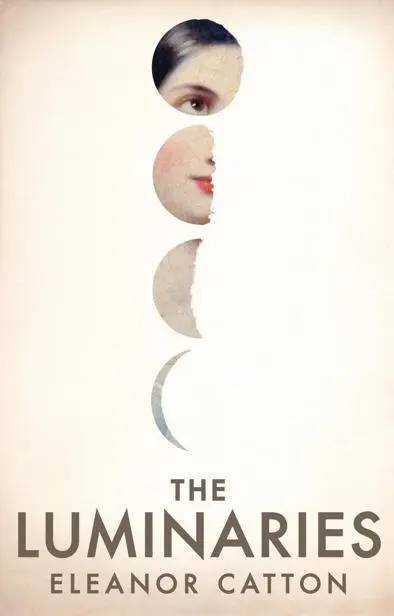
- Название:The Luminaries
- Автор:
- Издательство:Granta Publications
- Жанр:
- Год:2013
- ISBN:9781847085931
- Рейтинг книги:5 / 5. Голосов: 1
-
Избранное:Добавить в избранное
- Отзывы:
-
Ваша оценка:
The Luminaries: краткое содержание, описание и аннотация
Предлагаем к чтению аннотацию, описание, краткое содержание или предисловие (зависит от того, что написал сам автор книги «The Luminaries»). Если вы не нашли необходимую информацию о книге — напишите в комментариях, мы постараемся отыскать её.
The Luminaries — читать онлайн бесплатно полную книгу (весь текст) целиком
Ниже представлен текст книги, разбитый по страницам. Система сохранения места последней прочитанной страницы, позволяет с удобством читать онлайн бесплатно книгу «The Luminaries», без необходимости каждый раз заново искать на чём Вы остановились. Поставьте закладку, и сможете в любой момент перейти на страницу, на которой закончили чтение.
Интервал:
Закладка:
‘But the diggings can be made civil.’
‘Perhaps—after the rivers are spent. After the prospectors give way to dams and dredges and company mines—when the forests are felled—perhaps then.’
‘You do not have faith in the power of the law?’ Nilssen said, frowning. ‘Westland is soon to have a seat in Parliament, you know.’
‘I see that I am not making myself clear,’ Shepard said. ‘Will you allow me to begin again?’
‘By all means.’
The gaoler began immediately, without altering his posture or his tone. ‘When two codes of justice are available at once,’ he said, ‘a man will always use the one to inveigh against the other. Consider a man who thinks it just and right to bring a complaint to the Magistrate’s Court against his own whore—expecting both the exercise of the law, and his exemption from it. He is refused, and perhaps he is even charged for consorting with the girl; now he blames the law and the girl both. The law cannot answer for his digger’s sense of what is due, and so he takes the law upon himself, and throttles her. In former days he would have solved his quarrel with his fists, at once—that was digger’s law. Perhaps the whore would perish, or survive, but either way his action was his own. But now—now he feels his very right to demand justice has been threatened, and that is what he acts upon. He is doubly angry, and his rage is doubly spent. I am seeing examples of this kind every day.’
Shepard sat back, and replaced his pipe in his mouth. His manner was composed, but his pale eyes were fixed very intently upon his host.
Nilssen never refused an opportunity to provoke a hypothetical. ‘Yes, but—to follow your argument,’ he said, ‘surely you are not suggesting a preference for digger’s law?’
‘Digger’s law is philistine and base,’ Governor Shepard said calmly. ‘We are not savages; we are civilised men. I do not consider the law to be deficient; I mean to point out, merely, what happens when the savage meets the civil. Four months ago the men and women in my gaol-house were drunks and petty thieves. Now I see drunks and petty thieves who feel indignant, and entitled, and speak righteously, as if they have been unjustly tried. And they are angry.’
‘But—again—to conclude,’ Nilssen said. ‘After the whore is throttled, after the digger’s rage is spent. Surely the civil law then returns to condemn this man? Surely he’s punished justly—in the end?’
‘Not if his fellows rally round him, to preserve his digger’s rights,’ Shepard replied. ‘No man holds to any code as strong as he does when his code’s affronted, Mr. Nilssen, and there’s nothing more brutal than a gang of angry men. I’ve been a gaoler sixteen years.’
Nilssen sat back in his chair. ‘Yes,’ he said. ‘I take your point; it’s this twilight that’s the danger, between the old world and the new.’
‘We must do away with the old,’ Shepard said. ‘I will not suffer whores, and I will not suffer those who frequent them.’
Shepard’s autobiography (a document which, if ever penned, would be rigid, admonishing, and frugal) did not possess that necessary chapter wherein the young hero sows his oats and strays; since his marriage, his imagination had conjured nothing beyond the squarish figure of Mrs. George, whose measures were so familiar, and so regular, that he might have set his pocket watch by the rhythm of her days. He had always been irreproachable in his conduct, and as a consequence, his capacity for empathy was small. Anna Wetherell’s profession did not fascinate him in the least, and he had no boyhood memories of tenderness or embarrassment to soften him towards the subtleties of her trade; when he looked at her, he saw only a catalogue of indiscretions, a volatile intelligence, and a severe want of promise. That a whore might attempt to take her own life did not strike him as a remarkable thing, nor a very sad one; in this particular case, he might even call a termination merciful. Miss Wetherell lived by the will of the dragon, after all, a drug that played steward to an imbecile king, and she would guard that throne with jealous eyes forever.
It is fair to say that, of the seven virtues, Governor Shepard inclined towards the cardinal four. He was well apprised of the Christian doctrine of forgiveness, but only as a creed to be studied, and obeyed. We do not mean to diminish his religion by remarking that forgiveness is a thing that one must first be obliged to ask for in order to know how to give, and Governor Shepard had never in his life met any imperative to ask. He had prayed for Miss Wetherell’s soul, as he did for all the men and women in his keeping, but his prayers were expressions of duty rather than of hope. He believed the soul to inhabit the body, and consequently, that the body’s desecration was an assault upon the soul: a common whore, when judged by this substantive theology, fared ill indeed, and Anna Wetherell was malnourished, mistreated, and as wretched a picture as any he had seen. He did not wish her damned, but he believed, privately, that her salvation was impossible.
Miss Wetherell’s spiritual fate, and the method by which she had sought to determine it forever, did not interest him; her corporeal merits did not interest him either. In this Shepard was set apart from the majority of men in Hokitika, who (as Gascoigne was to remark to Moody some seven hours later) had been talking of little else for a fortnight. When they exhausted the former subject, they fell back upon the latter, an arrangement that kept them in conversation for a great while.
Nilssen’s pipe had gone out. He rapped the bowl against his desktop to empty the ash and then began to refill it. ‘I believe Alistair Lauderback means to make a change,’ he said, unlacing the strings of his tobacco pouch with his free hand. ‘If he is elected, of course.’
Shepard did not answer at once. ‘You’ve been following the campaigns?’
Nilssen, busy with his pouch, did not notice the other man’s hesitation. When the gaoler had first entered Nilssen had been fearful of himself, even guarded, but he rarely dwelled long in a state of embarrassment. Shepard’s theory of law had roused his intelligence, and gratified it, and he again felt master of his faculties. The absorbing rituals that attended the filling of his pipe—the worn thinness of the leather strings, the dry spice of the tobacco—had restored a kind of order to his senses. He replied, without looking up, ‘Yes indeed. Reading the speeches every day, and with keen attention. Lauderback is here now—in Hokitika—is he not?’
‘He is,’ Shepard said.
‘He will take the seat, I think,’ said Nilssen, rubbing a pinch of tobacco between his fingers. ‘The Lyttelton Times is backing his play.’
‘You value him?’
‘Tunnels and railways,’ Nilssen said, ‘that’s his game, isn’t it? Progress, civilisation, all of that. Strikes me that your thinking squares quite nicely with Lauderback’s campaign.’ He struck a match.
Shepard made to reply, then hesitated. ‘I don’t make a habit of speaking my politics in another man’s office unless I’m invited to do so, Mr. Nilssen.’
‘Oh—please,’ said Nilssen politely, shaking out the match.
‘But with your leave,’ nodding his great pale head, ‘I will say this. I too think that Lauderback will take the seat—Parliament and the Super both. He has a great force of personality on his side, and of course his connexion to the Bar and to the Provincial Council speak highly of his character and skill.’
‘And this is a re-election for him, of course,’ interrupted Nilssen, who very often made a habit of speaking politics in other men’s offices, and forgot for a moment that he had granted the other man licence to speak his own mind. ‘He’s familiar.’
Читать дальшеИнтервал:
Закладка:
Похожие книги на «The Luminaries»
Представляем Вашему вниманию похожие книги на «The Luminaries» списком для выбора. Мы отобрали схожую по названию и смыслу литературу в надежде предоставить читателям больше вариантов отыскать новые, интересные, ещё непрочитанные произведения.





Обсуждение, отзывы о книге «The Luminaries» и просто собственные мнения читателей. Оставьте ваши комментарии, напишите, что Вы думаете о произведении, его смысле или главных героях. Укажите что конкретно понравилось, а что нет, и почему Вы так считаете.