Eleanor Catton - The Luminaries
Здесь есть возможность читать онлайн «Eleanor Catton - The Luminaries» весь текст электронной книги совершенно бесплатно (целиком полную версию без сокращений). В некоторых случаях можно слушать аудио, скачать через торрент в формате fb2 и присутствует краткое содержание. Год выпуска: 2013, ISBN: 2013, Издательство: Granta Publications, Жанр: Историческая проза, Современная проза, на английском языке. Описание произведения, (предисловие) а так же отзывы посетителей доступны на портале библиотеки ЛибКат.
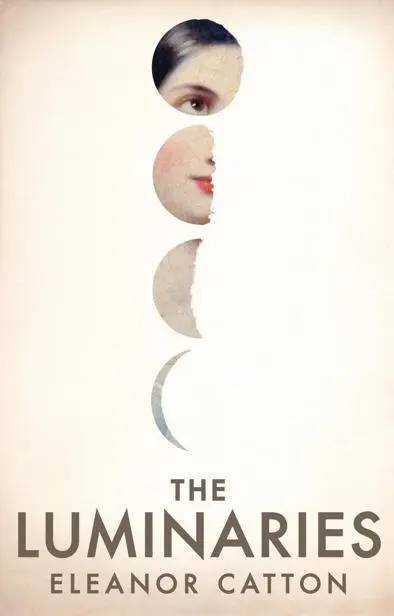
- Название:The Luminaries
- Автор:
- Издательство:Granta Publications
- Жанр:
- Год:2013
- ISBN:9781847085931
- Рейтинг книги:5 / 5. Голосов: 1
-
Избранное:Добавить в избранное
- Отзывы:
-
Ваша оценка:
The Luminaries: краткое содержание, описание и аннотация
Предлагаем к чтению аннотацию, описание, краткое содержание или предисловие (зависит от того, что написал сам автор книги «The Luminaries»). Если вы не нашли необходимую информацию о книге — напишите в комментариях, мы постараемся отыскать её.
The Luminaries — читать онлайн бесплатно полную книгу (весь текст) целиком
Ниже представлен текст книги, разбитый по страницам. Система сохранения места последней прочитанной страницы, позволяет с удобством читать онлайн бесплатно книгу «The Luminaries», без необходимости каждый раз заново искать на чём Вы остановились. Поставьте закладку, и сможете в любой момент перейти на страницу, на которой закончили чтение.
Интервал:
Закладка:
The quay curved around the mouth of the river to meet the spit, a narrow finger of sand that was battered on one side by the white surf of the open ocean, and lapped on the other by the confused wash of the river, its waters mingled now with salt, and stripped of gold. Here, on the calm side of the spit, a short wharf projected from the quay. Balfour stepped down onto it, landing with a flat sole, and the structure shuddered beneath his weight. Two stevedores, quite as sodden as he was, were sitting on the wharf some twenty feet away; they started at the jolt, and turned.
‘All right, chaps,’ said Balfour.
‘All right, Tom.’
One was carrying a brass-capped boathook; he had been using it to swipe at the gulls, which were diving for their supper on the rocks below, and now he resumed this idle purpose. The other was keeping score.
Balfour strolled up behind them, and for a time nobody spoke. They watched the moored vessels pitch back and forth, and squinted out, through the rain.
‘You know what the trouble is?’ Balfour said presently. ‘Down here, any man can make himself over. Make himself new. What’s an alias, anyway? What’s in a name? Pick it up as you pick up a nugget. Call this one Wells—this one Carver —’
One of the stevedores glanced around. ‘You got a quarrel with Francis Carver?’
‘No, no.’ Balfour shook his head.
‘Quarrel with a man called Wells?’
Balfour sighed. ‘No—there hasn’t been a quarrel,’ he said. ‘I’m wanting to find out a thing or two, that’s all. But quiet—on the sly.’
The gull returned; the stevedore swiped again, and missed.
‘Foul-hooked through his wing, nearly,’ said the second man. ‘That’s five.’
Balfour saw that they had dropped a square of biscuit on the gravel below.
The stevedore who had spoken first nodded his head at Balfour and said, ‘Are you wanting to chase up Carver, or chase up the other one?’
‘Neither,’ Balfour said. ‘Never mind. Never mind. I’ve got no quarrel with Francis Carver—you remember that.’
‘I’ll remember,’ said the stevedore, and then, ‘I say, though: if you’re wanting dirt—and on the sly—you ought to ask the gaoler.’
Balfour was watching the gull circle closer. ‘The gaoler? Shepard? Why?’
‘Why? Because Carver did time under Shepard,’ said the stevedore. ‘On Cockatoo Island, for all of ten years. Carver dug the dry dock there—convict labour—with Shepard looking on. If you’re wanting dirt on Carver, I’d make a bet that Gov. Shepard is the man to dig it up.’
‘At Cockatoo?’ Balfour said with interest. ‘I didn’t know Shepard was a sergeant at Cockatoo.’
‘He was. And then the very year after Carver gets his leave, Shepard gets a transfer to New Zealand—and follows him! How’s that for bad luck?’
‘The worst,’ agreed his fellow.
‘How do you know this?’ Balfour said.
The stevedore was addressing his mate. ‘That’s a face I’d never want to see again—my gaoler, day in and day out, for ten years—and then, as soon as I’m free—’
‘How do you know this?’ Balfour persisted.
‘I apprenticed on the dockyards there,’ the stevedore said. ‘Hey, now— that’s a corker!’
For he had struck the gull across the back with his stick.
‘You don’t happen to know what Carver was booked for—do you, lad?’
‘Trafficking,’ the stevedore said immediately.
‘Trafficking what?’
‘Opium.’
‘What—into China? Or out?’
‘Couldn’t tell you.’
‘Who booked him, though? Not the Crown.’
The stevedore thought about this, and then shrugged. ‘I don’t really know,’ he said. ‘I thought it was something to do with opium. But maybe that was just something I heard.’
Presently Balfour bid them both goodbye, and moved on along the spit. As soon as he was well alone, he planted his feet apart, thrust his hands into his pockets, and looked out over the white roar of the ocean—past the screw jacks and greased rollers, past the wooden lighthouse at the spit’s far end, past the dark hulks of the ships that had foundered on the bar.
‘See, now!’ he muttered to himself. ‘That’s something—that’s something, all right! Carver must be the man’s real name! He can’t be using an alias—not in Hokitika, under the gaoler’s own nose—when he served time beneath the man, in a penitentiary!’ Balfour slicked his moustache with his finger and thumb. ‘Here’s the rub, though. What in heaven’s name provoked him to make the claim—with proof in writing, to boot—that his name was Francis Wells?’
SATURN IN LIBRA
In which Joseph Pritchard outlines his theory of conspiracy; George Shepard makes a calculated offer; and Harald Nilssen agrees, in a tone of remonstration, to pay a call upon Ah Quee.
It was at this point that Balfour’s role as narrator was usurped—a transferral that was marked, on the shipping agent’s part, by the lighting of a new cigar, the filling of a fresh glass, and an enthusiastic ‘Now, correct me if I’m wrong, boys!’
This exhortation was apparently directed at two persons: Joseph Pritchard, the dark-haired man on Moody’s left, whose stifled intensity of silence was matched, as Moody soon discovered, by the stifled intensity of his unhurried speech, and another man whose physical presence we have not yet had cause to remark. This second man had been playing at billiards when Moody first made his entrance; Balfour now introduced him, with an admiring thrust of his cigar, as Harald Nilssen, born in Oslo, late of Bath, undefeated master of the three-card brag, and a d—ned fine shot—to which Nilssen added, springing forward to augment his own commendation, that he carried a muzzle-loading Enfield musket, the British Empire’s finest, and the only firearm he had ever deigned to touch. These two men were more than willing to take Balfour’s exhortation at face value—Nilssen for reasons of vanity, for he could not bear to be the leading role in a sensational tale, and not the leading actor, too; and Pritchard for reasons of precision.
We shall therefore leave Thomas Balfour standing on the wharf with his hands in his pockets, squinting into the rain. We shall turn our gaze some two hundred yards to the north, and alight at the Auction Yards on Gibson Quay—where, behind the rostrum, an unpainted door leading to a private office bears the legend Nilssen & Co., Commission Merchants.
In deference to the harmony of the turning spheres of time we shall resume our tale exactly at the moment Balfour left off—in Hokitika, on Saturday, the 27th of January, at five minutes before one in the afternoon.

At midday on a Saturday Harald Nilssen could usually be found in his office, sitting before a stack of contracts, wills, and bills of lading, patting his breast every ten minutes or so to check again the silver pocket watch that would release him to his luncheon—which he took with medical regularity each day at the Nonpareil. Nilssen recommended this routine to any who would listen, believing very stoutly in the curative properties of dark gravy, pastry, and ale; he did much recommendation, in fact, and often made an example of his own customs for the profit of other, less visionary men. He derived an especial pleasure from argument, so long as it was of the preposterous, hypothetical variety, and so loved to fashion absurd theories of abstraction from the small but dedicated circle of his own tastes. This attitude was affectionately reinforced by his friends, who thought him vivacious and amusing, and scorned by his detractors, who thought him affected and self-absorbed—but these latter voices were subdued in Nilssen’s ears, and he spent no effort to better make them out.
Читать дальшеИнтервал:
Закладка:
Похожие книги на «The Luminaries»
Представляем Вашему вниманию похожие книги на «The Luminaries» списком для выбора. Мы отобрали схожую по названию и смыслу литературу в надежде предоставить читателям больше вариантов отыскать новые, интересные, ещё непрочитанные произведения.




Обсуждение, отзывы о книге «The Luminaries» и просто собственные мнения читателей. Оставьте ваши комментарии, напишите, что Вы думаете о произведении, его смысле или главных героях. Укажите что конкретно понравилось, а что нет, и почему Вы так считаете.