Eleanor Catton - The Luminaries
Здесь есть возможность читать онлайн «Eleanor Catton - The Luminaries» весь текст электронной книги совершенно бесплатно (целиком полную версию без сокращений). В некоторых случаях можно слушать аудио, скачать через торрент в формате fb2 и присутствует краткое содержание. Год выпуска: 2013, ISBN: 2013, Издательство: Granta Publications, Жанр: Историческая проза, Современная проза, на английском языке. Описание произведения, (предисловие) а так же отзывы посетителей доступны на портале библиотеки ЛибКат.
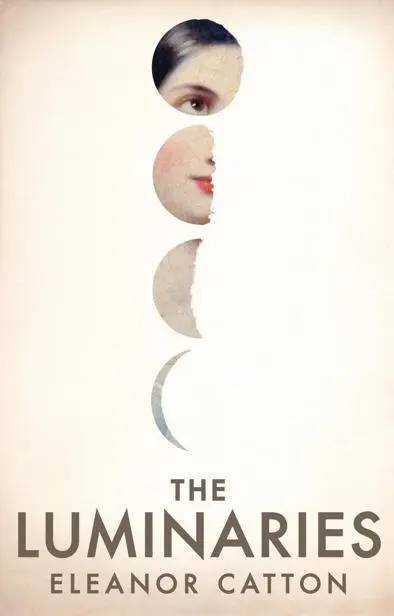
- Название:The Luminaries
- Автор:
- Издательство:Granta Publications
- Жанр:
- Год:2013
- ISBN:9781847085931
- Рейтинг книги:5 / 5. Голосов: 1
-
Избранное:Добавить в избранное
- Отзывы:
-
Ваша оценка:
The Luminaries: краткое содержание, описание и аннотация
Предлагаем к чтению аннотацию, описание, краткое содержание или предисловие (зависит от того, что написал сам автор книги «The Luminaries»). Если вы не нашли необходимую информацию о книге — напишите в комментариях, мы постараемся отыскать её.
The Luminaries — читать онлайн бесплатно полную книгу (весь текст) целиком
Ниже представлен текст книги, разбитый по страницам. Система сохранения места последней прочитанной страницы, позволяет с удобством читать онлайн бесплатно книгу «The Luminaries», без необходимости каждый раз заново искать на чём Вы остановились. Поставьте закладку, и сможете в любой момент перейти на страницу, на которой закончили чтение.
Интервал:
Закладка:
‘Frost.’
‘Thank you very much, Mr. Frost. You’ve been extraordinarily helpful.’
But the banker was looking at Balfour with a strange expression on his face.
‘Mr. Balfour,’ he said. ‘Perhaps you haven’t heard.’
‘Something about Staines?’
‘Yes.’
Balfour stiffened. ‘He’s dead?’
‘No,’ said Frost. ‘He vanished.’
‘What? When?’
‘Two weeks ago.’
Balfour’s eyes went wide.
‘I am sorry to be the one to break the news— if you are his great friend.’
Balfour did not notice the barb of emphasis in the banker’s remark. ‘Vanished—two weeks back!’ he said. ‘And no one’s talking? Why haven’t I heard about it?’
‘I assure you that many men have been talking,’ said Frost. ‘A notice has been published in the Missing Persons column every day this week.’
‘I never read the personals,’ said Balfour.
(But of course: he had been with Lauderback, this fortnight past, facilitating introductions up and down the Coast; he had not been frequenting the Corinthian, as he habitually did in the evenings, to share a mug of beer with the other camp followers while they exchanged the local news.)
‘Perhaps he found a strike,’ he said now. ‘That could be it. Perhaps Staines found a paying seam, up in the bush somewhere, and he’s keeping it quiet—until he’s staked the ground.’
‘Perhaps,’ the banker said courteously, and would not say more.
Balfour chewed his lip. ‘Vanished!’ he said. ‘I can’t understand it!’
‘I rather wonder whether this news will be of import to your partner,’ said Frost, smoothing the open page of his ledger with his palm.
‘Who’s my partner?’ Balfour said, with some alarm—thinking that the banker was referring to Alistair Lauderback, whose name he had been careful not to use.
‘Why—Mr. Carver,’ Frost said, blinking. ‘Your prospective partner in business—as you have just informed me, sir. Mr. Carver has a joint investment with Mr. Staines. So if Mr. Staines is dead …’
He trailed off with a shrug.
Balfour narrowed his eyes. The banker seemed to be implying, however vaguely, that Carver was in some way responsible for Emery Staines’s disappearance … an implication for which he surely did not have any proof. His attitude was very clear, and yet he had not really expressed an opinion of any kind, upon which he might be faulted. The tone of his voice implied that he did not like Carver, even though his words expressed sympathy for the man’s possible loss. Balfour, feeling the cowardice of this equivocation, almost became angry—but then he remembered that he was shamming. He was not going into business with Carver, and need not take his part in an argument against him.
But then young Frost smothered a smile, and Balfour saw, with a sudden rush of indignation, that, in fact, the younger man was mocking him. Frost had not believed his false story for a moment! He knew that Balfour was not going into business with Carver; he knew that this falsehood had been fabricated to mask some other purpose—and then he added the insult of diminishment to the injury of exposure, by finding Balfour amusing! It rankled Balfour to be second-guessed, but it rankled him still more to be ridiculed, especially by a man whose days were spent in a three-foot-square cubicle, signing cheques in another man’s name. (This last was Lauderback’s phrase, half-remembered from earlier that morning; it came to Balfour’s mind as his own.) Suddenly angry, he leaned forward and curled his hands around the bars of the grille.
‘All right,’ he said quietly. ‘You listen. I’m no more going into business with Carver than you are. I think the man’s a thug and a crook and all the rest of it. I’m up against him, d—n it. I’ve got to get a twinkle on him: something I can use.’
‘What is a twinkle?’ the banker asked.
‘It’s stupid—never mind it,’ Balfour snapped. ‘The point is that I’m looking to round him up. Give him over to the law. I think he skimmed a fair fortune out of some other fellow’s claim. Thousands. But it’s only a hunch, and I need hard evidence. I need a place to start. All right? That investment story I gave you just now was a bunch of guff. Cock and bull.’ He glared at the banker through the bars of the grille. ‘What?’ he said after a moment. ‘What, then?’
‘Nothing at all,’ said Frost. He squared the papers on his desk, and gave a cryptic, tight-lipped smile. ‘Your business is your own. I wish you only luck, Mr. Balfour.’

The news about Emery Staines had rattled Balfour severely. Shipping crates and blackmail was one thing, he thought, but a person disappearing was quite another. That was a sombre business. Emery Staines was a good digger, and much too young to die.
Outside the courthouse Balfour stood and breathed heavily for a moment. The small crowd outside the bank had dispersed to their luncheon, and the Maori man was gone. The rain had thinned to a persistent drizzle. Balfour cast his eye up and down the street, somewhat at a loss for where next to go. He felt excessively dejected. Vanished, he thought. But one did not simply vanish! The boy could only have been murdered. There was no other explanation for it—if he had not been seen for two weeks.
Emery Staines was easily the richest man south of the black sands. He owned more than a dozen claims, several of which had shafts that descended to depths of thirty feet, at least. Balfour, who admired Staines exceedingly, would have guessed his age at three-or four-and-twenty—not so young as to be unworthy of his luck, and not so old as to suggest that he might have acquired it by some less than honest means. In fact such a suggestion had never crossed Balfour’s mind. Staines had been gifted with a thoroughly good-natured beauty, the kind that is earnest and hopeful without ever declaring itself to be so; in temper he was affable, optimistic, and delightfully quick. Even to think him dead was hateful. To think him murdered was worse.
Just then the Wesleyan chapel bell struck half past twelve, releasing a flurry of birds: they burst out of the makeshift belfry and scattered, dark against the sky. Balfour turned his face to the sound, feeling as he did so a sudden ache in his temple. His senses were turning from dull to sharp—the effect of the spirits he had consumed that morning—and the responsibilities of his situation had begun to weigh heavy upon him. He no longer felt inclined to ask questions on Lauderback’s behalf.
He wrapped his coat around his body, turned on his heel, and began walking towards the Hokitika spit—a place that was, for him, a habitual refuge. It was his pleasure to stand on the sand in foul weather, clutch his coat across his body, and look out past the clustered masts of the ships at anchor, swaying en masse, impelled variously by the river’s rushing current, the surf, and the wind—the howling Tasman wind, that stripped the bark from the trees at the beachfront, and bent the scrub to crippled forms. Balfour enjoyed the fierce indifference of a storm. He liked lonely places, because he never really felt alone.
As he slithered down the muddy bank to the quay, the wind suddenly dropped. Smiling, Balfour peered into the mist. The rain had stolen all chance of a reflection from the wide mouth of the river, and the water was as grey and opaque as a pewter plate. The bucking masts had slowed their motion when the wind died away; Balfour watched them, calmed by their weighty roll, back and forth, back and forth. He waited until they were almost still before moving on.
Читать дальшеИнтервал:
Закладка:
Похожие книги на «The Luminaries»
Представляем Вашему вниманию похожие книги на «The Luminaries» списком для выбора. Мы отобрали схожую по названию и смыслу литературу в надежде предоставить читателям больше вариантов отыскать новые, интересные, ещё непрочитанные произведения.




Обсуждение, отзывы о книге «The Luminaries» и просто собственные мнения читателей. Оставьте ваши комментарии, напишите, что Вы думаете о произведении, его смысле или главных героях. Укажите что конкретно понравилось, а что нет, и почему Вы так считаете.