Eleanor Catton - The Luminaries
Здесь есть возможность читать онлайн «Eleanor Catton - The Luminaries» весь текст электронной книги совершенно бесплатно (целиком полную версию без сокращений). В некоторых случаях можно слушать аудио, скачать через торрент в формате fb2 и присутствует краткое содержание. Год выпуска: 2013, ISBN: 2013, Издательство: Granta Publications, Жанр: Историческая проза, Современная проза, на английском языке. Описание произведения, (предисловие) а так же отзывы посетителей доступны на портале библиотеки ЛибКат.
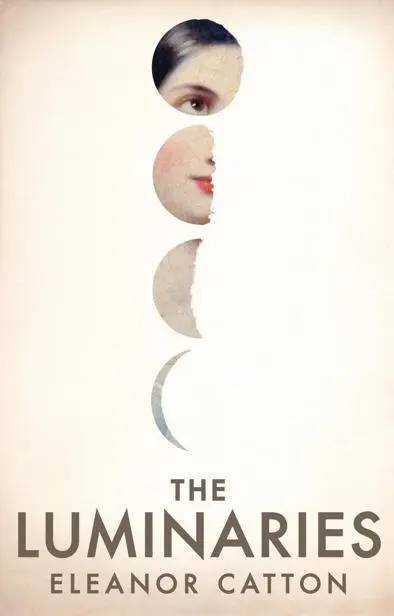
- Название:The Luminaries
- Автор:
- Издательство:Granta Publications
- Жанр:
- Год:2013
- ISBN:9781847085931
- Рейтинг книги:5 / 5. Голосов: 1
-
Избранное:Добавить в избранное
- Отзывы:
-
Ваша оценка:
The Luminaries: краткое содержание, описание и аннотация
Предлагаем к чтению аннотацию, описание, краткое содержание или предисловие (зависит от того, что написал сам автор книги «The Luminaries»). Если вы не нашли необходимую информацию о книге — напишите в комментариях, мы постараемся отыскать её.
The Luminaries — читать онлайн бесплатно полную книгу (весь текст) целиком
Ниже представлен текст книги, разбитый по страницам. Система сохранения места последней прочитанной страницы, позволяет с удобством читать онлайн бесплатно книгу «The Luminaries», без необходимости каждый раз заново искать на чём Вы остановились. Поставьте закладку, и сможете в любой момент перейти на страницу, на которой закончили чтение.
Интервал:
Закладка:
That morning there was only one buyer present: a slick-haired magnate, wearing a pale green hunting jacket and a yellow tie—a gaudy combination, and one that might have served to mark him rather too obviously as a moneyed man, had he been doing business alone and unprotected. But the Hokitika gold escort was on hand. This small army, a uniformed infantry of ten men, presided over every sale and purchase of the colour. Later they would oversee the bullion’s transfer into an armoured van, and ensure that it was safely conveyed offshore. They stood behind the buyer, and flanked the desk at which he sat—each man armed with a .577 Snider-Enfield rifle, a massive, gleaming piece of the most modern design. It took a cartridge as long as a man’s index finger, and could blow a fellow’s head to bloody dust. Balfour had admired the Snider-Enfield when the model was first shipped in, but seeing ten armed men in this enclosed space gave him an anxious premonition. The room was so crowded he doubted any one guard could find the room to raise his weapon to his shoulder, let alone discharge a round.
He shouldered his way through the diggers to the bankers’ cubicles. Most of the men in the room were present as spectators only, and so parted to admit him; it was in very little time at all, therefore, that Balfour found himself at a barred cubicle, facing a young man in a striped vest and a neatly pinned cravat.
‘Good morning.’
‘I’m wanting to know if a man named Francis Carver has ever taken out a miner’s right in New Zealand,’ Balfour said. He removed his hat and slicked back his wet hair, an action without a perceptible benefit, for the palm of his hand was very wet also.
‘Francis Carver—Captain Carver?’
‘That’s the man,’ said Balfour.
‘I am obliged to ask who you are, and why you are requesting this information.’
The banker spoke without affect, and in a mild tone of voice.
‘The man owns a ship, and I’m in the shipping trade,’ Balfour said smoothly, replacing his hat. ‘Tom Balfour’s my name. I’m looking to set up a side venture of a kind—tea-trading, back and forth from Canton. Just canvassing the idea at this point. I want to find out a bit more about Carver before I make any offers of business. Where his money’s spread. Whether he’s ever been bankrupted. That kind of thing.’
‘Surely you could just ask Mr. Carver yourself,’ replied the banker, speaking in the same inoffensive tone, so that the remark did not come off as rude, but, merely, as pleasantly offhand. He might have been passing a broken wagon in the street, and observing, quite affably, that there was a very simple way to mend the axle.
Balfour explained that Carver was at sea, and could not be contacted.
The banker seemed unsatisfied with this explanation. He considered Balfour, and put his finger against his lower lip. Evidently, however, he could not conjure a further objection that might give him reason to decline to pursue Balfour’s request. He nodded, pulled his ledger towards him, and wrote a note in a thin, precise script. He then blotted his page (a little unnecessarily, Balfour thought, for the ledger remained open) and dried the nib of his pen with a square of soft leather. ‘Wait here, please,’ he said. He disappeared through a low doorway, beyond which lay an antechamber of some kind, and soon returned carrying a large folder, bound in leather and marked on its spine with the letter C .
Balfour drummed his fingers as the banker untied the clasp upon the folder and opened it. He scrutinised the young man through the bars of the grille.
What a contrast this young man posed to the Maori in the street! They were rough contemporaries in age, but where Tauwhare had been muscled, tense, and proud, this fellow was languid, even catlike: he moved with a kind of casual luxury, as though he saw no need to spend his strength on swiftness, and nor did he see any reason to conserve it. He was lean in body. His hair was brown in hue, long, and curly at the tips; he wore it tied in a ribbon at the nape of his neck, in the fashion of a whaler. His face was broad and his eyes spaced widely; his lips were full, his teeth very crooked, and his nose rather large. These features conspired to form an expression that was both honest and nonchalant—and nonchalance is a form of elegance, when it demands much, and declines to reveal its source. Balfour considered him a very elegant young man.
‘Here,’ the banker said at last, pointing. ‘You see—Carswell, here, and then Cassidy. Your man’s not here.’
‘So Francis Carver doesn’t own a miner’s right.’
‘Not in Canterbury, no.’ He shut the folder with a soft thud.
‘What about an Otago certificate?’
‘I’m afraid you will have to go to Dunedin for that.’
This was a dead end. In Lauderback’s story the gold in the crate had hailed (allegedly, of course) from Dunstan, which was an Otago field.
‘You don’t keep records of Otago men?’ Balfour asked, disappointed.
‘No.’
‘What if he came in on Otago papers? Would there be a record at the customhouse—from when he first arrived?’
‘Not at the customhouse,’ said the banker, ‘but if he made any dust, he’d have to have it counted and weighed before he left. He’s not allowed to transfer it to another province, or out of the country, without declaring it first. So he’d come here. We’d ask to take a look at the miner’s right. Then we’d make a record in this book that he was working under Otago papers, but on a Hokitika claim. There’s nothing in this book; therefore, as I said just now, we can safely assume he hasn’t prospected anywhere hereabouts. As for whether he’s prospected in Otago, I’ve no idea.’
The banker spoke with the controlled alarm of a bureaucrat who is requested to explain some mundane feature of the bureaucracy of which he is a functioning part: controlled, because an official is always comforted by proof of his own expertise, and alarmed, because the necessity for explanation seemed, in some obscure way, to undermine the system which had afforded him that expertise in the first place.
‘All right,’ said Balfour. ‘Now, there’s one more thing. I need to know whether Carver has owned shares in any mining company, or if he took out shares on a private claim.’
A flicker of doubt disturbed the banker’s mild expression. For the briefest moment, he said nothing, and again it seemed as if he were trying to think of a reason to decline Balfour’s request, to declare it unorthodox, or to press to know the reason why. He looked at Balfour with a gaze that was no less piercing for its mildness—and Balfour, who was always made uncomfortable by scrutiny, scowled very darkly. But, as before, the banker applied himself to the task demanded of his office. He wrote another note upon his ledger, blotted it, and then politely excused himself to pursue this new request.
When he returned with the shares records, however, he looked openly uneasy.
‘Francis Carver has speculated in this area,’ he said. ‘You wouldn’t call it a portfolio: it’s only one claim. Looks like a private agreement. Carver takes home a return to the tune of fifty percent of the mine’s net profit every quarter.’
‘Fifty percent!’ Balfour said. ‘And only one claim—that’s confidence for you! When did he buy?’
‘Our records show the date as July 1865.’
‘That far back!’ Balfour said. (Six months ago! But that was after the sale of the Godspeed —was it not?) ‘Which claim is it? Who’s owning?’
‘The mine is called the Aurora,’ said the banker, enunciating very carefully. ‘It is owned and operated by—’
‘Emery Staines,’ Balfour finished for him, nodding his head. ‘Yes, I know the place—up Kaniere way. Why, that’s capital news. Staines is a great friend of mine. I’ll go and talk to the man myself. Thank you very much, Mr.—?’
Читать дальшеИнтервал:
Закладка:
Похожие книги на «The Luminaries»
Представляем Вашему вниманию похожие книги на «The Luminaries» списком для выбора. Мы отобрали схожую по названию и смыслу литературу в надежде предоставить читателям больше вариантов отыскать новые, интересные, ещё непрочитанные произведения.




Обсуждение, отзывы о книге «The Luminaries» и просто собственные мнения читателей. Оставьте ваши комментарии, напишите, что Вы думаете о произведении, его смысле или главных героях. Укажите что конкретно понравилось, а что нет, и почему Вы так считаете.