Eleanor Catton - The Luminaries
Здесь есть возможность читать онлайн «Eleanor Catton - The Luminaries» весь текст электронной книги совершенно бесплатно (целиком полную версию без сокращений). В некоторых случаях можно слушать аудио, скачать через торрент в формате fb2 и присутствует краткое содержание. Год выпуска: 2013, ISBN: 2013, Издательство: Granta Publications, Жанр: Историческая проза, Современная проза, на английском языке. Описание произведения, (предисловие) а так же отзывы посетителей доступны на портале библиотеки ЛибКат.
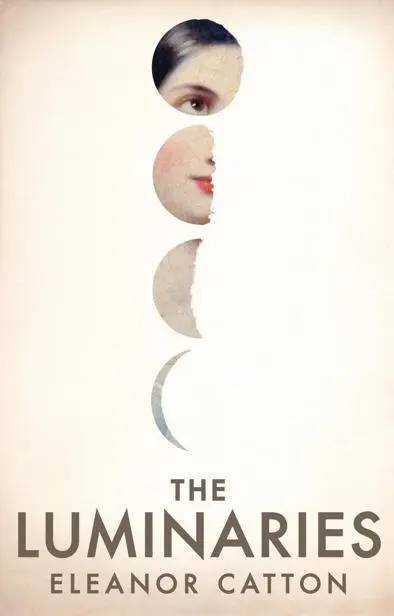
- Название:The Luminaries
- Автор:
- Издательство:Granta Publications
- Жанр:
- Год:2013
- ISBN:9781847085931
- Рейтинг книги:5 / 5. Голосов: 1
-
Избранное:Добавить в избранное
- Отзывы:
-
Ваша оценка:
The Luminaries: краткое содержание, описание и аннотация
Предлагаем к чтению аннотацию, описание, краткое содержание или предисловие (зависит от того, что написал сам автор книги «The Luminaries»). Если вы не нашли необходимую информацию о книге — напишите в комментариях, мы постараемся отыскать её.
The Luminaries — читать онлайн бесплатно полную книгу (весь текст) целиком
Ниже представлен текст книги, разбитый по страницам. Система сохранения места последней прочитанной страницы, позволяет с удобством читать онлайн бесплатно книгу «The Luminaries», без необходимости каждый раз заново искать на чём Вы остановились. Поставьте закладку, и сможете в любой момент перейти на страницу, на которой закончили чтение.
Интервал:
Закладка:
The corners of the room had now vanished entirely into black. The only light came from the flickering glow of the candles in the centre of the group, and around it the eleven faces had a greying, ghostly look. Without taking his eyes from the widow’s face, Frost noted that in fact the circle of chairs was not perfectly circular: it was more nearly an ellipsis, placed with its longest axis pointing to the door, and Lydia seated at its farthest end. By placing the seats in this configuration, she had been able to ensure that every man’s head would turn towards the door—and away from her —when Anna arrived. Well, Frost thought, the Chinese men, at least, must have seen the sleight of hand that she had performed in that quick instant when Anna appeared in the doorway. He made a second mental note: to question them once the séance was over.
The group now joined hands, at the widow’s instruction; and then, in the fluttering light of the candles, Lydia Wells heaved a great sigh, smiled, and closed her eyes.
The widow’s visitation took a very long time coming. The group sat in perfect silence for nigh on twenty minutes, each man holding himself very still, breathing rhythmically, and waiting for a sign. Charlie Frost kept his eyes on Mrs. Wells. At length she set up a humming sound, low at the back of her throat. The humming thickened, acquired pitch; soon one could make out words, some nonsensical, some recognisable only by their shapes, their syllables. These too thickened into phrases, entreaties, commands: finally Mrs. Wells, arching her back, made her request of the world of the dead: to give up the shade of Emery Staines.
Later, Frost would describe the scene that followed as, variously, a ‘fit’, a ‘seizure’, and a ‘prolonged convulsion’. He knew that none of these explanations was quite right, for none conveyed, accurately, either the elaborate theatrics of Lydia Wells’s performance, or Frost’s acute embarrassment, in witnessing them. Mrs. Wells called out Staines’s name, again and again, intoning the words with a lover’s dying fall—and when no answer came, she became agitated. She suffered paroxysms. She repeated syllables, like a babbling child. Her head lolled against her chest, reared back, lolled again. Presently her convulsions began approaching a kind of climax. Her breathing became faster and faster—and then suddenly quelled. Her eyes snapped open.
Charlie Frost felt a cold jolt of unease: Lydia Wells was staring directly at him, and the expression on her face was unlike any he had seen her wear before: it was rigid, bloodless, fierce. But then the flames from the candles ducked and leaped and he saw that Lydia Wells was not looking at him, but past him, over his shoulder, to where Ah Sook sat in the corner in his Oriental pose. Frost did not blink; he did not look away. Then Lydia Wells gave a strange sound. Her eyes rolled back in her head. The muscles in her throat began to pulse. Her mouth moved strangely, as though she were chewing on the air. And then in a voice that did not belong to her she said:
‘ Ngor yeu nei wai mut haak ngor dei gaa zuk ge ming sing tung wai waai ngor ge sing yu fu zaak. Mou leon nei hai bin, dang ngor co yun gaam cut lai, ngor yat ding wui wan dou nei. Ngor yeu wan nei bou sou— ’
And she gave a great shudder, and pitched sideways, onto the floor. In the very same moment (Frost would discuss this inexplicable event with Nilssen for weeks to come) the paraffin lamp on the table lurched violently to the side, coming down upon the plate of candles that had been set out next to it. This was a mistake that ought to have been very easily righted, for the glass globe of the lamp did not shatter, and the paraffin did not spill—but there was a colossal whoosh of flame, and the circle of men was suddenly illuminated: the entire surface of the table was burning.
In the next moment everyone burst into life. Someone shouted to cover the fire. One of the diggers pulled the widow to safety, and two others cleared the sofa; the fire was doused with shawls and blankets; the lamp was knocked away; everyone was talking at once. Charlie Frost, wheeling round in the sudden darkness, saw that Anna Wetherell had not moved, and her expression had not changed. The sudden blaze of the fire did not seem to have alarmed her in the slightest.
Someone lit the lamp.
‘Was that it? Was that what was supposed to happen?’
‘What did she say?’
‘Clear a space, would you?’
‘Coo—to see us all lit up like that!’
‘Some kind of primitive—’
‘Make sure she’s breathing.’
‘Have to admit, I didn’t expect—’
‘Did it mean anything, do you think? What she said? Or was it—’
‘That wasn’t Emery Staines, sure as I’m—’
‘Another spirit? Working through—’
‘The way the lamp moved of its own accord like that!’
‘We ought to ask the johnnies. Hi! Was that Chinese?’
‘Does he understand?’
‘Was that Chinese, that she was speaking just now?’
But Ah Quee did not appear to understand the question. One of the diggers leaned over and tapped him on the shoulder.
‘What was that, eh?’ he said. ‘What was it that she said? Was it Chinese, what she was saying? Or some other tongue?’
Ah Quee returned his gaze without understanding, and did not speak. It was Ah Sook who answered.
‘Lydia Wells speak Cantonese,’ he said.
‘Yes?’ Nilssen said eagerly, swivelling about. ‘And what did she say?’
Ah Sook studied him. ‘“One day I come back and kill you. You kill a man. He die—so you die. I come back and kill you, one day.”’
Nilssen’s eyes went wide; his next question died on his lips. He turned to Anna—who was looking at Ah Sook, her expression faintly perplexed. Charlie Frost was frowning.
‘Where’s Staines in all of that?’ demanded one of the diggers.
Ah Sook shook his head. ‘Not Staines,’ he said quietly. He got up from his cushion suddenly, and walked to the window, folding his arms.
‘Not Staines?’ said the digger. ‘Who then?’
‘Francis Carver,’ said Ah Sook.
There was an explosion of outrage around the room.
‘Francis Carver? How’s that for a séance —when he isn’t even dead? Why—I could talk to Carver myself; I’d only have to knock upon his door!’
‘But he’s at the Palace,’ said another. ‘That’s fifty yards away from where we are.’
‘That’s not the point.’
‘I mean you can’t deny that something strange—’
‘I could have talked to Carver myself,’ the digger repeated, stubbornly. ‘I don’t need a medium for that.’
‘What about the lamp, though? How do you account for the lamp?’
‘It jumped across the room!’
‘It levitated .’
Ah Sook had stiffened. ‘Francis Carver,’ he said, directing his question to Harald Nilssen. ‘At the Palace Hotel?’
Nilssen frowned—surely Ah Sook knew this already! ‘Yes, Carver’s staying at the Palace,’ he said. ‘On Revell-street. The building with the blue edging, you know. Next to the hardware store.’
‘How long?’ said Ah Sook.
Nilssen looked even more confused. ‘He’s been here for three weeks,’ he said, lowering his voice. ‘Since the night—I mean, since the Godspeed came to ground.’
The other men were still arguing.
‘It’s not a séance unless it’s talking with the dead.’
‘No—when you talk to Carver, it’s you who ends up dead!’
They laughed at this, and then the digger’s mate said, ‘Rum do, you’re thinking? Some kind of a hoax?’
The stubborn digger looked inclined to agree, but he cast a glance over at Lydia Wells. The widow was still unconscious, and her face was very pale. Her mouth was partly open, showing the glint of a molar and a dry tongue, and her eyes were fluttering weakly beneath the lids. If she was shamming, the digger thought, then she was shamming extraordinarily well. But he had paid for a communion with Emery Staines. He had not paid to hear a string of Chinese syllables and then watch a woman fall into a faint. Why, how could he be sure that the words were even Chinese? She might have been speaking gibberish! The Chinese fellow might be in on the secret, and she might have paid him a fee, to corroborate the lie.
Читать дальшеИнтервал:
Закладка:
Похожие книги на «The Luminaries»
Представляем Вашему вниманию похожие книги на «The Luminaries» списком для выбора. Мы отобрали схожую по названию и смыслу литературу в надежде предоставить читателям больше вариантов отыскать новые, интересные, ещё непрочитанные произведения.



Обсуждение, отзывы о книге «The Luminaries» и просто собственные мнения читателей. Оставьте ваши комментарии, напишите, что Вы думаете о произведении, его смысле или главных героях. Укажите что конкретно понравилось, а что нет, и почему Вы так считаете.