Eleanor Catton - The Luminaries
Здесь есть возможность читать онлайн «Eleanor Catton - The Luminaries» весь текст электронной книги совершенно бесплатно (целиком полную версию без сокращений). В некоторых случаях можно слушать аудио, скачать через торрент в формате fb2 и присутствует краткое содержание. Год выпуска: 2013, ISBN: 2013, Издательство: Granta Publications, Жанр: Историческая проза, Современная проза, на английском языке. Описание произведения, (предисловие) а так же отзывы посетителей доступны на портале библиотеки ЛибКат.
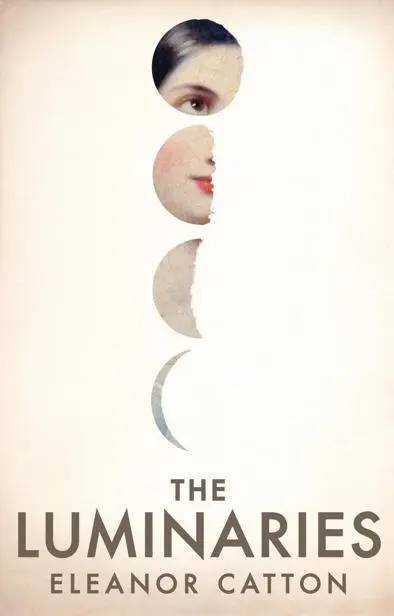
- Название:The Luminaries
- Автор:
- Издательство:Granta Publications
- Жанр:
- Год:2013
- ISBN:9781847085931
- Рейтинг книги:5 / 5. Голосов: 1
-
Избранное:Добавить в избранное
- Отзывы:
-
Ваша оценка:
The Luminaries: краткое содержание, описание и аннотация
Предлагаем к чтению аннотацию, описание, краткое содержание или предисловие (зависит от того, что написал сам автор книги «The Luminaries»). Если вы не нашли необходимую информацию о книге — напишите в комментариях, мы постараемся отыскать её.
The Luminaries — читать онлайн бесплатно полную книгу (весь текст) целиком
Ниже представлен текст книги, разбитый по страницам. Система сохранения места последней прочитанной страницы, позволяет с удобством читать онлайн бесплатно книгу «The Luminaries», без необходимости каждый раз заново искать на чём Вы остановились. Поставьте закладку, и сможете в любой момент перейти на страницу, на которой закончили чтение.
Интервал:
Закладка:
‘She has a cruel face,’ Tauwhare observed.
‘Yes,’ Clinch said, ‘I think so, too.’
‘Not a friend of Maori.’
‘No, I expect not. Nor of the Chinese—as we can very well see. Nor of any man in this room, I don’t doubt.’ Clinch drained his glass. ‘I’m out of humour, Mr. Tauwhare,’ he said again. ‘When I am out of humour, do you know what I like to do? I like to drink.’
‘That’s good,’ Tauwhare said.
Clinch reached for the decanter. ‘You’ll have another?’
‘Yes.’
He refilled both their glasses. ‘Anyway,’ he said, as he returned the decanter to the sideboard, ‘the appeal will go through, and the sale will be revoked, and I’ll get my deposit back, and that will be that. The cottage won’t belong to me any longer: it will belong to Mrs. Wells.’
‘Why did you buy?’ Tauwhare persisted.
Clinch exhaled heavily. ‘It wasn’t even my idea,’ he said. ‘It was Charlie Frost’s idea. Buy up some land, he said: that way nobody will ask any questions.’
Tauwhare said nothing, waiting for Clinch to go on; presently he did.
‘Here’s the argument,’ he said. ‘You don’t need a miner’s right if the land’s your very own, do you? And if you find a piece of gold on your own land, it’s yours, isn’t it? That was the idea—his idea, I mean: it wasn’t mine. I couldn’t take the gowns to the bank—not without a miner’s right. They’d ask where it came from, and then I’d be stuck. But if I had a piece of land for my very own, then nobody asks anything at all. I never knew about Johnny Quee, you see. I thought the gold had been in the dresses all along—still pure. So I saved up for a deposit. Charlie, he said to wait for either a deceased estate or a subdivision: either the one or the other, he said, for the sake of staying clean. So when the Wells tract came up for sale, I bought it first thing, thinking that—well, I don’t know. It was stupid. Settling there, with—I don’t know. Of course, Anna comes home from gaol in a different dress, the very next day—and then, after she quits the place, I find out the other dresses have been stripped. It was the leaden makeweights that I was feeling. The whole plan’s gone to custard. I’ve got a piece of land I don’t want, and no money to call my own, and Anna—well. You know about her.’
Tauwhare was frowning. ‘The Arahura is a very sacred place,’ he began.
‘Yes, well,’ said Clinch, waving a hand to silence him, ‘the law’s the law. If you want to buy the cottage back again, you’re more than welcome; but it’s not me you should be talking to. It’s her.’
They gazed across the room at Mrs. Wells.
‘The problem with beautiful women,’ Clinch said presently, ‘is that they always know it, and the knowing turns them proud. I like a woman who doesn’t know her own beauty.’
‘A stupid woman,’ Tauwhare said.
‘Not stupid,’ Clinch said. ‘Modest. Unassuming.’
‘I do not know those words.’
Clinch waved a hand. ‘Doesn’t say too much. Doesn’t speak about herself. Knows when to keep quiet, and knows when to speak.’
‘Cunning?’ said Tauwhare.
‘Not cunning.’ Clinch shook his head. ‘Not cunning, and not stupid either. Just—careful, and quiet. And innocent.’
‘Who is this woman?’ said Tauwhare slyly.
‘No: this isn’t a real woman,’ said Clinch. He scowled. ‘Never mind.’
‘Hi—Edgar. Do you have a moment?’
Löwenthal had come up behind them.
‘By all means,’ said Clinch. ‘Excuse me, Mr. Tauwhare.’
Löwenthal blinked, seeing Tauwhare for the first time. ‘You must have gone down to the wreck,’ he said. ‘Find anything?’
Tauwhare did not like to be addressed with condescension, as though he belonged to a servile class; nor could he forgive Löwenthal for having shamed him earlier that day.
‘No,’ he replied, scornfully. ‘Nothing.’
‘Pity,’ said Löwenthal, already turning away.
‘What’s on your mind, Ben?’ said Clinch, when they were alone.
‘It’s an indelicate question, I’m afraid,’ said Löwenthal. ‘About the child of Anna’s—the baby that never came to term.’
‘All right,’ said Clinch, cautiously.
‘You recall the night I found her—after the dust-up with Carver.’
‘Of course.’
‘That was the night she confessed that Carver was the child’s father.’
‘Yes—I remember.’
‘I would like to know whether you knew that fact already, or whether, like me, you heard that confession for the first time that evening,’ Löwenthal said. ‘You will please forgive my indelicacy—and the impertinence of the subject in question.’
Clinch was silent for a long time. ‘No,’ he said at last. ‘That was the first time she spoke of it. She kept mum on the subject until that night.’
‘But did you have an inkling?’ Löwenthal pressed. ‘Some idea? Were you of the opinion, perhaps, that Carver might have been the—ah—the sire?’
Clinch looked uncomfortable. ‘It was some fellow from Dunedin days,’ he said. ‘That’s all I knew. It wasn’t a Hokitika chap: the months didn’t match up.’
‘And Carver knew Anna in Dunedin.’
‘She came over on Godspeed ,’ Clinch said shortly. ‘Beyond that, I couldn’t tell you. What’s this in aid of?’
Löwenthal explained what had happened in the office of the West Coast Times that afternoon. ‘Anna might not have been telling the truth, you see. She might have been spinning us a line. Of course we never had reason to doubt her word—until now.’
Clinch scowled. ‘But who else could it be—if not Carver?’
Löwenthal pursed his lips. ‘I don’t know,’ he said. ‘Any number of men, I suppose. Perhaps it’s no one we know.’
‘This is just Carver’s word against Anna’s,’ Clinch said hotly. ‘You aren’t taking Carver’s part—on the strength of a single declaration? Any man can deny a thing, you know; it doesn’t cost a man a penny, to deny a thing!’
‘I’m not taking either part—yet,’ Löwenthal said. ‘But I do think that the timing of Anna’s confession could be significant. Perhaps.’
Frowning, Clinch reached up to stroke the side of his face. As he did so Löwenthal caught the spice of his cologne and realised that Clinch must have paid for a scented shave at the barbershop, rather than the penny lather that was the standing order of most Hokitika men—a guess that was further confirmed when Clinch moved his hand, and Löwenthal saw a reddish spray of irritation upon the man’s soft cheeks. Discreetly, Löwenthal looked the hotelier up and down. Clinch’s jacket had been brushed, and his collar starched; the shirt he was wearing seemed very white, and the toes of his boots were freshly blackened. Oh , Löwenthal thought, with pity: he made himself handsome, for Anna.
‘So she only named the father after the child was dead,’ Clinch said at last, and in a very harsh voice. ‘That’s a whore’s honour—that’s all that is.’
‘Perhaps you’re right,’ Löwenthal said, more kindly. ‘Let’s drop the subject.’

‘Mr. Walter Moody—Mrs. Lydia Wells,’ said Gascoigne. ‘Mr. Moody is come to Hokitika from Scotland, Mrs. Wells, to make his fortune in the gorge; Mrs. Wells, as you will know, Mr. Moody, is the mistress of this establishment, and a great enthusiast of realms.’
Lydia made a very pretty curtsey, and Moody a short but respectful bow. Moody then paid the necessary compliments to his hostess, thanking her very nicely for the evening’s entertainment, and praising her renovations of the old hotel. Despite his best efforts, the compliments came out very flat: when he looked at her, he thought only of Lauderback, and Crosbie Wells.
Читать дальшеИнтервал:
Закладка:
Похожие книги на «The Luminaries»
Представляем Вашему вниманию похожие книги на «The Luminaries» списком для выбора. Мы отобрали схожую по названию и смыслу литературу в надежде предоставить читателям больше вариантов отыскать новые, интересные, ещё непрочитанные произведения.


Обсуждение, отзывы о книге «The Luminaries» и просто собственные мнения читателей. Оставьте ваши комментарии, напишите, что Вы думаете о произведении, его смысле или главных героях. Укажите что конкретно понравилось, а что нет, и почему Вы так считаете.