Eleanor Catton - The Luminaries
Здесь есть возможность читать онлайн «Eleanor Catton - The Luminaries» весь текст электронной книги совершенно бесплатно (целиком полную версию без сокращений). В некоторых случаях можно слушать аудио, скачать через торрент в формате fb2 и присутствует краткое содержание. Год выпуска: 2013, ISBN: 2013, Издательство: Granta Publications, Жанр: Историческая проза, Современная проза, на английском языке. Описание произведения, (предисловие) а так же отзывы посетителей доступны на портале библиотеки ЛибКат.
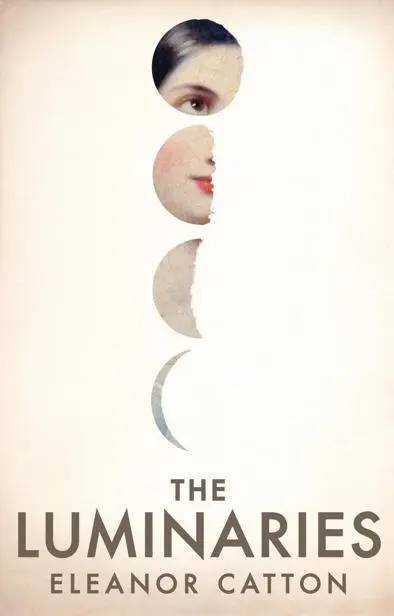
- Название:The Luminaries
- Автор:
- Издательство:Granta Publications
- Жанр:
- Год:2013
- ISBN:9781847085931
- Рейтинг книги:5 / 5. Голосов: 1
-
Избранное:Добавить в избранное
- Отзывы:
-
Ваша оценка:
The Luminaries: краткое содержание, описание и аннотация
Предлагаем к чтению аннотацию, описание, краткое содержание или предисловие (зависит от того, что написал сам автор книги «The Luminaries»). Если вы не нашли необходимую информацию о книге — напишите в комментариях, мы постараемся отыскать её.
The Luminaries — читать онлайн бесплатно полную книгу (весь текст) целиком
Ниже представлен текст книги, разбитый по страницам. Система сохранения места последней прочитанной страницы, позволяет с удобством читать онлайн бесплатно книгу «The Luminaries», без необходимости каждый раз заново искать на чём Вы остановились. Поставьте закладку, и сможете в любой момент перейти на страницу, на которой закончили чтение.
Интервал:
Закладка:
When he had finished speaking she said, ‘Do you have an interest in the occult, Mr. Moody?’—a question which Moody could not answer honestly without risking offence.
He paused only a moment, however, before replying, ‘There are many things that are yet arcane to me, Mrs. Wells, and I hope that I am a curious man; if I am interested in those truths that are yet unknown, it is only so that they might, in time, be made known—or, to put it more plainly, so that in time, I might come to know them.’
‘You are wonderfully free with one verb, I notice,’ the widow returned. ‘What does it mean for you, Mr. Moody, to know something? I fancy you put rather a lot of stock in knowing —judging from the way you speak.’
Moody smiled. ‘Why,’ he said, ‘I suppose that to know a thing is to see it from all sides.’
‘To see it from all sides,’ the widow repeated.
‘But I confess you catch me off guard; I have not spent any time working on the definition, and should not like to hear it quoted back to me—at least not until I have spent some time thinking about how I might defend it.’
‘No,’ the widow agreed, ‘your definition leaves much to be desired. There are so many exceptions to the rule! How could one possibly see a spirit from all sides, for example? The notion is incredible.’
Moody gave another short bow. ‘You are quite right to name that as an exception, Mrs. Wells. But I am afraid I do not believe a spirit can be known at all—by anyone—and I certainly do not believe a spirit can be seen. I do not mean to impugn your talents in the slightest—but there it is: I do not believe in spirits, categorically.’
‘And yet you applied for a ticket to the séance this evening,’ the widow pointed out.
‘My curiosity was piqued.’
‘By the particular spirit in question, perhaps?’
‘Mr. Staines?’ Moody shrugged. ‘I have never met the man. I arrived in Hokitika some fortnight after he disappeared. But since then I have heard his name many times, of course.’
‘Mr. Gascoigne says that you have come to Hokitika to make your fortune.’
‘Yes: so I hope.’
‘And how will you make it?’
‘By dint of hard work and good planning, I expect.’
‘Of course, there are many rich men who work little, and plan nothing at all.’
‘Those men are lucky,’ Moody said.
‘Do you not wish to be lucky also?’
‘I wish to be able to call myself deserving of my lot,’ Moody said carefully. ‘Luck is by nature undeserved.’
‘What an honourable answer,’ said Lydia Wells.
‘And a truthful one, I hope,’ said Moody.
‘Aha,’ said the widow. ‘We are back to “truth” again.’
Gascoigne had been watching Lydia Wells. ‘You see how her mind is working,’ he said to Moody. ‘She will swoop down in a moment, and savage your argument. Prepare yourself.’
‘I hardly know how to prepare to be savaged,’ Moody said.
Gascoigne was right. The widow lifted her chin and said, ‘Are you a man of religion, Mr. Moody?’
‘I am a man of philosophy,’ he rejoined. ‘Those aspects of religion that can be called philosophy, interest me extremely; those that cannot, do not.’
‘I see,’ said Lydia Wells. ‘I am afraid that in my case it is quite the reverse: it is only those philosophies that can be called religions that hold any interest for me.’
Gascoigne laughed outright at this. ‘Very good,’ he said, wagging his finger. ‘That is very good.’
Moody was amused, despite himself, by the widow’s acuity, but he was determined not to let her take the upper hand. ‘It seems that we have little in common, Mrs. Wells,’ he said. ‘I hope that this lack of common ground will not be an impediment to friendship.’
‘We disagree upon the validity of spirits: we have established that much,’ said Lydia Wells. ‘But let me put the contrary question to you. What about a soul—a living soul? Do you believe that you can “know” a person who is living, if you cannot “know” a person who is dead?’
Moody considered this, smiling. After a moment, the widow went on:
‘Do you feel that you could ever truly “know” your friend Mr. Gascoigne, for example? Can you see him from all sides?’
Gascoigne looked very peeved for having been used as a rhetorical example, and said so aloud; the widow shushed him, and put the question to Moody a second time.
Moody looked at Gascoigne. In fact he had anatomised Gascoigne’s character to a very fine degree of detail, over the three weeks of their acquaintance. He felt that he understood the scope and limits of the man’s intelligence, the quality of his sentiment, and the tenor of his many expressions and habits. He felt, as a whole, that he could summarise the man’s character very accurately. But he knew that Lydia Wells was intending to trap him, and in the end he chose to reply very blandly indeed, repeating that he had only arrived in Hokitika but three weeks ago, and could not hope to form an accurate assessment of Gascoigne’s soul in such a time. That project, he added, would require more than three weeks of observation.
‘Mr. Moody was Mr. Carver’s passenger,’ Gascoigne put in. ‘He arrived on the Godspeed the very night she came to ground.’
Moody felt a stirring of unease at this disclosure. He had used a false name while booking his passage upon Godspeed , and he did not like to advertise the fact that he had arrived in Hokitika upon that craft, given the nature of what he had witnessed—or imagined that he had witnessed—in the hours before the ship had foundered. He looked at the widow, seeking, in her face, some flicker of doubt or recognition that might show that she had known about the bloody phantom in Godspeed ’s hold.
But Lydia Wells was smiling. ‘Did he?’ she said, looking Moody up and down. ‘Then I’m afraid Mr. Moody is a very common specimen of a man indeed.’
‘How so?’ Moody said stiffly.
The widow laughed. ‘You are a lucky man who is scornful of the notion of luck,’ she said. ‘I am afraid, Mr. Moody, that I have met a great many men like you.’
Before Moody could think of a reply to this, she picked up a small silver bell, rang it sharply, and announced, in a voice that was no less penetrating for its husky half-whisper, that all those without tickets were to make their departures at once, for the séance was about to begin.
VENUS IN AQUARIUS
In which Sook Yongsheng forgets his shilling; Lydia Wells becomes hysterical; and we receive an answer from the realm of the dead.
What a different gathering this was to the clandestine council that had assembled in the Crown Hotel three weeks ago! The Crown had played host to a party of twelve, which, following Moody’s arrival, became a party of thirteen; here, in the front room of the Wayfarer’s Fortune, they were a party of eleven seeking to summon a twelfth.
Charlie Frost, under Joseph Pritchard’s instruction, kept his eyes fixed upon Lydia Wells as the widow led the seven ticket holders into the parlour where Ah Sook and Ah Quee, shining with greasepaint, sat cross-legged on either side of the hearth. The drapes had been drawn over the parlour windows, and all but one of the paraffin lamps had been doused, giving the room a pinkish glow. Above this last lamp a tin dish of attar had been placed on a metal stand, and the liquid, gently heated by the warmth of the flame, filled the room with the pleasant scent of roses.
Mrs. Wells invited the men to take their seats, which, in the interval while the other guests departed the Wayfarer’s Fortune and dispersed into the night, had been arranged in a circle in the middle of the room. There was much embarrassment and nervousness in the room as the seven guests were seated. One man kept emitting a high-pitched giggle; others grinned and elbowed their mates in the ribs. Mrs. Wells paid these disturbances no notice. She was busy arranging five candles in a star pattern upon a plate, and lighting them, one by one. When the candles were lit, and the paper spill extinguished, Lydia Wells seated herself at last, and remarked, in a voice that was suddenly hushed and conspiratorial, that Anna Wetherell, these hours past, had been preparing her mind for the impending communion with the dead. She was not to be spoken to, when she made her entrance in the parlour, for even the smallest disturbance could disrupt her state of mind, which in turn would disrupt the widow’s own transmissions. Did the present company consent to ignore her?
Читать дальшеИнтервал:
Закладка:
Похожие книги на «The Luminaries»
Представляем Вашему вниманию похожие книги на «The Luminaries» списком для выбора. Мы отобрали схожую по названию и смыслу литературу в надежде предоставить читателям больше вариантов отыскать новые, интересные, ещё непрочитанные произведения.





Обсуждение, отзывы о книге «The Luminaries» и просто собственные мнения читателей. Оставьте ваши комментарии, напишите, что Вы думаете о произведении, его смысле или главных героях. Укажите что конкретно понравилось, а что нет, и почему Вы так считаете.