Eleanor Catton - The Luminaries
Здесь есть возможность читать онлайн «Eleanor Catton - The Luminaries» весь текст электронной книги совершенно бесплатно (целиком полную версию без сокращений). В некоторых случаях можно слушать аудио, скачать через торрент в формате fb2 и присутствует краткое содержание. Год выпуска: 2013, ISBN: 2013, Издательство: Granta Publications, Жанр: Историческая проза, Современная проза, на английском языке. Описание произведения, (предисловие) а так же отзывы посетителей доступны на портале библиотеки ЛибКат.
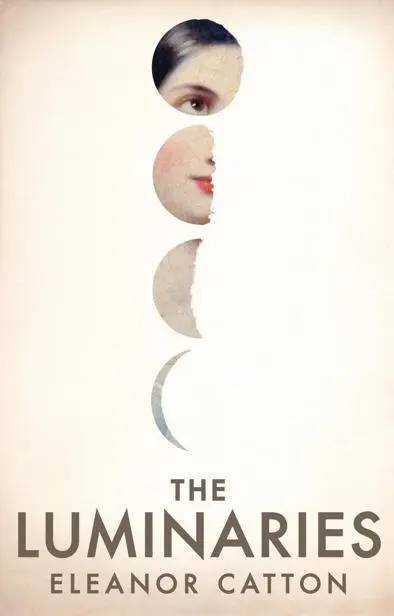
- Название:The Luminaries
- Автор:
- Издательство:Granta Publications
- Жанр:
- Год:2013
- ISBN:9781847085931
- Рейтинг книги:5 / 5. Голосов: 1
-
Избранное:Добавить в избранное
- Отзывы:
-
Ваша оценка:
The Luminaries: краткое содержание, описание и аннотация
Предлагаем к чтению аннотацию, описание, краткое содержание или предисловие (зависит от того, что написал сам автор книги «The Luminaries»). Если вы не нашли необходимую информацию о книге — напишите в комментариях, мы постараемся отыскать её.
The Luminaries — читать онлайн бесплатно полную книгу (весь текст) целиком
Ниже представлен текст книги, разбитый по страницам. Система сохранения места последней прочитанной страницы, позволяет с удобством читать онлайн бесплатно книгу «The Luminaries», без необходимости каждый раз заново искать на чём Вы остановились. Поставьте закладку, и сможете в любой момент перейти на страницу, на которой закончили чтение.
Интервал:
Закладка:
‘And I’ll be paying through the nose for the privilege, will I?’
‘But of course,’ said Mrs. Wells. ‘I wonder that you expected otherwise.’
Ah Sook was looking at Mrs. Wells, Ah Quee, at Mannering.
‘This is an outrage,’ Mannering said.
‘Perhaps you no longer wish to attend the party,’ said Mrs. Wells. ‘If that is the case, you need only say so; I shall repay your tariff in full.’
‘What’s the point of it? Keeping her upstairs.’
The widow laughed. ‘Come, Mr. Mannering! We are in the same business, as you have already pointed out; I don’t need to spell it out for you.’
‘No. Spell it out,’ said Mannering. ‘Go on. Spell it out.’
Mrs. Wells did not, however; she gazed at him a moment, and then said, ‘Why did you come to the party tonight?’
‘To speak with Anna. And to get a measure of my competition. You.’
‘The first of your ambitions will not be realised, as I have now made clear, and you surely must have achieved the second by now. This being the case, I do not see that there is any reason for you to remain.’
‘I’m staying,’ Mannering said.
‘Why?’
‘To keep an eye on you, that’s why.’
‘I see.’ Mrs. Wells gazed at him. ‘I think that there is another reason why you decided to attend the party tonight—a reason that you have not hitherto shared with me.’
‘Oh? And what might that be?’ said Mannering.
‘I’m afraid I can only guess,’ said Mrs. Wells.
‘Well, go on—make your prediction. That’s your game, isn’t it? Tell my fortune.’
She put her head to the side, appraising him. Then she said, suddenly decisive, ‘No; this time I believe I shall keep my prediction to myself.’
Mannering faltered, and after a moment Mrs. Wells gave her tinkling laugh, and drew herself upright, clasping her hands together over her bosom. Begging Mannering’s leave to depart, she explained that she had hired two barmaids from the Star and Garter to wait on her guests that evening, and the girls had not yet been briefed: they were waiting in the kitchen, very patiently, and she would not suffer them to wait a moment longer. She invited Mannering to pour himself a drink from the decanters set out upon the sideboard, and to make himself very much at home—and with that, she swept from the room, leaving Mannering staring after her, red-faced.
Once the door had closed behind her, he rounded on Ah Sook. ‘What have you got to say for yourself, then?’
‘To see Emery Staines,’ said Ah Sook.
‘You’ve got some questions for him , I suppose.’
‘Yes.’
‘Dead or alive,’ said Mannering. ‘It’s one or the other, isn’t it, Mr. Sook? It’s one or the other, at this stage.’
He stamped to the sideboard and poured himself a very stiff drink.

Mrs. Wells had hired a two-man orchestra, comprising a fiddle and a flute, from the Catholic Friendly Society on Collingwood-street. The musicians arrived a little before seven, their instruments rolled in velvet, and Mrs. Wells directed them to the end of the hallway where two chairs had been set up facing the door. The only songs they knew were jigs and hornpipes, but Mrs. Wells had lit upon the idea that they might play their repertoire at a quarter time, or as slowly as their breath and co-ordination would permit, in order to be more in keeping with the tenor of the evening. Played slowly, the jigs turned sinister, and the hornpipes became sad; even Mannering, whose bad temper had not been assuaged by two fingers of brandy and the cheerful ministration of the Star and Garter barmaids, had to admit that the effect was very striking. When the first guests knocked upon the door, ‘Sixpenny Money’ was sounding at an aching drawl—putting one in mind not of dancing and celebration, but of funerals, sickness, and very bad news.
By eight o’clock the former hotel had reached capacity, and the air was thick with smoke.
‘Have you ever watched a magician at a market? Have you ever seen a cup-and-ball man at work? Well, it’s all in the art of diversion, Mr. Frost. They have ways of making you look away, by means of a joke or a noise or something unexpected, and while your head is turned, that’s when the cups get swapped, or filled, or emptied, or what have you. I don’t need to tell you that no diversion’s as good as a woman, and tonight, you’ll be contending with two.’
Frost glanced at Pritchard, uncomfortably, and then away: he was a little afraid of the chemist, and he did not like the way that Pritchard was looming over him—standing so close that when he spoke Frost could feel the heat of his breath. ‘How do you propose I am not diverted?’ he said.
‘You keep both eyes open,’ Pritchard said. ‘Nilssen watches Anna. You watch the widow. Between the two of you, you’ve got them covered, you see? You watch Lydia Wells no matter what. If she invites you to close your eyes or look elsewhere—they often do that, you know—well, don’t.’
Frost felt a twinge of irritation at this. He wondered what right Joseph Pritchard had, to allocate duties of surveillance at a séance to which he did not hold an invitation. And why was he assigned to the widow, when Nilssen got Anna? He did not voice these complaints aloud, however, for a barmaid was approaching with a decanter on a tray. Both men filled their glasses, thanked her, and watched her move away through the crowd.
As soon as she had left Pritchard resumed, with the same intensity. ‘Staines has got to be somewhere ,’ he insisted. ‘A man doesn’t just vanish without a trace. What do we know for sure? Let us catalogue it. We know that Anna was the very last to see him alive. We know that she was lying about that opium—saying she’d eaten that ounce herself, when I saw for myself that that was a plain-faced lie. And we know that now she’s fixing to call him up from the dead.’
It occurred to Frost suddenly that Pritchard’s jacket fit him very ill, and that his necktie had not been pressed, and that his shirt was all but threadbare. Why, and his razor must be very blunt, Frost thought, to produce so uneven and patchy a shave. This criticism, internally voiced, gave him a sudden confidence. He said,
‘You don’t trust Anna very much, do you, Mr. Pritchard?’
Pritchard seemed taken aback by the assumption. ‘There is ample reason not to trust her,’ he said coldly. ‘As I have just chronicled for you.’
‘But personally,’ Frost said. ‘As a woman. I gather that your impression of her integrity is very low.’
‘You talk of a whore’s integrity!’ Pritchard burst out, but he did not go on.
After a moment Frost added, ‘I wonder what you think of her. That’s all.’
Pritchard stared at Frost with a vacant expression. ‘No,’ he said, at last. ‘I don’t trust Anna. I don’t trust her a straw. I don’t even love her. But I wish I did. Isn’t that a curious thing? I wish I did.’
Frost was uncomfortable. ‘Hardly worth three shillings, is it?’ he said, referring to the party. ‘I must say I expected more.’
Pritchard seemed embarrassed also. ‘Just remember,’ he said, ‘during the séance , keep both eyes on Mrs. Wells.’
They turned away from one another, pretending to scan the faces of the crowd, and for a moment the two men shared the very same expression: the distant, slightly disappointed aspect of one who is comparing the scene around him, unfavourably, to other scenes, both real and imagined, that have happened, and are happening, elsewhere.
Интервал:
Закладка:
Похожие книги на «The Luminaries»
Представляем Вашему вниманию похожие книги на «The Luminaries» списком для выбора. Мы отобрали схожую по названию и смыслу литературу в надежде предоставить читателям больше вариантов отыскать новые, интересные, ещё непрочитанные произведения.




Обсуждение, отзывы о книге «The Luminaries» и просто собственные мнения читателей. Оставьте ваши комментарии, напишите, что Вы думаете о произведении, его смысле или главных героях. Укажите что конкретно понравилось, а что нет, и почему Вы так считаете.