Eleanor Catton - The Luminaries
Здесь есть возможность читать онлайн «Eleanor Catton - The Luminaries» весь текст электронной книги совершенно бесплатно (целиком полную версию без сокращений). В некоторых случаях можно слушать аудио, скачать через торрент в формате fb2 и присутствует краткое содержание. Год выпуска: 2013, ISBN: 2013, Издательство: Granta Publications, Жанр: Историческая проза, Современная проза, на английском языке. Описание произведения, (предисловие) а так же отзывы посетителей доступны на портале библиотеки ЛибКат.
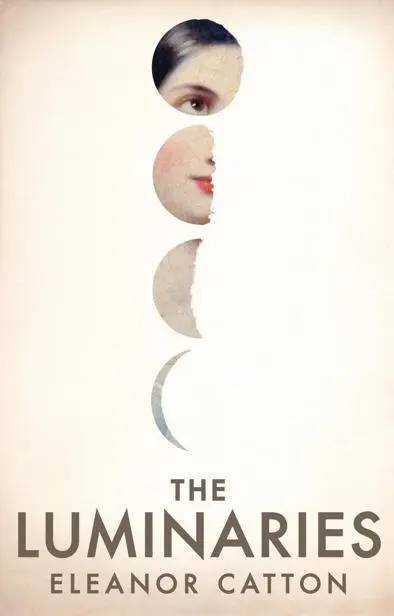
- Название:The Luminaries
- Автор:
- Издательство:Granta Publications
- Жанр:
- Год:2013
- ISBN:9781847085931
- Рейтинг книги:5 / 5. Голосов: 1
-
Избранное:Добавить в избранное
- Отзывы:
-
Ваша оценка:
The Luminaries: краткое содержание, описание и аннотация
Предлагаем к чтению аннотацию, описание, краткое содержание или предисловие (зависит от того, что написал сам автор книги «The Luminaries»). Если вы не нашли необходимую информацию о книге — напишите в комментариях, мы постараемся отыскать её.
The Luminaries — читать онлайн бесплатно полную книгу (весь текст) целиком
Ниже представлен текст книги, разбитый по страницам. Система сохранения места последней прочитанной страницы, позволяет с удобством читать онлайн бесплатно книгу «The Luminaries», без необходимости каждый раз заново искать на чём Вы остановились. Поставьте закладку, и сможете в любой момент перейти на страницу, на которой закончили чтение.
Интервал:
Закладка:
Moody squared the edges of the letters in his hands. He ought to have rung the bell for the maid an hour ago, and demanded the trunk be removed from his room; he would invite suspicion if he delayed any further. He wondered what he should do. There was not enough time to make copies of the entire correspondence. Ought he to return the letters to the lining of the trunk? Ought he to steal them? Surrender them to a relevant authority here in Hokitika? They were certainly pertinent to the case at hand, and in the event that a Supreme Court judge was summoned, they would be very valuable indeed.
He crossed the room and sat down upon the edge of his bed, thinking. He could send the letters to Löwenthal, with instructions that they were all to be published, in sequence and in full, in the West Coast Times . He could send them to George Shepard, the gaol warden, begging the latter’s advice. He could show them to his friend Gascoigne, in confidence. He could summon the twelve men of the Crown, and solicit their opinion. He could send them to the goldfields Commissioner—or better yet, to the Magistrate. But to what end? What would come of it? Who would profit from the news? He tapped his fingertips together, and sighed.
At length Moody gathered up the letter-bundle, tied the bow exactly as it had been tied, and replaced the bundle in the lining of the trunk. He fitted the bar back into the hasp, wiped the lid of the trunk, and stood back to make sure everything looked exactly as he had found it. Then he put his hat and coat back on—as though he had only just returned home from Maxwell’s dining hall—and rang the bell. The maid stamped upstairs in due course, and in a tone of deep exasperation he told her that the wrong trunk had been delivered to his rooms. He had taken the liberty of opening the trunk, and of reading the name inscribed on the interior: it belonged to Mr. Alistair Lauderback, a man whom he had never met, who was certainly not lodging at the Crown Hotel, and whose name bore no resemblance at all to his own. Presumably his own trunk had been sent to Mr. Lauderback’s hotel—wherever that was. He intended to spend the afternoon at the billiard hall on Stafford-street, and expected that the mistake would be corrected during the hours of his absence, for it was of the utmost importance that he was reunited with his possessions at the earliest convenience: he planned to attend the widow’s ‘drinks and speculation’ at the Wayfarer’s Fortune that evening, and he wished to do so in appropriate attire. He added, before taking his leave, that he was most severely displeased.
A MONTH WITHOUT A MOON
In which the Wayfarer’s Fortune opens to the public at long last.
The hanging sign outside the Wayfarer’s Fortune had been repainted so that the jaunty silhouette with his Dick Whittington bundle was now walking beneath a starry sky. If the stars formed a constellation above the painted figure’s head, Mannering did not recognise it. He glanced up at the sign only briefly as he mounted the steps to the veranda, noting, as he did so, that the knocker had been polished, the windows washed, the doormat replaced, and a fresh card fitted into the plate beside the door:
MRS. LYDIA WELLS, MEDIUM, SPIRITIST
SECRETS UNCOVERED FORTUNES TOLD
At his knock he heard female voices, and then quick footsteps on the stairs, ascending. He waited, hoping that it would be Anna who received him.
There was a rattling sound as the chain was unhooked. Mannering touched the knot of his necktie with his fingers, and stood a little straighter, looking at his faint reflection in the glass.
The door opened.
‘Dick Mannering!’
Mannering was disappointed, but he did not show it. ‘Mrs. Wells,’ he exclaimed. ‘A very good evening to you.’
‘I certainly hope it will be; but it is not the evening yet.’ She smiled. ‘I would expect you of all people to know that it is dreadfully unfashionable to arrive early to a party. What would my mother call it? A barbarism.’
‘Am I early?’ Mannering said, reaching for his pocket watch in a pretence of surprise. He knew very well that he was early: he had desired to arrive before the others, so as to get a chance to speak with Anna alone. ‘Oh yes—look at that,’ he added, squinting at the watch. He shrugged and tucked it back into the pocket of his vest. ‘I must have forgotten to wind it this morning. Well, I’m here now—and so are you. Dressed for the occasion. Very handsome. Very handsome indeed.’
She was wearing widow’s weeds, though her costume had been ‘enhanced’, as she might have phrased it, in various small ways, and these enhancements belied its sombre tone. The black bodice had been embroidered with vines and roses, stitched in a glossy thread, so that the designs winked and flashed upon her breast; she wore another black rose upon a band of black that was fitted, as a cuff, around the plump whiteness of her forearm, and a third black rose in her hair, pinned into the hollow behind her ear.
She was still smiling. ‘What am I to do now?’ she said. ‘You have put me in a dreadful position, Mr. Mannering. I cannot invite you in. To do so would only encourage you to arrive early on other occasions; before long, you would be inconveniencing men and women of society all over town. But I cannot turn you out into the street either—for then you and I will both be barbarians. You for your impudence, and me for my inhospitality.’
‘Seems there’s a third option,’ said Mannering. ‘Let me stand on the porch all night, while you mull it over—and by the time you make up your mind, I’ll be right on time.’
‘There’s another barbarism,’ said Mrs. Wells. ‘Your temper.’
‘You’ve never seen my temper, Mrs. Wells.’
‘Have I not?’
‘Never. With you, I’m a civilised man.’
‘With whom are you uncivilised, one wonders.’
‘It’s not a matter of with whom,’ said Mannering. ‘It’s a matter of how far.’
There was a brief pause.
‘How grand that must have felt,’ said Mrs. Wells presently.
‘When?’
‘Just then,’ said Mrs. Wells. ‘What you just said. It must have felt grand.’
‘There’s a certain style about you, Mrs. Wells. I’d forgotten it.’
‘Is there?’
‘Yes—a certain style.’ Mannering reached into his pocket. ‘Here’s the tariff. Daylight robbery, by the way. You can’t charge three shillings in Hokitika for an evening’s entertainment—not if you’re calling up Helen of Troy. The fellows won’t stand for it. Though I oughtn’t to be giving you advice. As of this evening, you and I are direct competitors. Don’t think that I don’t know it: it’ll be the Prince of Wales or the Wayfarer’s Fortune, when the boys turn out their pockets of a Saturday night. I’m a man who takes notice of my competition—and I’m here tonight to take notice of you.’
‘A woman likes to be noticed,’ said Mrs. Wells. She accepted the coins, and then pulled the door wide. ‘Anyway,’ she added, as Mannering stepped into the hall, ‘you’re a rotten liar. If you’d forgotten to wind your watch, you wouldn’t have been early, you’d have been late.’
She shut the door behind him, and set the chain.
‘You’re in black,’ Mannering observed.
‘Naturally,’ she returned. ‘I am recently widowed, and therefore in mourning.’
‘Here’s a fact,’ Mannering said. ‘The colour black is invisible to spirits. I’ll make a bet that you didn’t know that—did you, now! It’s why we wear black at funerals: if we dressed in colour we’d attract the attention of the dead. Wearing black, they can’t make us out.’
‘What a charming piece of trivia,’ said Mrs. Wells.
Читать дальшеИнтервал:
Закладка:
Похожие книги на «The Luminaries»
Представляем Вашему вниманию похожие книги на «The Luminaries» списком для выбора. Мы отобрали схожую по названию и смыслу литературу в надежде предоставить читателям больше вариантов отыскать новые, интересные, ещё непрочитанные произведения.







Обсуждение, отзывы о книге «The Luminaries» и просто собственные мнения читателей. Оставьте ваши комментарии, напишите, что Вы думаете о произведении, его смысле или главных героях. Укажите что конкретно понравилось, а что нет, и почему Вы так считаете.