Eleanor Catton - The Luminaries
Здесь есть возможность читать онлайн «Eleanor Catton - The Luminaries» весь текст электронной книги совершенно бесплатно (целиком полную версию без сокращений). В некоторых случаях можно слушать аудио, скачать через торрент в формате fb2 и присутствует краткое содержание. Год выпуска: 2013, ISBN: 2013, Издательство: Granta Publications, Жанр: Историческая проза, Современная проза, на английском языке. Описание произведения, (предисловие) а так же отзывы посетителей доступны на портале библиотеки ЛибКат.
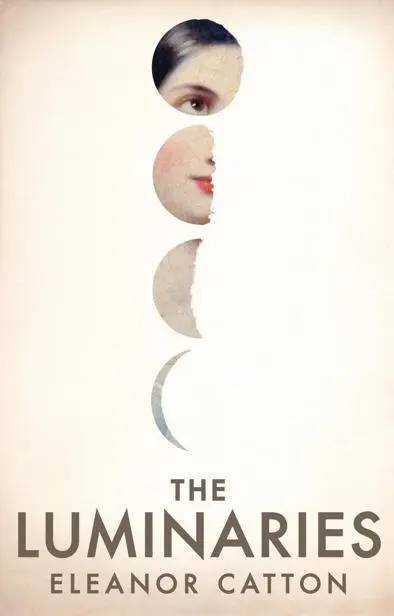
- Название:The Luminaries
- Автор:
- Издательство:Granta Publications
- Жанр:
- Год:2013
- ISBN:9781847085931
- Рейтинг книги:5 / 5. Голосов: 1
-
Избранное:Добавить в избранное
- Отзывы:
-
Ваша оценка:
The Luminaries: краткое содержание, описание и аннотация
Предлагаем к чтению аннотацию, описание, краткое содержание или предисловие (зависит от того, что написал сам автор книги «The Luminaries»). Если вы не нашли необходимую информацию о книге — напишите в комментариях, мы постараемся отыскать её.
The Luminaries — читать онлайн бесплатно полную книгу (весь текст) целиком
Ниже представлен текст книги, разбитый по страницам. Система сохранения места последней прочитанной страницы, позволяет с удобством читать онлайн бесплатно книгу «The Luminaries», без необходимости каждый раз заново искать на чём Вы остановились. Поставьте закладку, и сможете в любой момент перейти на страницу, на которой закончили чтение.
Интервал:
Закладка:
Yours very truly,
CROSBIE WELLS
West Canterbury. October 1865
Sir I have not received a letter X from you for which I thank you. Today I am heartened by your silence, though the very same has caused me grief before. I remain, as ever,
Yours,
CROSBIE WELLS
West Canterbury. December 1865
Sir I observe in the ‘West Coast Times’ that you mean to make the passage to Hokitika overland & therefore will pass through the Arahura Valley lest you make some deliberately circuitous route. I am a voting man and as such I would be honoured to welcome a politician at my home humble though the dwelling is. I shall describe it so that you might approach or direct your course away as you see fit. The house is roofed in iron & set back thirty yards from the banks of the Arahura on that river’s Southern side. There is a clearing of some thirty yards on either side of the cottage & the sawmill is some twenty yards further to the Southeast. The dwelling is a small one with a window & a chimney made of clay-fired brick. It is clad in the usual way. Perhaps even if you do not stop I shall see you riding by. I shall not expect it nor hope for it but I wish you a pleasant journey Westward and a triumphant campaign and I assure you that I remain,
With the deepest admiration,
CROSBIE WELLS
This was the final letter. It was dated a little over two months prior to the present day—and less than a month before Wells’s own death.
Moody threw down the page and sat a moment without moving. He did not habitually smoke alone, and so rarely kept tobacco about his person; right now, however, he wanted very much to be occupied by some compulsive and repeated motion, and briefly wondered whether he ought to ring the bell for a cigarette or a cigar. But he could not bear the thought of speaking to another person, even to deliver a command, and contented himself instead with the task of reshuffling the letters, and returning them to their original order, with the most recent letter placed on top.
It was clear from Crosbie Wells’s repeated allusions to Lauderback’s silence that the politician had never once responded to these letters from his bastard half-brother, his father’s whoreson child. Alistair Lauderback had kept his silence for thirteen years ! Moody shook his head. Thirteen years! When Crosbie’s letters were so yearning, and so candid; when the bastard so plainly desired to meet his brother, and to look upon him, even once. Would it have so harmed Lauderback—the honourable Lauderback—to pen a few words in response? To send a banknote, and buy the poor man’s passage home? It was extraordinarily callous, never to reply! And yet (Moody conceded) Lauderback had kept Wells’s letters—he had kept them, and read them, and reread them, for the oldest were very worn, and had been folded, and refolded, many times. And he had journeyed to Crosbie Wells’s cottage in the Arahura Valley—arriving, in the last, just half an hour too late.
But then Moody remembered something else. Lauderback had taken Lydia Wells as his mistress! He had taken his brother’s wife as his mistress! ‘Unconscionable,’ Moody said aloud. He leaped up and began to pace. It was extraordinarily callous! It was inhuman! He made the calculations in his head. Crosbie Wells had been on the fields at Dunstan, and at Kawarau … and all the while the brother he so desired to meet was in Dunedin, making him a cuckold! Could Lauderback have been truly ignorant of this connexion? That was hardly likely, for Lydia Wells had taken her husband’s surname!
Moody stopped. No, he thought. Lauderback had told Balfour explicitly that he had not known that Lydia Wells was married throughout the course of their affair. In all of their dealings with one another, she had used her maiden name, Greenway. It was not until Francis Carver returned from gaol—calling himself Francis Wells —that Lauderback discovered that Lydia was married, and that her name was properly Lydia Wells, and that he, Lauderback, had been cuckolding her husband. Moody rifled back through the pile of letters until he found the one dated August of the previous year. Yes: Crosbie Wells had made it explicitly clear that he had shared the details of his illegitimate parentage with his wife. So Lydia Wells had known about Lauderback’s illegitimate brother from the very beginning of their love affair—and she had known, furthermore, that this was a matter about which Lauderback presumably cherished a very raw and private feeling, for he had never replied to Crosbie’s letters, even once. Perhaps, Moody thought, she had even sought out Lauderback with the express purpose of exploiting that connexion.
Why—the woman was nothing better than a profiteer! To have used both brothers—to have ruined them both! For another thing was now clear: the fortune by which Lauderback had been blackmailed had not originated from Carver’s own claim at all. The sum total had been stolen from Crosbie Wells; he had been the one to make a strike on the fields at Dunstan, as his correspondence had attested! So Lydia Wells had betrayed Wells’s secret to Francis Carver, with whose help she had then devised a plan to steal Wells’s fortune and blackmail Lauderback, leaving the pair of them rich, and the proud possessors of the barque Godspeed , into the bargain. Lauderback was plainly ashamed of his illegitimate relation, as Mrs. Wells, as his mistress, must have known first-hand; clearly, she had devised a scheme to use that shame as leverage.
Suddenly Moody’s heart gave a lurch. This was the twinkle—the private information by which Francis Carver had blackmailed Lauderback, and guaranteed his silence on the sale of the Godspeed . For Carver had called himself Francis Wells, leading Lauderback to believe that he and Crosbie were brothers: fellow whoresons, brought up in the same whorehouse … born, perhaps, to the same mother ! Crosbie Wells’s surname had been given to him by assignation, and it was not implausible that Crosbie Wells might have had other siblings on his mother’s side, if his mother was a prostitute. What a way to play on Lauderback’s sympathies, and force his hand!
Crosbie Lauderback, Moody thought suddenly, feeling a rush of empathy for the man. He thought of Wells dead in his cottage in the Arahura, one hand curled around the base of an empty bottle, his cheek against the table, his eyes closed. How coldly the wheels of fortune turned. How steely Lauderback’s heart must have been, to maintain his silence, in the face of these impassioned appeals! And how pitiful, that Crosbie Wells had watched his brother’s ascension, over the course of a decade, through the ranks of the Provincial Council into the very House of Parliament itself—while the bastard struggled in the damp and frost, alone.
And yet Moody could not repudiate Lauderback altogether. The politician had visited his brother, in the end…. though with what intention, Moody did not know. Perhaps the politician meant to make up for thirteen years of silence. Perhaps he had intended to apologise to his half-brother, or merely, to look upon him, and speak his name, and shake his hand.
There were tears in Moody’s eyes. He swore, though without conviction, drew the back of his hand roughly across his face—feeling a bitter kinship with the hermit, a man whom he had never seen, and would never know. For there was a terrible resemblance between Crosbie Wells’s situation and his own. Crosbie Wells had been abandoned by his father, as had Moody. Crosbie Wells had been betrayed by his brother, as had Moody. Crosbie Wells had relocated to the southern face of the world in pursuit of his brother, as had Moody—and there he had been spurned, and ruined, only to live out his days alone.
Читать дальшеИнтервал:
Закладка:
Похожие книги на «The Luminaries»
Представляем Вашему вниманию похожие книги на «The Luminaries» списком для выбора. Мы отобрали схожую по названию и смыслу литературу в надежде предоставить читателям больше вариантов отыскать новые, интересные, ещё непрочитанные произведения.




Обсуждение, отзывы о книге «The Luminaries» и просто собственные мнения читателей. Оставьте ваши комментарии, напишите, что Вы думаете о произведении, его смысле или главных героях. Укажите что конкретно понравилось, а что нет, и почему Вы так считаете.