Eleanor Catton - The Luminaries
Здесь есть возможность читать онлайн «Eleanor Catton - The Luminaries» весь текст электронной книги совершенно бесплатно (целиком полную версию без сокращений). В некоторых случаях можно слушать аудио, скачать через торрент в формате fb2 и присутствует краткое содержание. Год выпуска: 2013, ISBN: 2013, Издательство: Granta Publications, Жанр: Историческая проза, Современная проза, на английском языке. Описание произведения, (предисловие) а так же отзывы посетителей доступны на портале библиотеки ЛибКат.
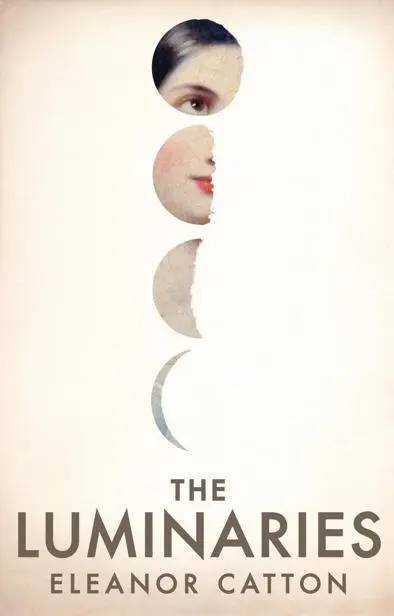
- Название:The Luminaries
- Автор:
- Издательство:Granta Publications
- Жанр:
- Год:2013
- ISBN:9781847085931
- Рейтинг книги:5 / 5. Голосов: 1
-
Избранное:Добавить в избранное
- Отзывы:
-
Ваша оценка:
The Luminaries: краткое содержание, описание и аннотация
Предлагаем к чтению аннотацию, описание, краткое содержание или предисловие (зависит от того, что написал сам автор книги «The Luminaries»). Если вы не нашли необходимую информацию о книге — напишите в комментариях, мы постараемся отыскать её.
The Luminaries — читать онлайн бесплатно полную книгу (весь текст) целиком
Ниже представлен текст книги, разбитый по страницам. Система сохранения места последней прочитанной страницы, позволяет с удобством читать онлайн бесплатно книгу «The Luminaries», без необходимости каждый раз заново искать на чём Вы остановились. Поставьте закладку, и сможете в любой момент перейти на страницу, на которой закончили чтение.
Интервал:
Закладка:
‘Do you know what it means, though? It means that Mr. Staines won’t be able to see you. Not in that gown. You’ll be quite invisible to him.’
She laughed. ‘Dear me. Well, there’s nothing to be done, I suppose. Not at this late stage. I shall have to call the whole evening off.’
‘And Anna,’ said Mannering. ‘What colour will she be wearing, tonight?’
‘Black, as a matter of fact,’ said Mrs. Wells, ‘for she is in mourning also.’
‘You’re scuppered,’ said Mannering. ‘The whole enterprise. And all on account of your gowns. How’s that for a stick in a wheel? Thwarted—by your own gowns!’
Mrs. Wells was no longer smiling. ‘You are irreverent,’ she said, ‘to make sport of the tokens of bereavement.’
‘You and I both, Mrs. Wells.’
They looked at each other for a moment, each searching the other’s expression.
‘I have the greatest respect for swindlers,’ said Mannering presently. ‘I ought to—seeing as I count myself among them! But fortune telling—that’s a poor swindle, Mrs. Wells. I’m sorry to say it plain, but there it is.’
Her expression was still cautious; lightly she said, ‘How so?’
‘It’s nothing better than a falsehood,’ said Mannering, stoutly. ‘Tell me the name of the next man to bet against me. Buy me into my next game of brag. Give me the winner of next week’s races. You wouldn’t do it, would you? No, you wouldn’t—because you can’t.’
‘I see that you like to doubt, Mr. Mannering.’
‘I’m an old hand at this game, that’s why.’
‘Yes,’ said the widow, still gazing at him. ‘You relish doubting.’
‘Give me the winner of next week’s races, and I’ll never doubt again.’
‘I cannot.’
Mannering spread his hands. ‘There you have it.’
‘I cannot; because in asking me for such a thing, you are not asking me to tell your fortune. You are asking me to give you an incontrovertible proof of my own ability. That is what I cannot do. I am a fortune-teller, not a logician.’
‘Poor fortune-teller, though, if you can’t see ahead to next Sunday.’
‘One of the first lessons one learns, in this discipline, is that nothing about the future is incontrovertible,’ said Mrs. Wells. ‘The reason is very simple: a person’s fortune always changes in the telling of it.’
‘You’re feathering your own nest, with that argument.’
She lifted her chin slightly. ‘If you were a jockey in next week’s horse race, and you came to me and asked to know if your fortune was likely good—well, that would be a different story. If I pronounced that your fortune was very gloomy, you would likely ride poorly, because you would be dejected; if I made a favourable forecast, you would likely ride with confidence, and thus do well.’
‘All right—I’m not a jockey,’ said Mannering, ‘but I am a punter with five pounds riding on a mare called Irish—that’s the truth—and I’m asking you to tell my fortune, good or bad. What’s my forecast?’
She smiled. ‘I doubt your fortunes would be very much altered by the loss or gain of five pounds, Mr. Mannering; and in any case, you are still seeking proof. Come through into the parlour.’
The interior of the Wayfarer’s Fortune hardly recalled the grimy establishment at which Mrs. Wells had received Aubert Gascoigne three weeks prior. The widow had ordered drapes, a new suite of furniture, and a dozen rolls of paper in a striking rose-and-thorn design; she had set a number of exotic prints behind glass, painted the stairwell, washed the windows, and papered both front rooms. She had found a lectern, upon which to place her almanac, and several shawled lamps, which she had placed in various situations around the former hotel’s front rooms in order to create a more mystical atmosphere. Mannering opened his mouth to comment upon the transformation—and came up short.
‘Why—it’s Mr. Sook,’ he said, in astonishment. ‘And Mr. Quee!’
The two Chinese men stared back at him. They were sitting cross-legged on either side of the hearth, their faces painted very thickly with grease.
‘Do you know these men?’ said Lydia Wells.
Mannering remembered himself. ‘Only to look at them,’ he said. ‘I do a fair patch of business with the Chinamen, you know—and these boys are familiar faces in Kaniere. How do you do, fellows?’
‘Good evening,’ said Ah Sook. Ah Quee said nothing. Their expressions were all but indistinguishable beneath the greasepaint, which exaggerated their features, lengthening the corners of their eyes, emphasising the roundness of their cheeks.
Mannering turned to Mrs. Wells. ‘What—they have a part in the séance , do they? In your employ?’
‘This one came by this afternoon,’ Mrs. Wells explained, pointing at Ah Sook, ‘and I had the idea that his presence might add a certain flavour to the séance this evening. He agreed to return, and in the event, he did me one better: he brought his friend along. You must agree that two is a good deal better than one. I like an axis of symmetry in a room.’
‘Where is Anna?’ said Mannering.
‘Oh—upstairs,’ said Mrs. Wells. ‘In fact it was you, Mr. Mannering, who gave me the idea. Your Sensations from the Orient. Nothing sells tickets like an Oriental touch! I saw it twice—once from the gallery, and once from the stalls.’
Mannering was frowning. ‘When is she coming down?’
‘Not until the séance ,’ said Mrs. Wells.
He started. ‘What—not for the party? She won’t be here for the party?’
Mrs. Wells turned away to arrange the glasses on the sideboard. ‘No.’
‘Why ever not?’ said Mannering. ‘You know there are a dozen men champing at the bit to get a word in with her. They’re shelling out a week’s wages just to get in the door—and it’s all on account of Anna. You’d be mad to keep her upstairs.’
‘She must prepare herself for the séance . I cannot have her equilibrium disturbed.’
‘Poppycock,’ said Mannering.
‘Pardon me?’ said Mrs. Wells, turning.
‘I said that’s poppycock. You’re keeping her back—for a reason.’
‘What do you imply?’
‘I lost my best girl in Anna Wetherell,’ said Mannering. ‘I’ve kept my distance for three weeks, out of respect for God knows what, and now I want a chance to speak with her. There’s no such thing as equilibrium disturbed and we both know it.’
‘I feel I must remind you that this is a field in which you lack expertise.’
‘Expertise!’ said Mannering, contemptuously. ‘Three weeks ago Anna didn’t know equilibrium from her own elbow. This is poppycock, Mrs. Wells. Call her down.’
Mrs. Wells drew back. ‘I must also remind you, Mr. Mannering, that you are a guest in my home.’
‘This isn’t a home; it’s a place of business. I’ve paid you three shillings on the surety that Anna would be here.’
‘In fact no such surety was given.’
‘Hear this!’ said Mannering—who was becoming very angry. ‘I’ll give you another piece of advice, Mrs. Wells, and I’ll give it to you free: in show business, you give an audience exactly what they’ve paid for, and if you don’t, you’ll suffer the consequences of their unrest. It said in the paper that Anna would be here.’
‘It said in the paper that she would be present at the séance , as my assistant.’
‘What have you got on her?’
‘I’m sure I don’t know what you mean.’
‘Why did she agree to it? To stay upstairs—alone, and in the dark?’
Mrs. Wells ignored this question. ‘Miss Wetherell,’ she said, ‘has been learning to play out the patterns of the Tarot, an art at which she has proven to be something of an adept. Once I am satisfied that she has achieved mastery, she will advertise her services in the West Coast Times , and at that time you will be very welcome, as will all the citizens of Hokitika, to make an appointment with her.’
Читать дальшеИнтервал:
Закладка:
Похожие книги на «The Luminaries»
Представляем Вашему вниманию похожие книги на «The Luminaries» списком для выбора. Мы отобрали схожую по названию и смыслу литературу в надежде предоставить читателям больше вариантов отыскать новые, интересные, ещё непрочитанные произведения.







Обсуждение, отзывы о книге «The Luminaries» и просто собственные мнения читателей. Оставьте ваши комментарии, напишите, что Вы думаете о произведении, его смысле или главных героях. Укажите что конкретно понравилось, а что нет, и почему Вы так считаете.