Eleanor Catton - The Luminaries
Здесь есть возможность читать онлайн «Eleanor Catton - The Luminaries» весь текст электронной книги совершенно бесплатно (целиком полную версию без сокращений). В некоторых случаях можно слушать аудио, скачать через торрент в формате fb2 и присутствует краткое содержание. Год выпуска: 2013, ISBN: 2013, Издательство: Granta Publications, Жанр: Историческая проза, Современная проза, на английском языке. Описание произведения, (предисловие) а так же отзывы посетителей доступны на портале библиотеки ЛибКат.
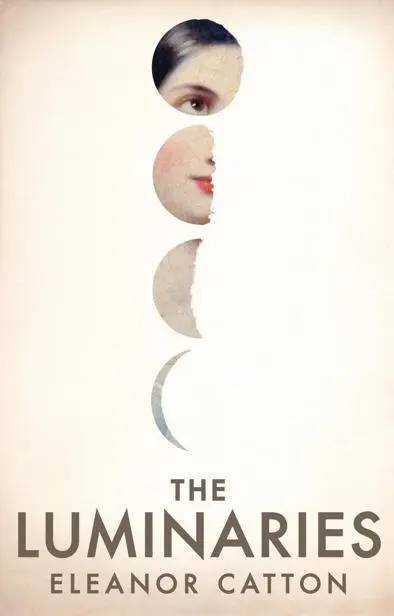
- Название:The Luminaries
- Автор:
- Издательство:Granta Publications
- Жанр:
- Год:2013
- ISBN:9781847085931
- Рейтинг книги:5 / 5. Голосов: 1
-
Избранное:Добавить в избранное
- Отзывы:
-
Ваша оценка:
The Luminaries: краткое содержание, описание и аннотация
Предлагаем к чтению аннотацию, описание, краткое содержание или предисловие (зависит от того, что написал сам автор книги «The Luminaries»). Если вы не нашли необходимую информацию о книге — напишите в комментариях, мы постараемся отыскать её.
The Luminaries — читать онлайн бесплатно полную книгу (весь текст) целиком
Ниже представлен текст книги, разбитый по страницам. Система сохранения места последней прочитанной страницы, позволяет с удобством читать онлайн бесплатно книгу «The Luminaries», без необходимости каждый раз заново искать на чём Вы остановились. Поставьте закладку, и сможете в любой момент перейти на страницу, на которой закончили чтение.
Интервал:
Закладка:
‘Not tonight,’ said Ah Sook. He began to strike his tent. Hauling the canvas fly, still wet with dew, from the rope over which it had been draped, he revealed the flattened square of earth where he had spent the night: the woollen blanket, twisted, and pressed flat with the tangled imprint of his body; a pot, filled with sand; his leather purse; a panning dish; a string bag containing tea and flour and several wrinkled potatoes; a standard-issue swag. Moody, casting his eye over this meagre inventory, was oddly touched.
‘I say,’ he said, ‘but where have you been, Mr. Sook, this month past? It’s been a full month since the séance —and no one’s heard a word from you!’
‘Digging,’ said Ah Sook, flattening the canvas fly across his chest.
‘You vanished so soon after the séance ,’ Moody continued, ‘we rather thought you’d gone the same way as poor old Mr. Staines! No one could make heads or tails of it, you disappearing like that.’
Ah Sook had been folding the fly into quarters; now he paused. ‘Mr. Staines come back?’
‘I’m afraid not,’ Moody said. ‘He’s still missing.’
‘And Francis Carver?’
‘Carver’s still in Hokitika.’
Ah Sook nodded. ‘At the Palace Hotel.’
‘Well, in actual fact, no,’ said Moody, pleased to be given an opportunity to conspire. ‘He’s begun sleeping at the Crown Hotel. In secret. Nobody knows he’s staying there: he’s kept up the pretence that he’s staying at the Palace, and he still pays rent to the Palace proprietor—and keeps his rooms, just as before. But he sleeps every night at the Crown. He arrives well after nightfall, and leaves very early. I only know because I rent the room above.’
Ah Sook had fixed him with a penetrating look. ‘Where?’
‘Carver’s room? Or mine?’
‘Carver.’
‘He sleeps in the room next to the kitchen, on the ground floor,’ said Moody. ‘It faces east. Very near the smoking room—where you and I first met.’
‘A humble room,’ said Ah Sook.
‘Very humble,’ Moody agreed, ‘but he’s got a vantage down the length of the Kaniere-road. He’s keeping watch, you see. He’s watching out for you.’
Walter Moody knew virtually nothing about Ah Sook’s history with Francis Carver, for Ah Sook had not had the opportunity, at the Crown Hotel, to narrate the tale in any detail, and had not been seen since, save for his appearance at the Wayfarer’s Fortune one month ago. Moody wished very much to know the full particulars, but despite his best efforts of surveillance and inquiry—he had become an adept at turning idle conversation, discreetly, to provocative themes—his understanding had not developed beyond what he had learned in the smoking room of the Crown, which was that the history concerned opium, murder, and a declaration of revenge. Ah Quee was the only man to whom Ah Sook had narrated the tale in full, and he did not, alas, possess language enough to share it with any English-speaking man.
‘Every night, at the Crown Hotel?’ said Ah Sook. ‘Tonight?’
‘Yes, he’ll be there tonight,’ said Moody. ‘Though not until well after dark, as I’ve told you.’
‘Not the Palace.’
‘No, not the Palace,’ said Moody. ‘He changed hotels.’
‘Yes,’ said Ah Sook gravely. ‘I understand.’ He went to loose the knot of his guy-rope from the fork of a tree.
‘Who was he?’ said Moody. ‘The murdered man.’
‘My father,’ said Ah Sook.
‘Your father ,’ said Moody. After a moment, he said, ‘How was he killed? I mean—forgive me, but—what happened?’
‘A long time ago,’ said Ah Sook. ‘Before the war.’
‘The opium wars,’ said Moody, prompting him.
‘Yes,’ said Ah Sook, but he did not go on. He began to reel in the guy-rope, using his forearm as a spool.
‘What happened?’ said Moody.
‘Profit,’ said Ah Sook, giving his explanation flatly.
‘Profit of what kind?’
Clearly Ah Sook thought this was a very stupid question; perceiving this, Moody rushed on to ask another. ‘I mean—was your father—was he in the opium business, as you are?’
Ah Sook said nothing. He withdrew his forearm from the loop of rope, twisted it into a figure-eight, and secured it onto his swag. Once it was affixed, he sat back on his haunches, regarded Moody coolly for a moment, and then leaned over and spat, very deliberately, into the dirt.
Moody drew back. ‘Forgive me,’ he murmured. ‘I ought not to pry.’
Walter Moody had told nobody at all that Crosbie Wells was the bastard brother of the politician Lauderback. He had decided, in the hours following this discovery, that the intelligence was not his to share. His reasons for this concealment were deeply felt, but vaguely articulated. A man should not be made to answer for his family. It was wrong to expose a man’s private correspondence without his consent. He did not want to perform this exposure himself. But these reasons, even when taken together, did not quite comprise the whole truth, which was that Moody had compared himself to both men many times over the past month, and felt a profound kinship with each of them, though in very different ways: with the bastard, for his desperation; with the politician, for his pride. This double comparison had become the habitual project of his meditations every day, as he stood in the chill water and ran clods of earth and metal through his hands.
Ah Sook stuffed the last of his possessions into his swag, and then sat down upon it to lace his boots.
Moody could not bear it any longer. He burst out, ‘You know you will be hanged. If you take Carver’s life, you will be hanged. They’ll take your life, Mr. Sook, if you take his, no matter what your provocation.’
‘Yes,’ said Ah Sook. ‘I understand.’
‘It will not be a fair trial—not for you.’
‘No,’ Ah Sook agreed. The prospect did not appear to distress him. He knelt by the fire, picked up a twig, and stirred the damp earth that he had placed over the embers the night before. Below the earth the coals were still warm, dark as matted blood.
‘What are you going to do?’ said Moody, watching him. ‘Shoot him down?’
‘Yes,’ said Ah Sook.
‘When?’ said Moody.
‘Tonight,’ said Ah Sook. ‘At the Crown Hotel.’ He appeared to be digging for something beneath the coals. Presently his stick struck something hard. Using the end as a lever, he flipped the object out onto the grass: it was a little tin tea caddy, black with soot. The box was evidently still hot: he wrapped his sleeve around his hand before he picked it up.
‘Show us your arms,’ said Moody.
Ah Sook looked up.
‘Go on and show us your arms,’ said Moody, suddenly flushed. ‘There are pistols and there are pistols, Mr. Sook: you have to know your powder, as my own father used to say.’
It was rare he quoted his father in company, Adrian Moody’s habitual phrases being, in general, unsuitable to civil conversation, and Walter Moody being, in general, disinclined to reference him.
‘I buy a pistol,’ said Ah Sook.
‘Good,’ said Moody. ‘Where is it?’
‘Not yet,’ said Ah Sook.
‘You haven’t bought it yet?’
‘Today,’ said Ah Sook. He opened the caddy, and poured a handful of golden flakes into his palm. Moody realised that he must have buried the box in the earth beneath his fire, in case he was robbed during the night.
‘What kind of pistol are you going to buy?’
‘From Tiegreen’s.’ With his free hand he reached for his purse.
‘What manufacturer, I meant. What kind.’
‘Tiegreen’s,’ said Ah Sook again. He opened the mouth of the purse one-handed, to transfer the gold into it.
Читать дальшеИнтервал:
Закладка:
Похожие книги на «The Luminaries»
Представляем Вашему вниманию похожие книги на «The Luminaries» списком для выбора. Мы отобрали схожую по названию и смыслу литературу в надежде предоставить читателям больше вариантов отыскать новые, интересные, ещё непрочитанные произведения.




Обсуждение, отзывы о книге «The Luminaries» и просто собственные мнения читателей. Оставьте ваши комментарии, напишите, что Вы думаете о произведении, его смысле или главных героях. Укажите что конкретно понравилось, а что нет, и почему Вы так считаете.