Eleanor Catton - The Luminaries
Здесь есть возможность читать онлайн «Eleanor Catton - The Luminaries» весь текст электронной книги совершенно бесплатно (целиком полную версию без сокращений). В некоторых случаях можно слушать аудио, скачать через торрент в формате fb2 и присутствует краткое содержание. Год выпуска: 2013, ISBN: 2013, Издательство: Granta Publications, Жанр: Историческая проза, Современная проза, на английском языке. Описание произведения, (предисловие) а так же отзывы посетителей доступны на портале библиотеки ЛибКат.
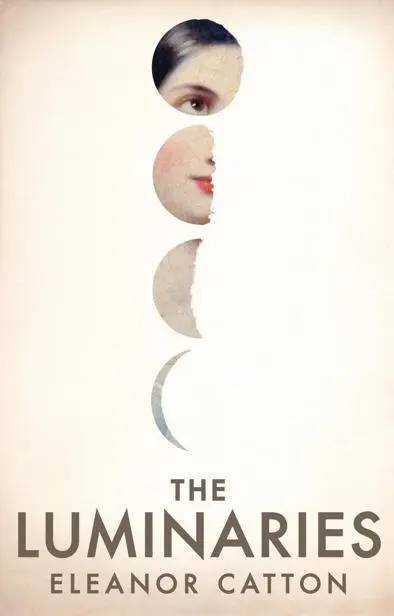
- Название:The Luminaries
- Автор:
- Издательство:Granta Publications
- Жанр:
- Год:2013
- ISBN:9781847085931
- Рейтинг книги:5 / 5. Голосов: 1
-
Избранное:Добавить в избранное
- Отзывы:
-
Ваша оценка:
The Luminaries: краткое содержание, описание и аннотация
Предлагаем к чтению аннотацию, описание, краткое содержание или предисловие (зависит от того, что написал сам автор книги «The Luminaries»). Если вы не нашли необходимую информацию о книге — напишите в комментариях, мы постараемся отыскать её.
The Luminaries — читать онлайн бесплатно полную книгу (весь текст) целиком
Ниже представлен текст книги, разбитый по страницам. Система сохранения места последней прочитанной страницы, позволяет с удобством читать онлайн бесплатно книгу «The Luminaries», без необходимости каждый раз заново искать на чём Вы остановились. Поставьте закладку, и сможете в любой момент перейти на страницу, на которой закончили чтение.
Интервал:
Закладка:
The door opened almost at once.
‘Miss Wetherell,’ Devlin said, removing his hat with his free hand. ‘Please allow me to introduce myself. My name is Cowell Devlin; I am the resident chaplain of the Hokitika Gaol. I have in my possession a document that I expect will be of great interest to you, and I hope to gain a private audience with you, in order to discuss it.’
‘I remember you,’ said Anna. ‘You were there when I woke up in gaol after my blackout.’
‘Yes,’ Devlin said.
‘You prayed for me.’
‘And I have prayed for you many times since.’
She looked surprised. ‘Have you?’
‘Fervently,’ the chaplain replied.
‘What did you say you wanted?’
Devlin repeated his intentions.
‘What do you mean, a document?’
‘I would prefer not to produce it here. May I come in?’
She hesitated. ‘Mrs. Wells is out.’
‘Yes, I know,’ Devlin said. ‘In fact I saw her entering the Courthouse just now, and hastened here with the precise hope that I might speak with you alone. I confess I have been waiting for just such an opportunity for some time. May I come in?’
‘I’m not supposed to receive guests when she’s not here.’
‘I have but one item of business to speak with you about,’ Devlin said calmly, ‘and I am a member of the clergy, and this is a respectable hour. Would your mistress deny you so little?’
Anna’s mistress would certainly her deny so little, and a great deal more—it being against the widow’s policy ever to admit exceptions to the regulations she imposed at whim. But in a moment Anna decided to be reckless.
‘Come through into the kitchen,’ she said, ‘and I’ll make us a pot of tea.’
‘You are most kind.’
Devlin followed her down the corridor to the kitchen at the rear of the house, where he waited, still standing, for Anna to fill the kettle and place it on the stove. She had certainly become extraordinarily thin. Her cheeks were hollow, and her skin had a waxy sheen; her wasted carriage bespoke malnourishment, and when she moved, it was with a trembling exhaustion, as though she had not eaten a decent meal in weeks. Devlin glanced quickly around the kitchen. On the washboard the plates from breakfast had been stacked to dry, and he counted two of everything, including two ceramic egg cups, printed with a raised blackberry design. Unless Lydia Wells had had a guest to dine early that morning—which was doubtful—then Anna must have eaten breakfast, at least. There was a half-round of bread on the breadboard, wrapped in a linen cloth, and the butter dish had not yet been put away.
‘Will you have a biscuit with your tea?’
‘You are most kind,’ Devlin said again, and then, embarrassed at having repeated the platitude, he rushed on: ‘I was gratified, Miss Wetherell, to learn that you had conquered your dependence upon the Chinese drug.’
‘Mrs. Wells won’t permit it in the house,’ Anna said, swiping a strand of hair from her face. She fetched the biscuit tin from the pantry shelf.
‘She is right to be strict,’ Devlin said, ‘but it is you who deserves congratulation. You must have shown great fortitude, in throwing off your dependency. I have known grown men who have not managed such a feat.’
Whenever Devlin was nervous, his speech became very formal and correct.
‘I just stopped,’ Anna said.
‘Yes,’ Devlin said, nodding, ‘an abrupt cessation is the only way, of course. But you must have battled every kind of temptation, in the days and weeks afterward.’
‘No,’ Anna said. ‘I just didn’t need it any more.’
‘You are too modest.’
‘I’m not mincing,’ Anna said. ‘I kept going, for a while—until the lump ran out. I ate all of it. But I just couldn’t feel it any more.’
Devlin appraised her with a calculating look. ‘Have you found that your health has much improved, since your cessation?’
‘I expect it has,’ Anna said, fanning the biscuits in an arc over the plate. ‘I’m well enough.’
‘I am sorry to contradict you, Miss Wetherell, but you do not seem at all well.’
‘You mean I’m too thin.’
‘You are very thin, my dear.’
‘I’m cold,’ said Anna. ‘I’m always cold these days.’
‘I expect that is on account of your being very thin.’
‘Yes,’ she said. ‘I expect so too.’
‘I have observed,’ Devlin said after a moment, ‘in persons of low morale—particularly those who have contemplated suicide—that the loss of appetite is a common symptom.’
‘I have an appetite,’ she said. ‘I eat . I just can’t seem to keep the weight on.’
‘Do you eat every day?’
‘Three meals,’ she said, ‘two of them hot. I manage the cooking for both of us.’
‘Mrs. Wells must be very grateful,’ Devlin said, speaking in a tone that made it clear he did not entirely believe her.
‘Yes,’ she said, vaguely. She turned away to fetch cups and saucers from the rack above the washboard.
‘Will you continue in your present circumstances after Mrs. Wells is married?’ Devlin inquired.
‘I expect so.’
‘I imagine that Mr. Carver will take up residence here.’
‘Yes, I believe he means to.’
‘Their engagement was announced in the West Coast Times this morning. It was a very modest announcement; even, one might have said, subdued. But a wedding is always a happy event.’
‘I love a wedding,’ Anna said.
‘Yes,’ said Devlin. ‘A happy event—no matter what the circumstances.’
It had been suggested, following the scandal precipitated by George Shepard’s letter to the editor of the West Coast Times one month ago, that only remarriage could ameliorate the damage the widow’s reputation had sustained. Mrs. Wells’s claim upon Crosbie Wells’s inheritance had been considerably weakened by the revelation that she had made him a cuckold in the years before his death, and her position had been weakened still further by the fact that Alistair Lauderback had made a full and very frank confession. In a public reply to George Shepard, Lauderback admitted that he had concealed the fact of the affair from the voting public, to whom he offered his sincere apologies. He wrote that he had never been more ashamed of himself, and that he accepted full responsibility for all consequences, and that until the day he died he would regret that he had arrived at Mr. Wells’s cottage half an hour too late to beg the man’s forgiveness. The confession had its desired effect; indeed, by the outpouring of sympathy and admiration that followed it, some even supposed Lauderback’s reputation to have been improved.
Anna had finished arranging the saucers. ‘Let us go into the parlour,’ she said. ‘I’ll hear the kettle when it boils.’
She left the tray, and padded back down the corridor to the parlour, which was set up for the widow’s afternoon appointments, with the two largest armchairs drawn very close to one another, and the curtains closed. Devlin waited for Anna to sit before he did so himself, and then he opened his Bible and withdrew the charred deed of gift from between its pages. He handed it to her without a word.
On this 11th day of October 1865 a sum of two thousand pounds is to be given to MISS ANNA WETHERELL, formerly of New South Wales, by MR. EMERY STAINES, formerly of New South Wales, as witnessed by MR. CROSBIE WELLS, presiding.
Anna took up the deed with a rather glazed look: she was all but illiterate, and did not expect to make sense of the words in a single glance. She knew her alphabet, and could sound out a line of print if she worked very slowly and in a very good light; it was a laborious task, however, and she made many errors. But in the next moment she snatched it up, and, with an exclamation of surprise, held it close to her eyes.
Читать дальшеИнтервал:
Закладка:
Похожие книги на «The Luminaries»
Представляем Вашему вниманию похожие книги на «The Luminaries» списком для выбора. Мы отобрали схожую по названию и смыслу литературу в надежде предоставить читателям больше вариантов отыскать новые, интересные, ещё непрочитанные произведения.





Обсуждение, отзывы о книге «The Luminaries» и просто собственные мнения читателей. Оставьте ваши комментарии, напишите, что Вы думаете о произведении, его смысле или главных героях. Укажите что конкретно понравилось, а что нет, и почему Вы так считаете.