Nicola Griffith - Hild
Здесь есть возможность читать онлайн «Nicola Griffith - Hild» весь текст электронной книги совершенно бесплатно (целиком полную версию без сокращений). В некоторых случаях можно слушать аудио, скачать через торрент в формате fb2 и присутствует краткое содержание. Город: New York, Год выпуска: 2013, ISBN: 2013, Издательство: Farrar, Straus and Giroux, Жанр: Историческая проза, на английском языке. Описание произведения, (предисловие) а так же отзывы посетителей доступны на портале библиотеки ЛибКат.
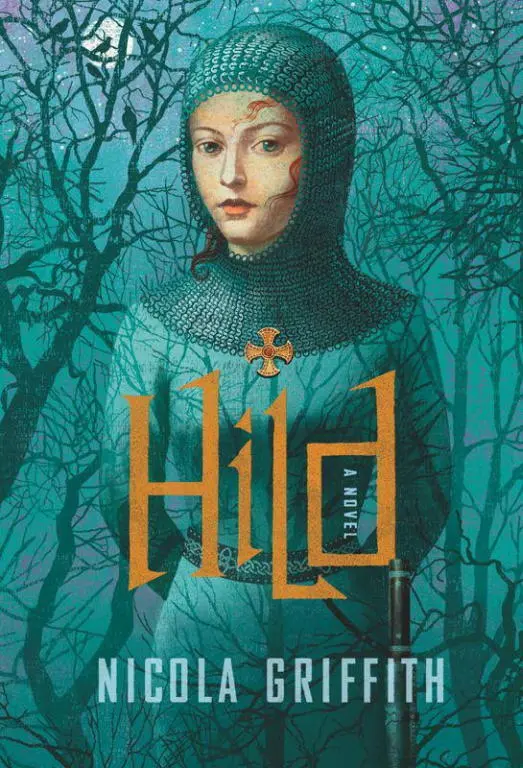
- Название:Hild
- Автор:
- Издательство:Farrar, Straus and Giroux
- Жанр:
- Год:2013
- Город:New York
- ISBN:978-0-374-28087-1
- Рейтинг книги:5 / 5. Голосов: 1
-
Избранное:Добавить в избранное
- Отзывы:
-
Ваша оценка:
Hild: краткое содержание, описание и аннотация
Предлагаем к чтению аннотацию, описание, краткое содержание или предисловие (зависит от того, что написал сам автор книги «Hild»). Если вы не нашли необходимую информацию о книге — напишите в комментариях, мы постараемся отыскать её.
But now she has only the powerful curiosity of a bright child, a will of adamant, and a way of seeing the world—of studying nature, of matching cause with effect, of observing her surroundings closely and predicting what will happen next—that can seem uncanny, even supernatural, to those around her.
Her uncle, Edwin of Northumbria, plots to become overking of the Angles, ruthlessly using every tool at his disposal: blood, bribery, belief. Hild establishes a place for herself at his side as the king’s seer. And she is indispensable—unless she should ever lead the king astray. The stakes are life and death: for Hild, for her family, for her loved ones, and for the increasing numbers who seek the protection of the strange girl who can read the world and see the future.
Hild is a young woman at the heart of the violence, subtlety, and mysticism of the early Middle Ages—all of it brilliantly and accurately evoked by Nicola Griffith’s luminous prose. Working from what little historical record is extant, Griffith has brought a beautiful, brutal world—and one of its most fascinating, pivotal figures, the girl who would become St. Hilda of Whitby—to vivid, absorbing life.
Hild — читать онлайн бесплатно полную книгу (весь текст) целиком
Ниже представлен текст книги, разбитый по страницам. Система сохранения места последней прочитанной страницы, позволяет с удобством читать онлайн бесплатно книгу «Hild», без необходимости каждый раз заново искать на чём Вы остановились. Поставьте закладку, и сможете в любой момент перейти на страницу, на которой закончили чтение.
Интервал:
Закладка:
“Will you paint it?”
“Um? I hadn’t thought to.” He drew his knife carefully down the tail, and again, blew away the shavings, hummed some more.
“Rhin sent twoscore sacks of nuts and a flitch of bacon from the mene wood. I sent a score and the bacon back. I would have sent everything but Morud tells me they truly have more nuts than they can use. So does everyone this year. Except the squirrels.” The squirrels were almost frantic. And the newly arrived rooks were building low to the ground. “It won’t be an easy winter.”
Cian examined his horse. “Is it ever?” He set the horse on the hearth. In the flickering light, it seemed to be trotting. It stood perfectly, as his animals always did.
“It’s beautiful,” she said.
He looked at her. “It’s just a horse.” She looked away, sipped at her mead. He leaned back on his hands. “So how’s the rest of the mene? Still wet?”
“Rhin tells me he has twoscore and six souls under his charge. He says the harvest was good. There’s more land under the plough—and it’s draining well. He says, too, that the crayfish from the beck are tasty and go well with pepper. If he could but get some.”
He laughed. His lips were very red. “The poor man, suffering crayfish without pepper. I might send him a sack. When is Morud going back?”
“He’s already there. I sent him out again with the nuts and bacon. Though perhaps he stopped to talk to his aunt. Lweriadd sends her best love to Lord Boldcloak, by the bye.”
He nodded. Nothing out of the ordinary now in being called lord and Boldcloak. Cian, king of Rheged. It could happen. At least the queen was still in Derventio. No doubt she’d make it to York for Yule, but perhaps by then she would be more concerned with her belly than with marrying her godson to poor mad Rhianmelldt.
Someone entered the other room; she heard voices. If it was important, Gwladus would let them in.
Cian stretched, turned the horse the other way. “Perhaps next time Rhin will send us salmon.”
“Do you remember the story you used to tell about the salmon of Elmet? Tell me again.”
He poured himself more mead, sipped, put his cup down, and opened his hands. “Once upon a time, if there was such a time, nine hazel trees grew around a pool. Now, these trees were sacred trees, and the pool a sacred pool, and in the pool lived a throng, a rush, a river of salmon. Every year the hazel trees dropped their nuts in the pool. Every year the salmon rose up and ate the nuts. These nuts, as everyone knows, were creamy and fat not only with goodness but with wisdom. The fish ate the nuts and grew wise in their turn, and as they grew wiser they grew more spots. One day—”
“Lady.” Gwladus stood at the curtain. “The boy is back. He has news from his aunt, news the king doesn’t yet have.”
Hild nodded. Gwladus lifted the curtain and Morud burst in and dropped to one knee. He was trembling with excitement. Or perhaps exhaustion. He must have run half the way from Elmet. Hild stifled her answering longing to run, to match staff to blade, to command with her own voice instead of others’.
Morud poured out the news from the British priest web, three main points.
Oswald Iding, his brother Osric the Burnt, and the Dál Riata under the prince Domnall Brecc had won great renown at the battle of Ard Corann across the North Channel in Ireland. They’d killed Fiachnae mac Demmáin of the Dál Fiatach. Domnall Brecc, the son of Eochaid, king of the Dál Riata north of Alt Clut, had declared the Idings brothers and heroes, high among Dál Riatans.
The men of Alt Clut had now sent an envoy to the Dál Riata, undisputed lords of the Scots and Irish. Hild remembered her first war trail, the way the men of Alt Clut had crossed themselves and not let her join their councils. The king sitting on the rock of Alt Clut, Hild standing tall and prophesying of Bebbanburg.
Rhoedd of Rheged was rumoured to be considering an offer for his daughter, though no one knew whose. Whoever married Rhianmelldt would one day sit by the fountain in Caer Luel, her fountain, while he laid plans to rally the men of the north…
She stood, and Gwladus was draping her newly brushed cloak, before Morud had quite finished. Hild gulped her mead, held it out to be refilled, gulped again. The king wouldn’t like any of her news. “Find Oeric,” she told Gwladus. “Find my mother. Be ready for anything when I get back.” She looked at Cian. “Anything.”
She wondered how it felt to be Cian, or to be an Iding, and fight for a place with muscle and bone, not just words. Fiachnae mac Demmáin dead. She remembered cutting open his man’s arm. But she couldn’t remember why it had upset her so.
When she got back they were all waiting: her mother, Begu, Oeric, Morud, Gwladus… No, not all. Not Cian. Hadn’t he understood? Of course he had.
Gwladus took her cloak, shot a look at Oeric that Hild didn’t understand, and brought her a cup of mulled wine. Hild sat opposite her mother. Sipped.
Eventually Breguswith said, “Well, you’re not dead.”
“I might be by next summer.” She sipped some more. “I had to promise him a son.”
Breguswith’s spine went rigid.
“Don’t,” Hild said. “I didn’t have a choice.”
Her mother looked at her. There was always a choice. But in a fight you risked all on an opening; you didn’t think about what happened if you missed. “I told him the bad news, told him it was going to be a bad winter in other ways, too—”
“How do—”
“It will. If you stopped thinking about wool for an hour, you’d see it. So I told him that. And the Crow started talking about witches bringing misfortune. The king… you know how he is.” First the half-lidded look, then the widening eyes, the black pupils swelling like ink dropped in water, swallowing the blue centres, leaving the outer pleats of his eyes green and glistening, swarming like flies looking for something to eat, someone to hurt to make himself feel strong and safe. “So I told him it would be a hard winter, yes, but that he was strong and canny and his land rich, that the gods would grant him a son, a fine strong son, born into a Christian marriage, one blessed by the pope. A pope who, with the conversion of so many people, would be happy to call him king of all the Anglisc, happy to call him so to the Franks and the Jutes, happy to bless his heir. Heir to the overkingship of all the Anglisc. So what, in the end, would it matter about the men of the north and who they called brother and hero if he, Edwin king, could call on all the Anglisc?”
A boy. And healthy. Two risks, not one. But it was done.
She finished her wine, held the cup out for more. “Is there any bread? I’m starved.”
Oeric cleared his throat. “There’s more news, lady.”
Hild stared. “More?”
“It’s not urgent,” Gwladus said.
“How do we know?” Oeric said. “It’s a letter.”
Hild held out her hand. Red wax, a goose. “It’s from Hereswith.” She broke it, read quickly. “She has a daughter, fine and strong.”
“When?” Breguswith said. “What colour are her eyes?”
Hild held out the letter, then remembered her mother couldn’t read. “It doesn’t say.” She smoothed the letter, so no one would see her hand trembling. Her mother couldn’t read. Her mother hadn’t noticed the signs of a bad winter. Cian wasn’t even there. Hereswith was far away, and Fursey. She had taken a double risk and there was no one to help her.
“Well, what does it say?” Begu asked.
Hereswith’s writing had improved. “The baby came just before midsummer.”
“Late,” Begu said.
Hild nodded, reading one thing, thinking another. “Æthelric is holding the fen, though he won’t challenge Ricberht.” He is happy to cower in our stinking fen and play prince to the North Folk and stallion to his pagan woman. She’d been right. She must tell Hereswith to watch what she wrote. Not everyone who could read was on their side… “Father Fursey sends his love and prayers.”
Читать дальшеИнтервал:
Закладка:
Похожие книги на «Hild»
Представляем Вашему вниманию похожие книги на «Hild» списком для выбора. Мы отобрали схожую по названию и смыслу литературу в надежде предоставить читателям больше вариантов отыскать новые, интересные, ещё непрочитанные произведения.



Обсуждение, отзывы о книге «Hild» и просто собственные мнения читателей. Оставьте ваши комментарии, напишите, что Вы думаете о произведении, его смысле или главных героях. Укажите что конкретно понравилось, а что нет, и почему Вы так считаете.