Nicola Griffith - Hild
Здесь есть возможность читать онлайн «Nicola Griffith - Hild» весь текст электронной книги совершенно бесплатно (целиком полную версию без сокращений). В некоторых случаях можно слушать аудио, скачать через торрент в формате fb2 и присутствует краткое содержание. Город: New York, Год выпуска: 2013, ISBN: 2013, Издательство: Farrar, Straus and Giroux, Жанр: Историческая проза, на английском языке. Описание произведения, (предисловие) а так же отзывы посетителей доступны на портале библиотеки ЛибКат.
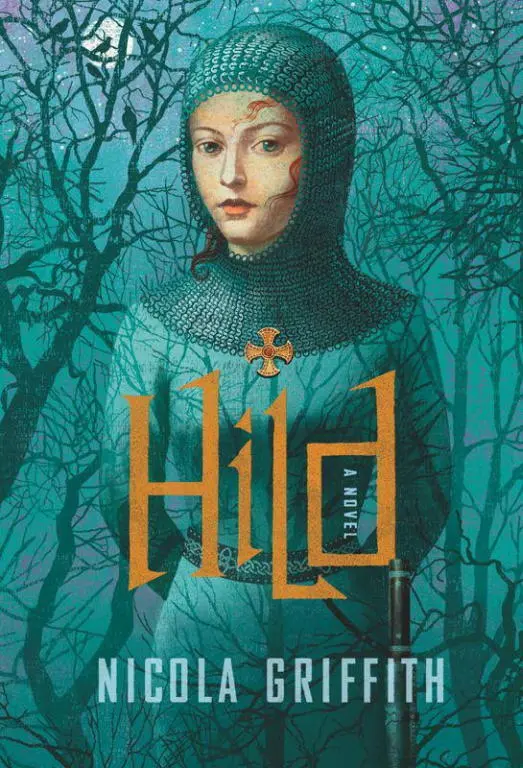
- Название:Hild
- Автор:
- Издательство:Farrar, Straus and Giroux
- Жанр:
- Год:2013
- Город:New York
- ISBN:978-0-374-28087-1
- Рейтинг книги:5 / 5. Голосов: 1
-
Избранное:Добавить в избранное
- Отзывы:
-
Ваша оценка:
Hild: краткое содержание, описание и аннотация
Предлагаем к чтению аннотацию, описание, краткое содержание или предисловие (зависит от того, что написал сам автор книги «Hild»). Если вы не нашли необходимую информацию о книге — напишите в комментариях, мы постараемся отыскать её.
But now she has only the powerful curiosity of a bright child, a will of adamant, and a way of seeing the world—of studying nature, of matching cause with effect, of observing her surroundings closely and predicting what will happen next—that can seem uncanny, even supernatural, to those around her.
Her uncle, Edwin of Northumbria, plots to become overking of the Angles, ruthlessly using every tool at his disposal: blood, bribery, belief. Hild establishes a place for herself at his side as the king’s seer. And she is indispensable—unless she should ever lead the king astray. The stakes are life and death: for Hild, for her family, for her loved ones, and for the increasing numbers who seek the protection of the strange girl who can read the world and see the future.
Hild is a young woman at the heart of the violence, subtlety, and mysticism of the early Middle Ages—all of it brilliantly and accurately evoked by Nicola Griffith’s luminous prose. Working from what little historical record is extant, Griffith has brought a beautiful, brutal world—and one of its most fascinating, pivotal figures, the girl who would become St. Hilda of Whitby—to vivid, absorbing life.
Hild — читать онлайн бесплатно полную книгу (весь текст) целиком
Ниже представлен текст книги, разбитый по страницам. Система сохранения места последней прочитанной страницы, позволяет с удобством читать онлайн бесплатно книгу «Hild», без необходимости каждый раз заново искать на чём Вы остановились. Поставьте закладку, и сможете в любой момент перейти на страницу, на которой закончили чтение.
Интервал:
Закладка:
In the queen’s guardroom, Bassus frowned—not at the king’s niece, the king’s fist, but at her question. What did she want with bandits?
He waved the houseman out and threw a log on the fire himself. She poured them both wine, unbidden. She wore the Yffing token. She didn’t need anyone’s permission.
Bandits.
“I hunted them in Kent, when Eadbald was ætheling.” He immediately felt foolish. The girl—not girl, king’s fist—wouldn’t care who’d been ætheling. He lifted his cup and sniffed it. Iberian. His favourite. The same colour as her ring. “It’s hard and filthy work. I wouldn’t wish it on my worst enemy.”
The log caught, setting shadows dancing along the wall and the Yffing token glinting blood-red. He wished his words back: She was the king’s fist. It didn’t do to use the word enemy in the same room.
“I’ll show you the scar they gave me?”
She nodded, and he thumped his wine cup on the board and his right foot on the bench. He took off his belt, unfastened the tie under his jacket, and peeled down his hose. The scar along his shin was the size of a grass snake, thick and twisting, blueish-white and sunken in the middle, pink at the edges. It hadn’t healed fast, and the infection had taken some of the bone with it.
“Worse than anything I took in a shield wall. Not made with good clean steel. An iron-edged spade,” he said. “Filthy thing. Still aches sometimes, when it rains.”
“I’ll send you something for it.”
“Thank you, lady.” It wouldn’t do to refuse.
He pulled his hose up again, tied them carefully, rearranged his jacket. He picked up his belt. Paused. “They fight with teeth and hands, slings and stones, sickles and spades. They turn on you, even when they’ve a hole torn right through the belly. Like mindless rats, never knowing when they’re beaten. You should hunt them like rats, with nets and clubs, or dogs and a ring of bowmen. Or poison. Kill them all.”
“Not all, surely.”
“All, lady. And their young.” She’d killed at Lindum, so they said. But you didn’t understand bandits until you’d had one turn under your heel like a broken-backed snake. “Some say bandits are good men fallen on hard times. And perhaps some begin that way. But they become savages.”
He ran his belt through his hands, half listening to the clink of gold fastenings won in his time as king’s gesith.
“Lady, it’s not like war. Bandits give no quarter, and you don’t offer it, you can’t, because they’ve no honour. None. I wouldn’t do it again, not for all the wine in Iberia.”
While Gwladus packed, Hild turned her wrist, tilting the ring this way and that. This way, even in the overcast, the carved garnet pulsed like lifeblood. That way turned it dark as a scab. Light, dark. King’s token, king’s fist.
King’s weight.
She checked her packets of healing herbs, tucked them into their pockets next to the bandages and needles, rolled the leather, and tied it.
When Gwladus put her own dress in the small pile by the leather saddlebags, Hild said, “No. You’re not coming.”
Gwladus stopped, looked at her. “Then who’s to attend you?”
“No one. Pack enough for a month.”
“A month? You can’t—”
“You’re not coming.”
“But—”
“Enough. I don’t want you.”
Gwladus flinched.
She wasn’t riding as Lady Hild, king’s niece, king’s seer. She was riding as Hild, king’s fist. She doubted it would be as bad as old Bassus thought, but it was clear bandit-hunting was not a task that required well-dressed hair or clean clothes. She wouldn’t ride with anyone who couldn’t kill, nor anyone who might recall her to herself. She had to be the king’s fist, a killer. She had asked for this task. It must be done.
She rode south into Elmet through the blazing heather, Morud running beside her, and Oeric and six gesiths arrayed in a jingling crescent about her: Gwrast and Cynan, Coelwyn and Eadric, and the brothers Berht.
She rode light, no spare clothes, just two slim saddlebags holding hard bread, mead, and her wound roll. She carried her tokens on her body: her beads, her seax, her cross, the cups Cian had carved, Begu’s snakestone, and Edwin’s ring. When the sun came out the stone on her thumb glowed, her carnelians burnt, and the gold on her belt and Ilfetu’s headstall gleamed.
They camped the first night in the lee of a lichened rock: the moor’s bones, poking from the thin soil. Apart from Oeric and Morud the men were used to the war trail and comfortable enough, though unhappy that she wanted them to take off their rings and wrap their horse gear in cloth.
“Even in the moonlight you’ll glitter like barrow wights. They’ll see you coming from a mile away.”
“Good!” Coelwyn said. “We’ll freeze their marrow.”
“Would you want birds to know the net is there?”
“Birds? We’re gesiths. We hunt fearsome beasts. We don’t bother with small frightened things.”
“You do now.”
She took off her beads, coiled them in her hand, dropped them in the purse on her belt.
“If we let them run, they’ll come back when we’re gone. We’re here to trap them, judge them, then settle or kill them.”
They nodded. They’d all seen her kill, except Oeric.
It was as their lady, dealer of wyrd and woe, that she judged the miserable bandits they chased down, the children, women, and men hauled cowering in groups of six from bramble thickets, hiding by twos in an overstood coppice, or snivelling alone over a half-eaten bird in the lee of a rock.
Children, weak and starveling, who could cry on command and, if you offered comfort, would poke your eye with a filthy finger and rip the pin from your cloak. That’s what had happened to Coelwyn. He would most probably lose that eye, though she’d done what she could.
Women, lush as a water meadow but with no teeth. Women with broken knives hidden in both hands. It served Gwrast right, she told him every night when she changed his bandage. It would be a while before he could carry a shield—but he didn’t need a shield to fight bandits.
Men, with muscles like steel bands and broken minds. Men who’d try to rape a nettle bush if it kept still.
Hild judged them all. She judged them as impersonally as a murrain or a bolt of lightning.
She sent children with milk teeth, even the wicked ones, to her mene wood, with Morud to guide and Coelwyn to guard. Morud brought back news that the beck glistened with eggs and flickered with flies; there would be a fine run of fish, sun or no sun. The mene would survive. Next year it might thrive. There would be plenty of work for healthy children. He also brought back two bow hunters and a netman; Rhin hoped the lady would return them by Blodmonath.
She was glad of the bow hunters: Bassus had been right about some things.
She rode from dawn to dusk, judging, settling, listening to the folk. Every steading had a story of a band of wolf’s-heads, bandit fiends who raped and murdered and slaughtered the kine, burnt the fields, shat in the well from sheer wickedness. But like the Cait Sith these fiends always seemed to visit misery on someone else, someone over the hill or in the next valley.
She smashed the right elbows of two brothers they found stealing cattle from a widow and her sons at Brown Crag. Without use of their arms they would only survive if there were people who loved them well enough to feed them for a few weeks.
She settled one couple and nearly grown son, whom they’d caught holding nothing but a handful of stolen carrots, with a farmer just west of Rhin’s old church. A week later, she led her band back to the farm hoping for an evening sleeping dry under a roof and a hot meal. They found the place smouldering, the farmwife raped and dead, and the husbandman’s guts spilt in the straw of the byre where the bandits had cut off the milch cow’s hind legs and tried to start a fire.
Читать дальшеИнтервал:
Закладка:
Похожие книги на «Hild»
Представляем Вашему вниманию похожие книги на «Hild» списком для выбора. Мы отобрали схожую по названию и смыслу литературу в надежде предоставить читателям больше вариантов отыскать новые, интересные, ещё непрочитанные произведения.



Обсуждение, отзывы о книге «Hild» и просто собственные мнения читателей. Оставьте ваши комментарии, напишите, что Вы думаете о произведении, его смысле или главных героях. Укажите что конкретно понравилось, а что нет, и почему Вы так считаете.