Nicola Griffith - Hild
Здесь есть возможность читать онлайн «Nicola Griffith - Hild» весь текст электронной книги совершенно бесплатно (целиком полную версию без сокращений). В некоторых случаях можно слушать аудио, скачать через торрент в формате fb2 и присутствует краткое содержание. Город: New York, Год выпуска: 2013, ISBN: 2013, Издательство: Farrar, Straus and Giroux, Жанр: Историческая проза, на английском языке. Описание произведения, (предисловие) а так же отзывы посетителей доступны на портале библиотеки ЛибКат.
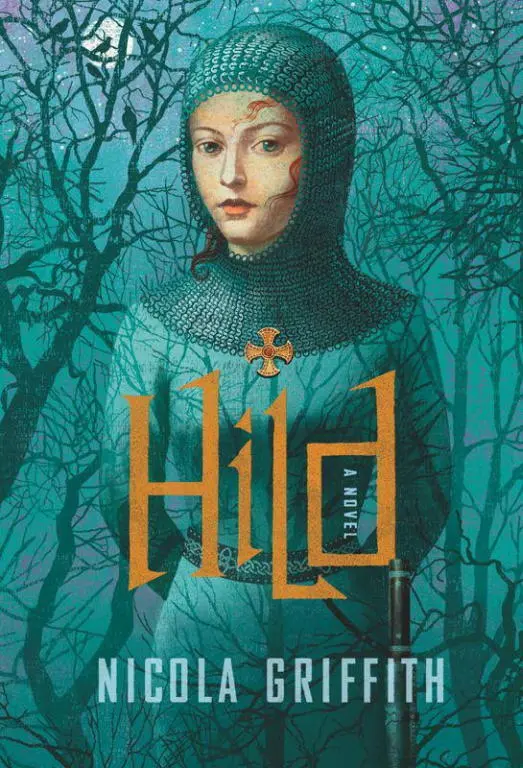
- Название:Hild
- Автор:
- Издательство:Farrar, Straus and Giroux
- Жанр:
- Год:2013
- Город:New York
- ISBN:978-0-374-28087-1
- Рейтинг книги:5 / 5. Голосов: 1
-
Избранное:Добавить в избранное
- Отзывы:
-
Ваша оценка:
Hild: краткое содержание, описание и аннотация
Предлагаем к чтению аннотацию, описание, краткое содержание или предисловие (зависит от того, что написал сам автор книги «Hild»). Если вы не нашли необходимую информацию о книге — напишите в комментариях, мы постараемся отыскать её.
But now she has only the powerful curiosity of a bright child, a will of adamant, and a way of seeing the world—of studying nature, of matching cause with effect, of observing her surroundings closely and predicting what will happen next—that can seem uncanny, even supernatural, to those around her.
Her uncle, Edwin of Northumbria, plots to become overking of the Angles, ruthlessly using every tool at his disposal: blood, bribery, belief. Hild establishes a place for herself at his side as the king’s seer. And she is indispensable—unless she should ever lead the king astray. The stakes are life and death: for Hild, for her family, for her loved ones, and for the increasing numbers who seek the protection of the strange girl who can read the world and see the future.
Hild is a young woman at the heart of the violence, subtlety, and mysticism of the early Middle Ages—all of it brilliantly and accurately evoked by Nicola Griffith’s luminous prose. Working from what little historical record is extant, Griffith has brought a beautiful, brutal world—and one of its most fascinating, pivotal figures, the girl who would become St. Hilda of Whitby—to vivid, absorbing life.
Hild — читать онлайн бесплатно полную книгу (весь текст) целиком
Ниже представлен текст книги, разбитый по страницам. Система сохранения места последней прочитанной страницы, позволяет с удобством читать онлайн бесплатно книгу «Hild», без необходимости каждый раз заново искать на чём Вы остановились. Поставьте закладку, и сможете в любой момент перейти на страницу, на которой закончили чтение.
Интервал:
Закладка:
Breguswith looked at her, and her thoughts were plain to everyone in the room: They’d have to be powerful prayers if the prediction about a son didn’t come true.
“But for now,” Begu said, “you’re a grandmother. And Hild’s an aunt.” She smiled. “An aunt! What’s her name?”
Hild shook her head. “She’s didn’t say. She’s not very used to writing letters.” She turned to Oeric. “Bring me ink. And get ready for a long ride. You’re taking letters to Hereswith and to her priest, Fursey. Take two men, a pair of spare mounts each. I’ll want replies faster than fast. Morud, you’ll rest. I’ll need your eyes in half a dozen places.” Rhin had at least one wealh priest hiding with him. One of them could reshave his forehead and get up to Rheged, with Morud, and take the lie of the land. With the Idings ascendant, no man of the north would talk to Edwin’s Anglisc now, priest or gesith. And now was not the time to stop being right.
20
WINTER WAS HARSH: wind and snow, then, just as the snowdrops were poking free of the dirt, silence and cracking cold from skies as blue and hard as enamel. Sunlight glittered on ice-cased twigs. Fawns in the wood starved and foxes ran thinner than weasels. In York, folk like Linnet hunched against the cold alongside their byre animals, glad of the warm stink, glad of the dung to burn—while it lasted—eyeing the tree hay, and weighing the coming choice between staying warm and letting the kine starve.
Hild and her mother made sure Æthelburh always had tempting treats to hand; they needed her child to be healthy.
Towards the end of their stay at Bebbanburg, spring came at last. It began to warm. In the valleys, barley shoots poked through the dirt. Folk straightened and began to smile.
Then came the rain. Endless rain, beating the shoots back into the earth, flattening the early flowers, drowning the hum and bumble of bees. Cattle found hillocks where they could, or rotted where they stood. Cloth mildewed and flour mouldered. Rivers rose, and rose again, til herons roosted on roofs and ducks on styles. Pastures turned to mud and roads to slipways. And still it rained.
Everywhere there was unrest. From Tinamutha, Osfrith sent word of blood and mud-soaked raids by young Gododdin. Hild wondered if Coledauc pondered taking his Bryneich to join them. She rested her hand on her seax: Would he risk breaking her prophecy of friendship?
Men murmured: Wights walked the world under the uncanny sky, and moonless nights sent bats and birds mad; nets strung in the usual alleys caught only air. Wildcats and wolves came down from the hills and out from the weald and slunk into farmsteads at night. Eagles snatched sheep from the hillside in what passed for daylight. The king offered a bounty on wolfskins and eagle wings, but bowmen complained of slack strings and warped arrows, and spearmen threw awry.
Christ, folk whispered, was an unchancy god.
They were at Yeavering when Oeric returned with a letter from Fursey, so circumspect as to be brow-furrowing. Your niece is a Noble Joy. It took Hild several reads to determine he meant her name was Æthelwyn. S brings incense of the kind your sister enjoys to drive vermin from the room. That was easier: Sigebert had pledged allegiance to the Franks in return for arms and men. Edwin wouldn’t like that. Your humble correspondent bids you to remember the road to Lindum and our conversation about the brightest bead of all. He is everywhere.
She turned her beads half the night, thinking about that. The little yellow bead, the brightest of all: Christ. He wasn’t talking of the priests—that would be like explaining that the sun rose in the east. What did he mean? She fell asleep holding the beads and dreamt of damp. They all dreamt of damp. The weather was more like autumn than early summer. Rain-lashed seas heaved. Shipping was uncertain. Trade fell.
They moved to Derventio. Edwin fumed in his splendid mosaic-floored hall, guarded at every entrance by a pair of gesiths. Gesiths did not make good guards: guarding wasn’t fighting. Lintlaf told them they’d have real fighting soon enough, and made sure the men changed places four times a day.
Æthelburh, swollen as a drowned ewe and not due for another two months, prayed in her splendid gilt and vermilion-painted chapel. James’s choir sang bravely, but their song seemed to reach only as far as the high roof then fell back to earth, unheard. Hild, seer and prophet, repeated that the king’s son would be strong and healthy. But she made no promise about the rain. The king shouted at her. Men muttered as she passed. Women drew aside their skirts.
Morud brought news of worried men in Rheged and a desperate message from Uinniau: Rhoedd was beset by envoys from the north—Dál Riata and Alt Clut—husbandmen driven from their farms by bad weather and a cattle murrain. He would have to make an alliance soon. Hild still had no one to suggest to Edwin for Rhianmelldt.
She slid her seax in and out of its sheath, thinking, then jammed it home and picked up her staff. Good oak, solid. She hefted it, balanced it in her hands, wondered how it would be to fight Idings. Then she rested it in the crook of her arm and smoothed her hair. The Idings weren’t here, and she had news to take to Edwin in his hall.
Paulinus was there, with Stephanus. Edwin heard her out in silence and then began to rant. With no wheat and no barley harvest likely, he’d had to trade with the queen’s brother in Kent for grain. He’d raised the tithe at his York wīc and Tinamutha. He’d pressed Mulstan for greater revenue from the Bay of the Beacon. He’d sent word to Coelgar in Lindsey, to their cousin Osric in Craven hiding in his birch-clad hills and iron-rich streams, and to Pyr in Elmet: They must be stern; their king needed what could be spared, and more. But what did he get back? Whining, nothing but whining and news of more problems. He wanted to hear some useful suggestions for a change from his so-called counsellors.
Paulinus stepped forward and suggested the king might force the Gododdin and the men of Rheged to pay higher tribute because they didn’t worship Christ through the right priests.
Edwin screamed at him and stabbed the table to tatters: Had his nithing, criminal god stolen his brains in the night? Did he not understand that, in Gaul, Sigebert was kissing the ring of the Franks for aid against the East Angles? The Franks! What was he, Edwin: fried tripe? You’d think so the way the Gododdin were becoming so bold. And now Rheged was mulling an alliance with the Dál Riata. On top of that, Cadwallon was readying Gwynedd for war, and Penda marching his Mercians to meet the West Saxons. He’d win. And then anything could happen, anything, and it was the priests’ job to pray to their mighty god and bring some fine weather and a good end to the queen’s term. And failing that, he should shut his mouth or by the gods he, the king, would pull his bishop’s guts through his belly button and nail them to a tree. And the bishop of Rome could shove that up his arse and shit around it.
“At least Coifi knew his place!” he shouted at his retreating bishop, and followed it with a hurled bowl, which clipped Stephanus on the back of the head.
Hild watched the elm bowl roll in a tight circle on its silver rim, then settle upside down. She knew how it felt: round and round, everyone watching. She longed to throw something: at Paulinus, at Cian, at the king. Or stab something. Anything but stand calm and still and wait, always wait for things over which she had no control but had predicted boldly. A son. And healthy. But no one would know for a month or two.
“Wooden-headed, skirt-wearing lily-livers. Someone bring me another drink. And you,” he said to Hild, “tell me something good.”
Читать дальшеИнтервал:
Закладка:
Похожие книги на «Hild»
Представляем Вашему вниманию похожие книги на «Hild» списком для выбора. Мы отобрали схожую по названию и смыслу литературу в надежде предоставить читателям больше вариантов отыскать новые, интересные, ещё непрочитанные произведения.









Обсуждение, отзывы о книге «Hild» и просто собственные мнения читателей. Оставьте ваши комментарии, напишите, что Вы думаете о произведении, его смысле или главных героях. Укажите что конкретно понравилось, а что нет, и почему Вы так считаете.