Nicola Griffith - Hild
Здесь есть возможность читать онлайн «Nicola Griffith - Hild» весь текст электронной книги совершенно бесплатно (целиком полную версию без сокращений). В некоторых случаях можно слушать аудио, скачать через торрент в формате fb2 и присутствует краткое содержание. Город: New York, Год выпуска: 2013, ISBN: 2013, Издательство: Farrar, Straus and Giroux, Жанр: Историческая проза, на английском языке. Описание произведения, (предисловие) а так же отзывы посетителей доступны на портале библиотеки ЛибКат.
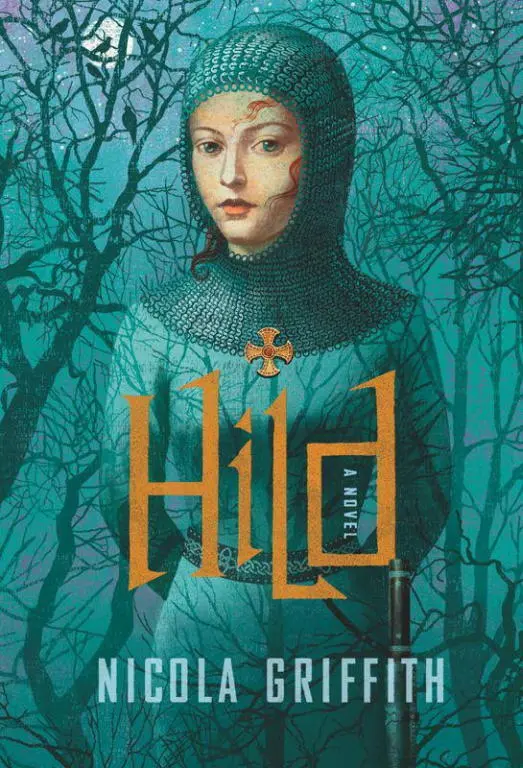
- Название:Hild
- Автор:
- Издательство:Farrar, Straus and Giroux
- Жанр:
- Год:2013
- Город:New York
- ISBN:978-0-374-28087-1
- Рейтинг книги:5 / 5. Голосов: 1
-
Избранное:Добавить в избранное
- Отзывы:
-
Ваша оценка:
Hild: краткое содержание, описание и аннотация
Предлагаем к чтению аннотацию, описание, краткое содержание или предисловие (зависит от того, что написал сам автор книги «Hild»). Если вы не нашли необходимую информацию о книге — напишите в комментариях, мы постараемся отыскать её.
But now she has only the powerful curiosity of a bright child, a will of adamant, and a way of seeing the world—of studying nature, of matching cause with effect, of observing her surroundings closely and predicting what will happen next—that can seem uncanny, even supernatural, to those around her.
Her uncle, Edwin of Northumbria, plots to become overking of the Angles, ruthlessly using every tool at his disposal: blood, bribery, belief. Hild establishes a place for herself at his side as the king’s seer. And she is indispensable—unless she should ever lead the king astray. The stakes are life and death: for Hild, for her family, for her loved ones, and for the increasing numbers who seek the protection of the strange girl who can read the world and see the future.
Hild is a young woman at the heart of the violence, subtlety, and mysticism of the early Middle Ages—all of it brilliantly and accurately evoked by Nicola Griffith’s luminous prose. Working from what little historical record is extant, Griffith has brought a beautiful, brutal world—and one of its most fascinating, pivotal figures, the girl who would become St. Hilda of Whitby—to vivid, absorbing life.
Hild — читать онлайн бесплатно полную книгу (весь текст) целиком
Ниже представлен текст книги, разбитый по страницам. Система сохранения места последней прочитанной страницы, позволяет с удобством читать онлайн бесплатно книгу «Hild», без необходимости каждый раз заново искать на чём Вы остановились. Поставьте закладку, и сможете в любой момент перейти на страницу, на которой закончили чтение.
Интервал:
Закладка:
Now Edwin was nodding: He was a wise king, and generous, and rich. Paulinus stared at her, unwinking. In this hall, with his black hair and eyes, he looked like a foreign shadow. His skin drank in the Anglisc light.
“A drunken man, my king, gives away too much too fast to the wrong people. And so it was with Eorpwald. He gave too much too fast to his new priests. The king had no wise adviser to temper his generosity.” No one like her, skirt and sword. Book and blade. “The king’s thegns were bewildered.”
Coelgar was now looking speculatively at Paulinus.
“The thegns rose up. They swore to Ricberht, who swore to shun the Christ.” She looked around the room and smiled. “Who here hasn’t sworn to never drink again?”
Laughter.
“But, my lord King, like all of us, Ricberht will one day no doubt be persuaded to sip of this foreign wine anew. And, failing that, his thegns might listen to suggestions for another king. Sigebert, they say, is safe in Frankia. Where we have many friends.” And her mother’s relatives, her sister’s, her own. “And much new trade.”
“Meanwhile,” Edwin said, “the East Angles are not bending the knee, and this Ricberht, they say”—ironic smile—“has friends in Mercia.”
“Yes, my king.” She had no idea if that was true, but it was best not to contradict one’s king in public. “However, my sister’s husband, Æthelric, is still prince of the North Folk.” They would have heard otherwise. “He will hold the fens against the men of Mercia and the West Saxons. We will regain Rendlesham and, meanwhile, my sister’s husband will guard the border. Lindsey is safe.”
“You’re sure?”
“I am.” Hereswith would persuade Æthelric. Hereswith and Fursey. Between them they would remind him of Hild’s prophecy: He would be king. “Meanwhile, my king, we must in future make sure that any kings whom we seek to turn to Christ are supported with wise advisers.”
Coelgar nodded, and Hild turned deliberately to him. As ealdorman in his own hall, he did not need the king’s permission to speak.
“She’s right, my lord. I don’t hold with this hurry.” He looked over at Paulinus. “I hear they killed your underbishop. Put his head on the altar.”
“Bishop Thrythnoth is in heaven. He was much loved by God and has been gathered to His bosom.”
“Well,” said Coelgar, “I’m not in a hurry to be loved that way by any god.”
Gesiths laughed, black-clad priests crossed themselves, and Paulinus said nothing.
“My dear Coelgar,” Edwin said, “I’ll make sure that with you, Paulinus takes all the time you need. I’ll make sure he stays here all winter if necessary. Is that all right with you, Paulinus?”
Paulinus had no choice but to bow.
Coelgar said, “Let’s eat,” and housefolk poured into the hall to move benches.
The king crooked his finger to Hild and waved Paulinus away. While everything rearranged itself around them, turning them momentarily into a private island, he tapped his ring on the arm of his chair. Hild wondered how that ring might feel. All that power. No more waiting .
He leaned forward. “I don’t like surprises. I don’t want any more. Do whatever you have to.” They both glanced at Paulinus, who clearly wished he could hear what they were saying. “What he doesn’t know, he won’t hector me for. If the wyrd needs a little help”—he tapped the thick gold band around his left arm—“let me know.”
“Yes, Uncle.”
“Wear that cross outside your clothes. And no… distractions.” She didn’t want to think what he meant by that. “About Rendlesham. Work out with your mother how to make up for the loss of trade.” He moved restlessly in his chair. “We’ll be here another fortnight now. May the Christ bend Eorpwald Sulkmouth over a heavenly bench and fuck him!” He slammed both hands on the chair. “Someone bring me a drink!”
In York, birds were eating the last of the hornbeam nuts, the hazelnuts had been gathered, and the ash between the north pasture and the east fields pollarded. Everywhere smoke rose into the hard blue sky: fragrant ash from the hearth, keeping them warm; applewood smouldering under butchered pig, turning it to bacon; thorn-brush coals roasting hazelnuts.
Cian one day started talking to Hild again, though there were odd moments of silence, quick looks that she couldn’t read, and every time she considered asking him, she found she couldn’t. Their friendship grew back, like tree bark growing over a wound. But they did not fight anymore. “It’s different now,” was all he said. And, again, Hild couldn’t bring herself to ask him why. She sparred sometimes with Oeric, but it wasn’t the same.
She helped her mother persuade the queen that, even tucked up in Derventio with a swollen belly, she and her women could make embroideries more efficiently; talk Osfrith into squeezing his thegns just a little harder; and make sure the dyeing and fulling of cloth didn’t slow despite the fading light. Then she turned her mind to keeping abreast of news from everywhere. The priests had had a network before Paulinus unravelled it. Hild would reweave it, to her own purpose.
In the woodland south of the site cleared for the wīc, Hild had to reassure two thin and owl-eyed charcoal burners that she wasn’t a wraith from the long ago; she was looking for the hut of a woman called Linnet. Here, see, she was bringing Linnet and her old mother a sack of hazelnuts. Charcoal burners were often strange; not getting enough sleep for weeks led to a tendency to visions. And a gesith-tall maid draped in gold was not something you saw every day. She gave them a handful of nuts, and the earthiness of the little brown nuggets seemed to persuade them. They pointed her to a narrow path. Her boots crunched on the fallen leaves.
At the hut, Hild knocked on the doorpost.
Linnet’s mother opened the door.
“It’s you, then.”
Hild agreed it was.
“And what’s that?”
“Don’t be rude,” Linnet said, moving her mother aside. She leaned through the door, peered behind Hild, and frowned. “You’re on your own, lady?”
“As you see.” Hild shifted her sack to both hands and held it out. “Hazelnuts. I have more than I can use.”
“Tuh,” said Linnet’s mother. “Doesn’t everyone, this year?”
Linnet took the sack.
“They’re from my own land in Elmet. Fresh and fresh. Elmet’s—”
A pig squealed from behind the hut, a bubbling jagged shriek that reminded Hild of Lindum, the fallen wailing and begging, the sow rooting in the Lindsey man’s belly.
“What are they doing to the poor thing?”
“It’s my sons. They’re young and don’t yet have the hang of it. But, as Mam says, they have to learn sometime. Will you come in?”
Cian sat cross-legged on his folded cloak by the hearth, whittling hard white hornbeam. He hummed tunelessly, concentrating on the wood. His fingers worked. Firelight glinted red-gold in his hair. His throat apple moved as he hummed. His clothes smelt of the crisp green-apple smoke of burning birch from the hearth of Wen, the young widow with the freckles, who shaved the priests and those of the king’s men who liked smooth chins.
“What are you making?”
He smiled and held it out: a horse. “Du likes horses.” Du was Wen’s toddler. Before she could stop it, Hild was imagining Wen stropping her razors on the velvety skin of birch-bracket fungus, Cian leaning back, head on her breast, Wen holding his chin with one hand, holding the razor against his throat with the other. They were both naked.
She poured mead. Gwladus was in the other room, brushing the mud out of her cloak. If you must keep visiting these hovels , she’d said, at least try not to tread in the pig shit .
Читать дальшеИнтервал:
Закладка:
Похожие книги на «Hild»
Представляем Вашему вниманию похожие книги на «Hild» списком для выбора. Мы отобрали схожую по названию и смыслу литературу в надежде предоставить читателям больше вариантов отыскать новые, интересные, ещё непрочитанные произведения.








Обсуждение, отзывы о книге «Hild» и просто собственные мнения читателей. Оставьте ваши комментарии, напишите, что Вы думаете о произведении, его смысле или главных героях. Укажите что конкретно понравилось, а что нет, и почему Вы так считаете.