Nicola Griffith - Hild
Здесь есть возможность читать онлайн «Nicola Griffith - Hild» весь текст электронной книги совершенно бесплатно (целиком полную версию без сокращений). В некоторых случаях можно слушать аудио, скачать через торрент в формате fb2 и присутствует краткое содержание. Город: New York, Год выпуска: 2013, ISBN: 2013, Издательство: Farrar, Straus and Giroux, Жанр: Историческая проза, на английском языке. Описание произведения, (предисловие) а так же отзывы посетителей доступны на портале библиотеки ЛибКат.
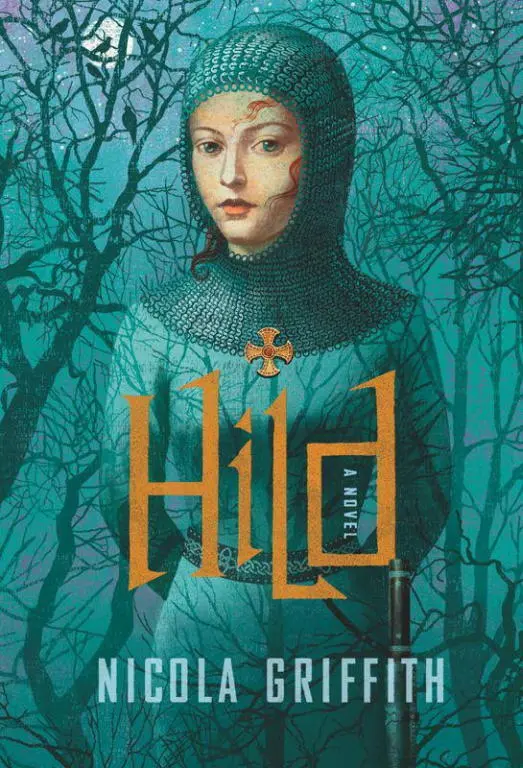
- Название:Hild
- Автор:
- Издательство:Farrar, Straus and Giroux
- Жанр:
- Год:2013
- Город:New York
- ISBN:978-0-374-28087-1
- Рейтинг книги:5 / 5. Голосов: 1
-
Избранное:Добавить в избранное
- Отзывы:
-
Ваша оценка:
Hild: краткое содержание, описание и аннотация
Предлагаем к чтению аннотацию, описание, краткое содержание или предисловие (зависит от того, что написал сам автор книги «Hild»). Если вы не нашли необходимую информацию о книге — напишите в комментариях, мы постараемся отыскать её.
But now she has only the powerful curiosity of a bright child, a will of adamant, and a way of seeing the world—of studying nature, of matching cause with effect, of observing her surroundings closely and predicting what will happen next—that can seem uncanny, even supernatural, to those around her.
Her uncle, Edwin of Northumbria, plots to become overking of the Angles, ruthlessly using every tool at his disposal: blood, bribery, belief. Hild establishes a place for herself at his side as the king’s seer. And she is indispensable—unless she should ever lead the king astray. The stakes are life and death: for Hild, for her family, for her loved ones, and for the increasing numbers who seek the protection of the strange girl who can read the world and see the future.
Hild is a young woman at the heart of the violence, subtlety, and mysticism of the early Middle Ages—all of it brilliantly and accurately evoked by Nicola Griffith’s luminous prose. Working from what little historical record is extant, Griffith has brought a beautiful, brutal world—and one of its most fascinating, pivotal figures, the girl who would become St. Hilda of Whitby—to vivid, absorbing life.
Hild — читать онлайн бесплатно полную книгу (весь текст) целиком
Ниже представлен текст книги, разбитый по страницам. Система сохранения места последней прочитанной страницы, позволяет с удобством читать онлайн бесплатно книгу «Hild», без необходимости каждый раз заново искать на чём Вы остановились. Поставьте закладку, и сможете в любой момент перейти на страницу, на которой закончили чтение.
Интервал:
Закладка:
Begu sniffed, shook her head.
“Sharp, but musty. Like lye and old leather.” A moth fluttered over the reflection of the moon on the water. She spoke quietly in the still, scented air. “When bats are hunting, a moth will fold its wings and fall as though caught in a sudden frost. I’ve seen it. The moths fall down, lie on the turf like dead leaves, and when the bats have passed, they fly away again.”
They held hands. The river poured. The trees whispered. Hild thought she could already hear the difference in the leaves, stiffer than a month ago, though in the daylight the colour was just the same.
The air changed. Once again, it was just a beautiful night.
Begu stirred. “Oeric. He won’t be happy when he comes back and sees how it is.”
Hild shrugged.
“And then there’s Cian.”
Hild didn’t say anything.
“We’re like the moths,” Begu said. “The priests and Uinniau and Cian are like bats. When we go back to York, we’ll have to stop, lie down, for a while.”
The barley was in the barn, the wheat cut, the sheep back on the wolds. Wagons creaked away, laden with sacks of fleece, to Sancton, to Derventio, to Flexburg, to Aberford.
Begu came down from the fold. She slept in Hild’s bed again. She made sure she was not in the room in the afternoons. But she watched Gwladus carefully for a while. Gwladus behaved respectfully, and even Begu had to admit that Hild was better taken care of than ever.
Oeric returned.
When he reported to Hild and Begu on the mene wood, he stood stiff as a board and shot Hild wounded looks. Gwladus, who served them, was particularly careful to behave like a wealh slave in a room of wellborn Anglisc—Hild wondered how long that would last—but Oeric looked daggers until Hild nodded for her to leave.
When he had finished his report—the mene thrived, Loid and Anglisc were in accord—and had, in his turn, left, Begu said, “Was I that bad?”
“Not that bad.”
“At least Gwladus is acting well.”
And Gwladus was. In public, she never once overstepped her role. In private, the one time Hild had tried to give back, Gwladus had put her hand on Hild’s and stopped her. “No, lady.”
“But you let Lintlaf.”
Gwladus stilled, like a mouse under a cat’s paw. “Of course, lady. As it pleases you.” Her eyes stayed open, but she could have been dead. Even her skin felt different: lumpen as a flitch of bacon.
Hild stopped. “Why?”
Gwladus said nothing.
Hild felt as though she’d bitten an apple and swallowed, then seen half a worm in the white fruit. She sat up. “Pass my dress.”
While Gwladus dressed her, she stared at nothing, moving her arms when told, thinking. Gwladus had liked it, she was sure. She had felt Gwladus’s blood beating, heard her breath come faster, seen her nipples rise and pebble, smelt the sharp tang and glisten between her legs. So why?
That night she lay awake next to Begu. Berenic cried sometimes, Begu had said, and his eyes went soft. But Berenic was not a slave, and Berenic would stay on the wold.
The next afternoon, before she lay on the bed, Hild gave Gwladus a small purse of coins. She said, “I won’t do it again,” and later tried not to see Gwladus watching her when she came around her hand.
After that, some afternoons Hild stayed away from her room. But she always ended up going back.
The days were rich and fine and sweet. Most mornings Hild spent with her mother and Begu, tallying, discussing weaving patterns, trying the hand and drape of different cloths, trying cloak sizes. Begu had many good ideas about what people might like for next year. Hild could see ways to set up the pattern on the loom.
Hild walked the hills in the golden time before dusk, senses wide open but no longer restless. One evening she was moved to tears by the blaze of crimson, gold, and green of the wold, moving at the centre of a vast pattern that she knew she would never have the words to explain. The pattern watched over her from the face of every leaf and every tiny flower of furze. She felt sure and safe.
Word came from Arbeia: Clotrude and Osfrith had a fine, strong son and named him Yffi.
At the name, Hild, Breguswith, and Begu looked at one another. Yffi was a king’s name, an heir’s name. Æthelburh had better hurry.
King’s messengers came from York, but never with anything they most wanted to know. Nothing about who the king would choose for Rheged. Nothing of the wīc. Nothing of Penda or Cwichelm or Cadwallon. Nothing from Cian. Breguswith’s own messengers brought her samples of the cloth that came off the looms, along with tallies of the quantity. The quality was good. She forwarded the news to the king and Coelfrith in York.
Hild had a letter from James: Paulinus had converted Eorpwald king to the faith, Christ be praised, though it meant more work for James. The king had disbursed more monies for the church at York. They would all be stunned and amazed by its appointments, though he imagined she herself might not get to see it for some time: Paulinus, rather than consolidating his new flock, was now aiming to round up the people of Lindsey. But ealdorman Coelgar was a stubborner man than Eorpwald, and he knew the king’s aims, the king’s goals that lay behind the bishop’s actions. He would not be as easy to persuade. No doubt the king would require the lady Hild’s thoughts on the matter.
19
HILD RODE WITH HER MOTHER and Begu, accompanied by Gwladus and Oeric and Morud, to York.
In the glow of the setting sun, Cian seemed brighter, denser, his eyes more blue. He laughed when he saw them, swung Begu off her horse and kissed her cheek, bowed to Breguswith, and grinned at Hild. “I’ve learnt a new song of Branwen!” He slapped Oeric on the shoulder, and told him four months among the women had put fat on him and that they’d need to work it off.
Gwladus bobbed her head to Hild and said that, if the lady pleased, she’d take Morud and go straight to their apartment, make sure all was in order. Hild nodded.
Cian watched her go. “Is she quite well?”
“What do you mean?”
“If the lady pleases? And not a bit of cheek. Did you give her a whipping?”
Begu poked him in the ribs. “Four months among women has made us all shy. Now tell me how you’ve been without us.”
There was no formal feast, just friends sitting in small groups at the board, but after a quiet summer the flash of gold and snap of dogs, the laughter and shouts were sharp and loud. The meat was good, though, and the mead, and Cian entertained them with stories of horse races and hunting parties and the king rubbing his hands over the new wīc.
“You won’t see much of it tomorrow. We’re riding out early.”
After a while he cleared his throat. “Now I’ll sing of Branwen. Not the warrior maid. The other one.” He launched into a song of Branwen, daughter of Lyr, who died of grief. His voice throbbed with emotion, the kind he usually saved for glorious death in battle. Hild wondered if he’d fallen in love with one of his red-handed dairymaids. She closed her eyes, belly full of meat and mead, content between her mother and Begu, and drifted.
Later, in their apartments, Gwladus told them the queen had been unwell; Arddun thought she might be with child.
The queen and her women, including Begu, removed to Derventio. The king and a small group of advisers—including Hild and her mother—rode to Lindsey to talk to Coelgar about Christ and wool.
Miles from the city of Lindum, on the edge of the thick stink of its tanning and fulling, Paulinus asked the king for a word.
Читать дальшеИнтервал:
Закладка:
Похожие книги на «Hild»
Представляем Вашему вниманию похожие книги на «Hild» списком для выбора. Мы отобрали схожую по названию и смыслу литературу в надежде предоставить читателям больше вариантов отыскать новые, интересные, ещё непрочитанные произведения.








Обсуждение, отзывы о книге «Hild» и просто собственные мнения читателей. Оставьте ваши комментарии, напишите, что Вы думаете о произведении, его смысле или главных героях. Укажите что конкретно понравилось, а что нет, и почему Вы так считаете.