Nicola Griffith - Hild
Здесь есть возможность читать онлайн «Nicola Griffith - Hild» весь текст электронной книги совершенно бесплатно (целиком полную версию без сокращений). В некоторых случаях можно слушать аудио, скачать через торрент в формате fb2 и присутствует краткое содержание. Город: New York, Год выпуска: 2013, ISBN: 2013, Издательство: Farrar, Straus and Giroux, Жанр: Историческая проза, на английском языке. Описание произведения, (предисловие) а так же отзывы посетителей доступны на портале библиотеки ЛибКат.
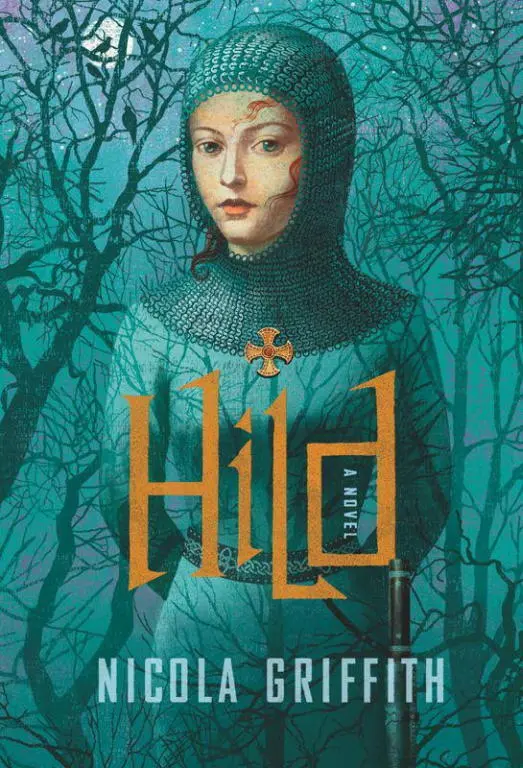
- Название:Hild
- Автор:
- Издательство:Farrar, Straus and Giroux
- Жанр:
- Год:2013
- Город:New York
- ISBN:978-0-374-28087-1
- Рейтинг книги:5 / 5. Голосов: 1
-
Избранное:Добавить в избранное
- Отзывы:
-
Ваша оценка:
Hild: краткое содержание, описание и аннотация
Предлагаем к чтению аннотацию, описание, краткое содержание или предисловие (зависит от того, что написал сам автор книги «Hild»). Если вы не нашли необходимую информацию о книге — напишите в комментариях, мы постараемся отыскать её.
But now she has only the powerful curiosity of a bright child, a will of adamant, and a way of seeing the world—of studying nature, of matching cause with effect, of observing her surroundings closely and predicting what will happen next—that can seem uncanny, even supernatural, to those around her.
Her uncle, Edwin of Northumbria, plots to become overking of the Angles, ruthlessly using every tool at his disposal: blood, bribery, belief. Hild establishes a place for herself at his side as the king’s seer. And she is indispensable—unless she should ever lead the king astray. The stakes are life and death: for Hild, for her family, for her loved ones, and for the increasing numbers who seek the protection of the strange girl who can read the world and see the future.
Hild is a young woman at the heart of the violence, subtlety, and mysticism of the early Middle Ages—all of it brilliantly and accurately evoked by Nicola Griffith’s luminous prose. Working from what little historical record is extant, Griffith has brought a beautiful, brutal world—and one of its most fascinating, pivotal figures, the girl who would become St. Hilda of Whitby—to vivid, absorbing life.
Hild — читать онлайн бесплатно полную книгу (весь текст) целиком
Ниже представлен текст книги, разбитый по страницам. Система сохранения места последней прочитанной страницы, позволяет с удобством читать онлайн бесплатно книгу «Hild», без необходимости каждый раз заново искать на чём Вы остановились. Поставьте закладку, и сможете в любой момент перейти на страницу, на которой закончили чтение.
Интервал:
Закладка:
“At least you’ve left me Gwladus,” she said to her mother, who smiled tiredly and said, “Not for long.”
And, indeed, when it was time to pull weeds from the barley fields, Hild told her bodywoman she would have to help somewhere. “The dairy,” Gwladus said. And Hild smiled. Of course: cool, easy on the hands, access to food.
With the king, queen, reeve, and scop at York, along with Cian and the other gesiths, the hall was quiet, talk more a tired murmur than a thing of fire and song and boast.
One night, as they sat outside, lit and warmed by the setting sun, and ate pottage and drank week-old beer, everyone looked worn and dusty but content. Happy, even.
Hild leaned back on her bench and refilled her cup. Gwladus would have done it, but Gwladus was refilling her own bowl with the stew of barley and greens and slivers of mutton. Conversation hummed around her, someone laughed, but gently.
Happy, she thought again, though it was more than that. They weren’t afraid. No drunken fighting and boasting. No gesiths pulling wealh onto their laps or persuading the dogs to fight. No thundering horses or sudden deadly silence as the king smiled that smile at someone. No Woden priests with their omens or Christ priests frowning and chastising. She’d even seen her mother deigning to talk to Gwladus. Was this what it was to live an ordinary life? Orderly, peaceful, calm. Work, yes, endless as rain, but also warmth and plenty and safety.
Even Mulstanton hadn’t been like this. There she had been worrying about Bebbanburg, about her mother and Hereswith, about what might happen.
But here she was, and this was how it would be for the whole summer. Four months. More. In one place, with no one watching her.
The first night Begu didn’t return from the fold, Hild didn’t quite sleep—just planed over the surface of sleep and missed her. Twice, Gwladus brought her milk. The second time she rearranged the pillows, and took Begu’s away.
The world turned, ripened, grew hotter and heavier. The days lengthened and stretched, thinning at each end to a kind of timeless blue twilight in which nightjars churred and moths fluttered.
Hild slept less and less. She fell into a waking dream and on clear nights walked for miles on the wold and in the woods.
The woods were thick with sound: hedgepigs and badgers in the understorey, the swoop of a bat and yip of a fox, the splash of an otter sliding into the water, the hoot of an owl. An endless song of life around her, eating, crying, dying, breathing, breeding.
She began to feel her own rhythm. Between her bleeding days, at the waxing of the moon, her senses opened like a night lily. For two nights she would feel the ruffle of the air against her face when a bat took a moth, taste the sweet sting of honey in the air near a full hive. Just by smell she knew when Breguswith had washed her hair, when Gwladus had walked through the byre, when Morud had stolen a loaf of fresh bread. Her skin felt denser, more alive, her bones stronger, her belly heavy.
She felt her mother and Gwladus watching her, just as everyone else watched the fields, watching the barley turn gold, the heads bend, the whiskers touch the dirt.
On the night before the harvest, Hild lay naked by the pool. In the moonlight the grass looked like straw, each stem sharp and distinct. She could smell herself: rich, sleek, ready. She put her arms behind her head, watched a stoat creep headfirst like a squirrel down the cherry tree. Then it leapt, and a sudden furious struggle erupted by the hollow alder. The ferns shook. Something ran away, squeaking.
“Soon,” she told the stoat. “Soon.”
She returned to the vill with the sun, sleeves neatly pinned and girdle tied, to find everyone awake and fed and binding their hair in cloth, preparing for the field work of harvest. A boy tootled on a pipe, and a woman banged her hand drum once, twice, ready to beat out a rhythm. Hild joined her mother at the head of the procession of people and hand carts full of food and sickles.
“No,” Breguswith said. “Stay. Take charge.”
Hild had no idea what the handful of wealh left behind—a groom, a cook, the swineherd—might need of her, but she nodded. Perhaps her mother was expecting messages.
With a great drumming and piping and shrieking of children, the procession moved out. The sound receded slowly, and quiet settled over the vill.
Hild sat on the south bench, facing the sun, and listened. The caw of crows in the distance, following the people. A brief hiss of wind in the grass. A fluttering butterfly. This was what it would be like after a contagion, or if the king were dead, the people fled, the Idings on the march. She remembered the farmsteads of Elmet, the missing pigs, the doused fires. But then she heard the groom whistling from the byre, a snort and whicker as he mucked out a stall, and saw the blue smoke seeping from the kitchen eaves. Swallows swooped up under the eave and out again. Blue tits, robins, chaffinches began to sing. Hild leaned back, eyes half closed, listening. Her vill.
She woke from a dream of stoat, all long sinuous muscle. It was hot. Milk, that’s what she needed, a long cool drink of buttermilk.
She unpinned her sleeves as she walked—no one here but wealh—and tucked them in her girdle.
In the kitchen it was even hotter. The milk crock was not in its usual place.
“They took it to the field,” the cook said. “But there’s a bit of beer set by. Or there’ll be some in the dairy if they’ve made the butter.”
It was a relief to step into the dairy shed, to feel the black, hard-packed dirt under her bare feet.
She walked past the rows of clabbering pots, down a step and to the heavy door of the creamery.
A woman whose name Hild didn’t know turned at the waft of warm air and was so startled to see Hild that her churning rhythm faltered.
Gwladus, underdress unpinned and hanging from her belt, was tilting a milk tray. Her bare skin gleamed. She saw Hild and nodded. As the tray tilted to the bottom right corner, she leaned forward and laid her right forearm across the lip. Muscles, small and busy as baby mice, swelled and stretched. Her breast, plumped against her biceps, was much paler than her arm, creamy, but not like the milk—creamy like the inside of a hazelnut.
Gwladus poured the thin greyish skim milk in an expert stream from the corner of the tray into a brown crock. Cream collected in a lake against her arm and breast. When the stream stopped she let the tray lie flat again. She straightened. Followed Hild’s gaze down to her cream-dabbed nipple, then looked back to Hild.
The churning paddle thumped up and down.
“I was thirsty,” Hild said.
Gwladus nodded at the woman churning butter. “Hwl will be done soon.” Then she lifted her forearm and licked along the bone.
Something inside Hild squeezed and dropped. Gwladus nodded at the empty churn in the corner.
“If you help, the butter’ll be done that much sooner. But you should hang your overdress and sleeves.”
Hild turned away, pulled her sleeves from her girdle, hung them by the apron on the wall, unfastened her girdle, hung that, pulled her dress over her head.
Heat. Slipping cream. Gleaming skin. Lift. Tilt. Pour.
Hwl’s thumping began to slow as her cream turned to butter.
Then the trays were empty. Hwl turned the butter out and began to shape it, squeezing out the last trickles of buttermilk.
Gwladus wiped her arm and breast with a cloth and repinned her underdress. Hwl ground salt. Hild listened to the gritty crunch and thump . Like a stoat eating a bird.
Then it was done. Gwladus brought them a dipper of buttermilk, passed it to Hild, who drank and drank again. It didn’t quench her thirst. She passed it to Gwladus.
Читать дальшеИнтервал:
Закладка:
Похожие книги на «Hild»
Представляем Вашему вниманию похожие книги на «Hild» списком для выбора. Мы отобрали схожую по названию и смыслу литературу в надежде предоставить читателям больше вариантов отыскать новые, интересные, ещё непрочитанные произведения.









Обсуждение, отзывы о книге «Hild» и просто собственные мнения читателей. Оставьте ваши комментарии, напишите, что Вы думаете о произведении, его смысле или главных героях. Укажите что конкретно понравилось, а что нет, и почему Вы так считаете.