Johanna Spyri - Heidi
Здесь есть возможность читать онлайн «Johanna Spyri - Heidi» — ознакомительный отрывок электронной книги совершенно бесплатно, а после прочтения отрывка купить полную версию. В некоторых случаях можно слушать аудио, скачать через торрент в формате fb2 и присутствует краткое содержание. Год выпуска: 2009, ISBN: 2009, Издательство: Penguin Books Ltd, Жанр: Детская проза, на английском языке. Описание произведения, (предисловие) а так же отзывы посетителей доступны на портале библиотеки ЛибКат.

- Название:Heidi
- Автор:
- Издательство:Penguin Books Ltd
- Жанр:
- Год:2009
- ISBN:9780141919010
- Рейтинг книги:2.5 / 5. Голосов: 2
-
Избранное:Добавить в избранное
- Отзывы:
-
Ваша оценка:
Heidi: краткое содержание, описание и аннотация
Предлагаем к чтению аннотацию, описание, краткое содержание или предисловие (зависит от того, что написал сам автор книги «Heidi»). Если вы не нашли необходимую информацию о книге — напишите в комментариях, мы постараемся отыскать её.
With a delightfully nostalgic introduction by award-winning author, Eva Ibbotson.
Heidi — читать онлайн ознакомительный отрывок
Ниже представлен текст книги, разбитый по страницам. Система сохранения места последней прочитанной страницы, позволяет с удобством читать онлайн бесплатно книгу «Heidi», без необходимости каждый раз заново искать на чём Вы остановились. Поставьте закладку, и сможете в любой момент перейти на страницу, на которой закончили чтение.
Интервал:
Закладка:
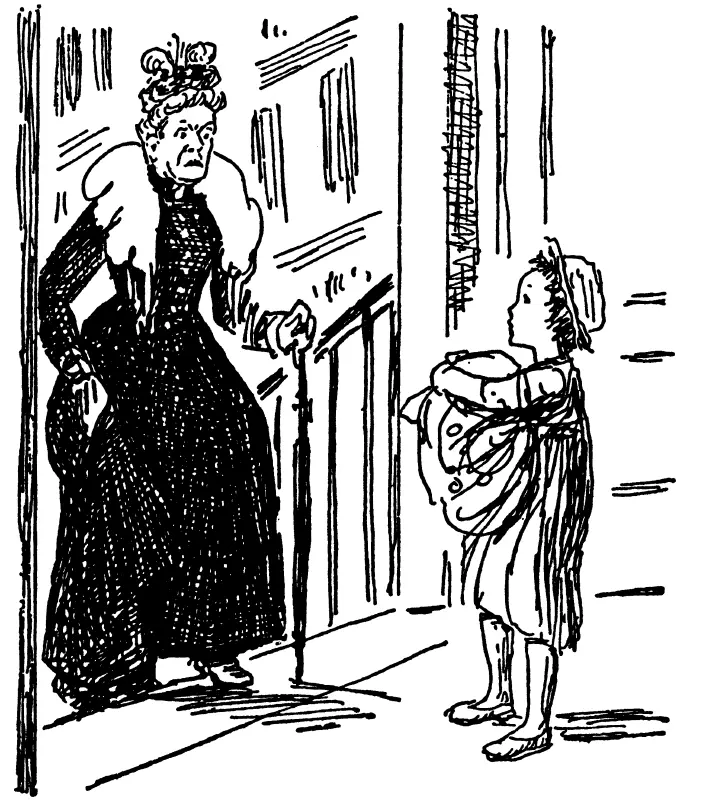
‘And what does this mean?’ she demanded. ‘Why are you dressed up like that? Haven’t I forbidden you to go running about the streets alone, or to go out without permission? Yet here I find you trying it again and looking like a beggar’s child into the bargain.’
‘I wasn’t going to run about,’ murmured Heidi, a little frightened. ‘I only want to go home to see Grandfather and Grannie.’
‘What’s that? You want to go home?’ Miss Rottenmeier threw up her hands in horror. ‘You’d simply run off like that? What would Mr Sesemann say? I can only hope he’ll never hear of it. What’s wrong with this house, pray? Have you ever lived in such a fine place before, or had such a soft bed or such good food? Answer me that.’
‘No,’ said Heidi.
‘You have everything you can want here. You’re an ungrateful little girl who doesn’t know when she’s well off.’
This was too much for Heidi and she burst out, ‘I want to go home because while I’m here Snowflake will be crying, and Grannie will be missing me too. And here I can’t see the sun saying goodnight to the mountains. And if the hawk came flying over Frankfurt he’d croak louder than ever because there are such a lot of people here being horrid and cross, instead of climbing high up where everything’s so much nicer.’
‘Merciful heavens! The child’s out of her mind!’ exclaimed Miss Rottenmeier and ran swiftly upstairs, bumping violently into Sebastian who was going down. ‘Bring that wretched child up here at once,’ she ordered.
‘Very good,’ said Sebastian.
Heidi hadn’t moved. She was trembling all over and her eyes were blazing. ‘Well, what have you done this time?’ asked Sebastian cheerfully. Still she didn’t stir, so he patted her shoulder and added sympathetically, ‘Come now, don’t take it so much to heart. Keep smiling, that’s the best thing to do. She bumped into me so hard just now she nearly knocked my head off. But don’t you worry. Come along. We’ve got to right‐about‐turn and upstairs again. She said so.’ Heidi went slowly with him, looking so very dejected that Sebastian felt really sorry for her.
‘Cheer up,’ he said, ‘don’t be downhearted. I’ve never seen you cry yet and I know you’re a sensible little girl. Later on, when Miss Rottenmeier’s out of the way, we’ll go and look at the kittens, shall we? They’re having a fine time up in the attic and it’s fun to watch them playing together.’
Heidi gave a subdued little nod and went to her room, leaving him looking after her with real kindliness.
At supper Miss Rottenmeier hardly spoke, but every now and then she glanced sharply at Heidi as though expecting her to do something unheard‐of at any moment. But the little girl sat as quiet as a mouse, eating and drinking nothing, though she managed to put her roll in her pocket as usual.
Next morning, when Mr Usher arrived, Miss Rotten‐meier beckoned him mysteriously into the dining‐room and told him she feared the change of air and the new way of life, with all its unusual experiences, had affected Heidi’s mind. She told him how the child had tried to run away and repeated the extraordinary things she had said. Mr Usher tried to calm her.
‘I assure you,’ he said, ‘that although in some ways Adelheid is rather peculiar, in others she seems quite normal and it should be possible, with careful treatment, to steady her quite satisfactorily in the end. I am really more worried by the fact that she seems to find such difficulty in learning the alphabet. So far we have made no progress at all.’
Miss Rottenmeier felt somehow satisfied by that and let him go to his pupils. Later in the day she remembered the strange garments Heidi had put on to go home in, and decided she ought to give her some of Clara’s outgrown clothes before Mr Sesemann came home. She spoke to Clara about it and she agreed at once that Heidi could have several of her dresses, hats, and other garments. So Miss Rottenmeier went off to Heidi’s room to look at her clothes and decide what was worth keeping and what should be thrown away. In a few minutes she returned, looking more put out than ever.
‘Adelheid’ she cried, ‘what do I find in your wardrobe? Can I believe my eyes? Just think of it, Clara, at the bottom of the cupboard — a cupboard meant for clothes, Adelheid — I found a great pile of stale dry rolls. Fancy hoarding food away like that!’ Then she raised her voice and called Tinette. ‘Go to Miss Adelheid’s room,’ she told her, ‘and get rid of the rolls in the cupboard, and throw the old straw hat that’s on the table into the dustbin!’
‘Oh, no,’ Heidi wailed, starting up, ‘I must keep my hat, and the rolls are for Grannie.’ She tried to run after Tinette but Miss Rottenmeier caught hold of her.
‘You’ll stay here. That rubbish is going to be thrown away,’ she said firmly.
Heidi threw herself down beside Clara’s chair and began to cry bitterly. ‘Now Grannie won’t get any nice white bread,’ she sobbed. ‘The rolls were all for her and now they’re going to be thrown away.’ She wept as if her heart would break, and Miss Rottenmeier hurried out of the room. Clara was very upset by all the commotion.
‘Heidi, don’t cry so,’ she begged. ‘Listen to me. If you’ll only stop, I promise to get you just as many rolls as you had saved, or even more, to take to Grannie when you go home. And they’ll be soft, fresh ones. Those you’d saved must have got quite hard already. Come on, Heidi, please don’t cry any more.’
It was a long time before Heidi could stop, but she understood what Clara was promising and was comforted at last, though she still wanted to be assured that Clara meant it.
‘Will you really give me as many rolls as I had saved?’ she asked in a still tearful voice.
‘Of course I will. Now do cheer up.’
Heidi came to supper that night with red eyes, and when she saw the roll beside her plate, a lump came in her throat. But she managed not to cry for she knew that would not do at table. Sebastian kept making strange signs whenever he came near her, pointing first to his head, then to hers, nodding and winking as he did so, as though to convey to her something very secret, and when she went to bed she found her battered old straw hat under the quilt. She caught it up and squashed it a little more in her pleasure at seeing it again. Then she wrapped it up in a big old handkerchief and hid it right at the back of the wardrobe.
That was what Sebastian had been trying to tell her at supper. He had heard what Tinette had been told to do, and had heard Heidi’s despairing cry. So he had gone after the girl and waited till she came out of Heidi’s room carrying the hoard of rolls, with the hat perched on top of them. He had snatched away the hat, saying, ‘I’ll get rid of this,’ and so had been able to save it.
9
A Bad Report to Mr Sesemann
There was a great bustle in the big house and much running up and down stairs a few days later, for the master had returned from his travels, and Sebastian and Tinette had one load of luggage after another to carry up from the carriage, for Mr Sesemann always brought a lot of presents and other nice things home with him.
The first thing he did was to go and find his daughter, and there was Heidi with her, for it was the late afternoon, when they were always together. Father and daughter were very fond of one another and they greeted each other very warmly. Then he put out a hand to Heidi, who had moved quietly away into a corner, and said kindly:
‘So this is our little Swiss girl. Come and shake hands. That’s right. And tell me, are you and Clara good friends? I hope you don’t squabble, so that you have to kiss and make it up and then start the whole performance again.’
Читать дальшеИнтервал:
Закладка:
Похожие книги на «Heidi»
Представляем Вашему вниманию похожие книги на «Heidi» списком для выбора. Мы отобрали схожую по названию и смыслу литературу в надежде предоставить читателям больше вариантов отыскать новые, интересные, ещё непрочитанные произведения.











Обсуждение, отзывы о книге «Heidi» и просто собственные мнения читателей. Оставьте ваши комментарии, напишите, что Вы думаете о произведении, его смысле или главных героях. Укажите что конкретно понравилось, а что нет, и почему Вы так считаете.